CouponF5 is an independent publisher. We may earn a commission when you purchase through our links, at no extra cost to you. Merchant terms apply.
In this guide
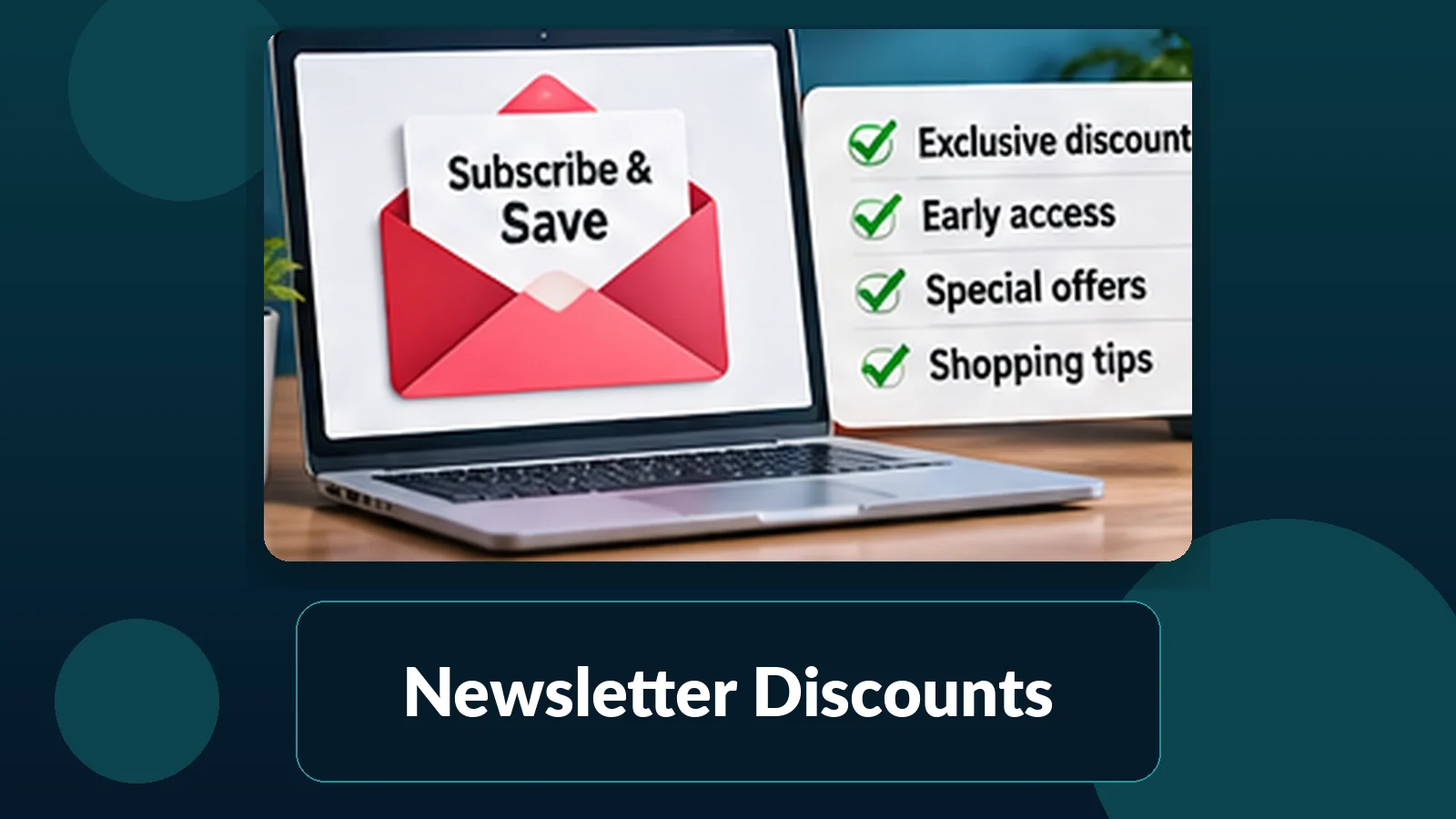
Newsletter discounts can be worth using when a legitimate email sign-up offer lowers the cost of a purchase you already planned, and you are comfortable receiving the retailer’s marketing messages. The coupon is not automatically valuable: eligibility, minimum spending, exclusions, future email volume and privacy practices all matter.
Before entering your address, check what the merchant promises and whether you actually want the ongoing relationship. A small one-time discount can be sensible, but not if it requires unnecessary spending or a subscription you do not understand.
What Is a Newsletter Sign-Up Discount?
Some retailers invite shoppers to join promotional email lists in exchange for a first-order code, early notice of sales or other account benefits. Others show a signup form without guaranteeing any discount. The specific benefit and method of delivery depend on the merchant.
A newsletter discount may be a percentage, fixed amount or eligible shipping waiver. It can also be restricted to new customers or designated products. Do not assume every signup sends a public code immediately.
1. Start With the Retailer’s Genuine Website
Look for an offer on the store’s official promotions page, footer signup area or account settings. If a pop-up appears on an unfamiliar website and claims to represent a brand, check the domain before sharing personal information.
A legitimate retailer’s welcome email should not require your account password, full payment information or a fee simply to reveal a standard coupon. If a message asks for unrelated sensitive information, leave it and navigate to the merchant independently.
2. Read the Actual Coupon Conditions
Check whether the discount applies only to new email subscribers, first-time buyers, certain products or a minimum eligible subtotal. Look for start and end dates, per-customer use limits and restrictions on combining the code with other sale prices.
For example, a hypothetical $10-off coupon that requires $100 of eligible merchandise may have no value for an $80 planned cart. Adding an unwanted $25 product to qualify would increase merchandise spending by $15 relative to the original plan after the discount.
3. Compare the Offer With Other Available Savings
Even a valid signup coupon may be worse than the retailer’s automatic price or free-shipping promotion. If you must choose one offer, compare the actual dollar reduction and final order total on the same items and delivery method.
For an illustrative $60 eligible subtotal, 15% off saves $9, while a separate $12 fixed deduction could be better if it also applies. Other charges, caps and exclusions may change the result. The examples are not live merchant promotions.
4. Consider Privacy and Email Frequency
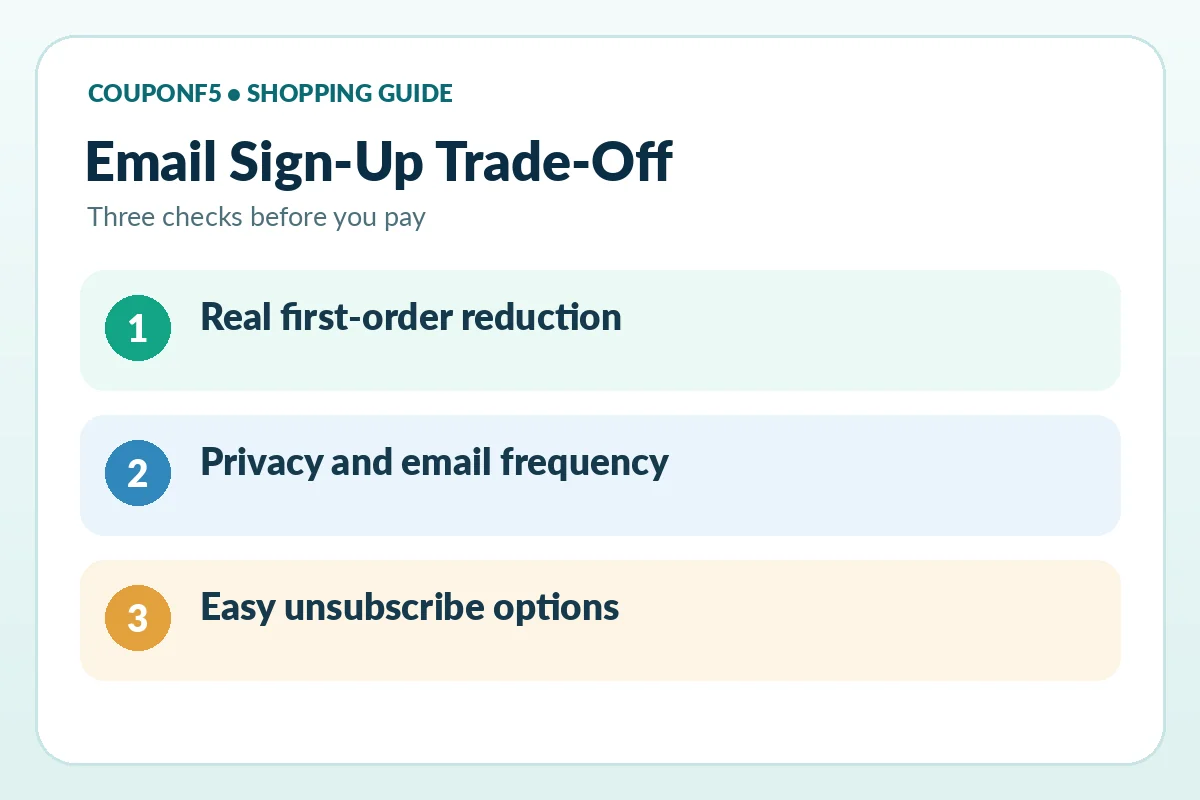
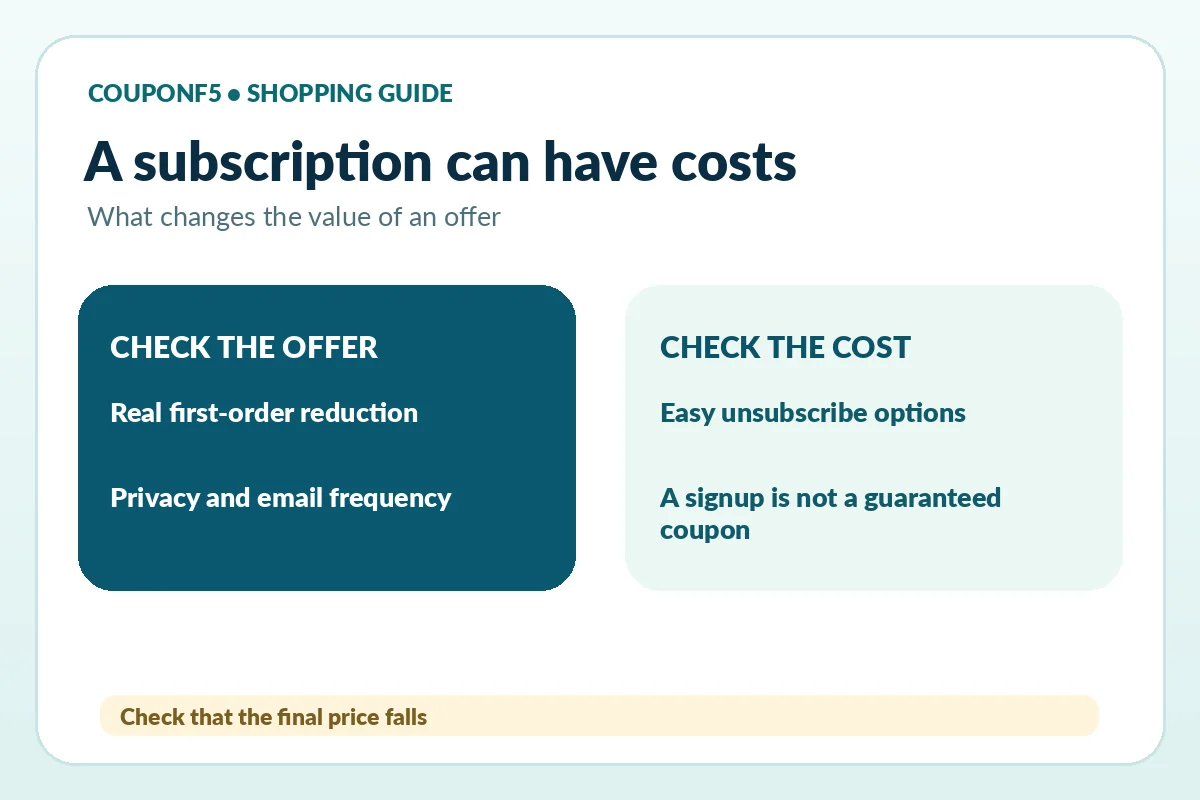
Joining a newsletter is also a marketing choice. Read the retailer’s privacy information to understand how it describes its use of subscriber data and whether it offers controls over message frequency or categories. Do not assume every company follows identical practices or sends the same volume of email.
If your inbox is already crowded, a one-time discount may not outweigh ongoing unwanted messages for you. That is a personal trade-off rather than a universal rule about the value of sign-up offers.
5. Understand Unsubscribe Options
In the United States, commercial email is subject to requirements that include a way for recipients to opt out. The FTC’s CAN-SPAM business guidance explains that marketing emails generally must provide a usable unsubscribe mechanism and that subscribers can also opt out of marketing messages.
The exact treatment of transactional or relationship messages differs from marketing messages. You may still receive necessary order confirmations after opting out of promotions. If an unfamiliar message looks suspicious, avoid blindly clicking a potentially fraudulent unsubscribe link; manage preferences through a known legitimate merchant account if safer.
6. Check Whether Signup Creates Other Obligations
A normal email newsletter is not necessarily a paid membership, but some marketing campaigns connect to account creation, loyalty programs or subscriptions. Read any additional terms before accepting. An introductory price for a recurring service requires a separate evaluation of future charges and cancellation.
Do not treat the word “free” as proof that the overall interaction has no privacy, time or financial trade-offs. Consider only the information and commitment actually requested by the retailer.
7. Confirm the Discount Before You Pay
If you receive an offer, add the planned items to the real store checkout and enter the exact code as directed. Make sure the intended discount appears and that shipping, tax and other fees are included in the amount due. A success message is not enough if the final price is unchanged.
If the code fails, verify whether it is restricted to first orders, whether selected products qualify, and whether an automatic sale blocks it. A rejection does not by itself mean the merchant’s email was fraudulent.
When a Newsletter Coupon Is Not Worth It
It may be better to skip the signup when you do not plan to buy, the discount requires unwanted products, the merchant is unfamiliar or the signup requests more personal information than you are willing to provide. You may also prefer to pay a slightly higher price without adding another marketing relationship.
Remember that not buying an unnecessary item is different from “missing” a discount. A $15 coupon that persuades you to spend $85 on a product you did not want has not improved your budget.
A Four-Step Newsletter Offer Test
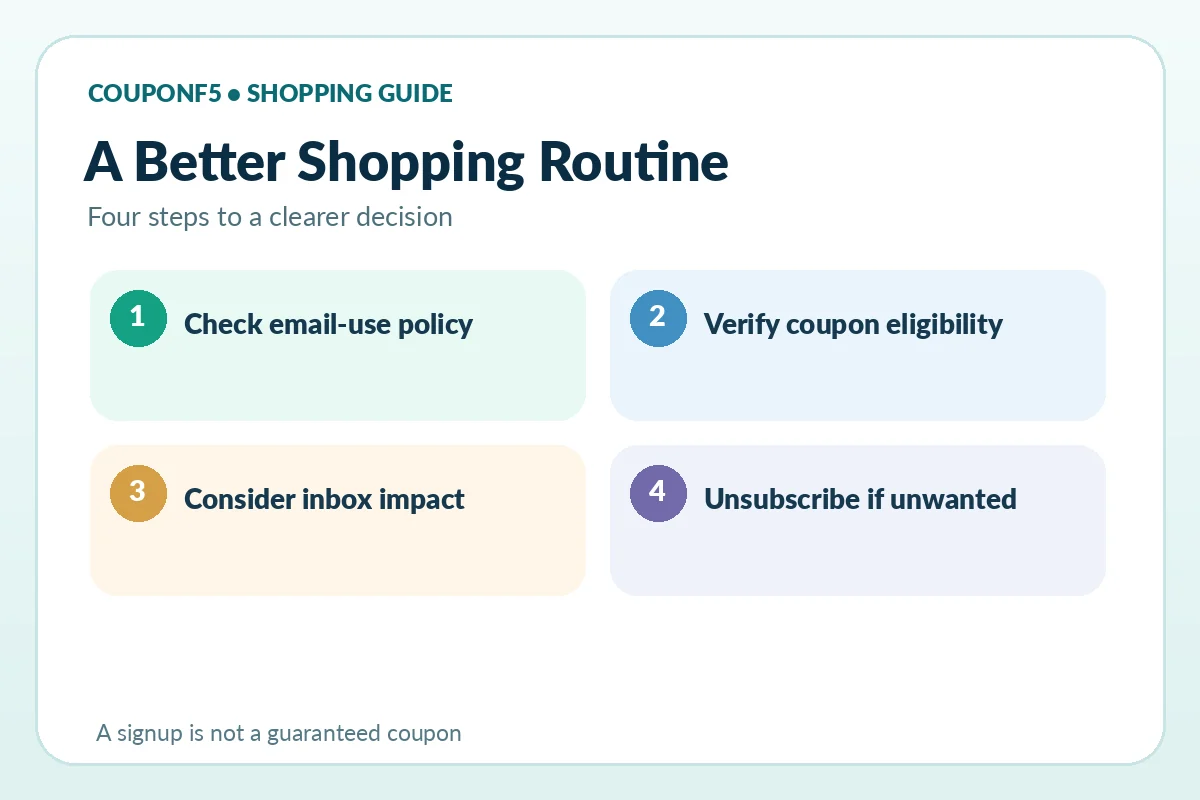
- Verify the real merchant and its stated signup benefit.
- Read coupon conditions, privacy information and email preferences.
- Compare the offer with other eligible prices and shipping.
- Check the final checkout total, then manage marketing messages as you prefer.
Frequently Asked Questions
Does signing up for a newsletter guarantee a code?
No. The merchant decides whether to offer one, what it covers and how to deliver it.
Can I unsubscribe after receiving the coupon?
Commercial marketing messages generally must provide opt-out options, but coupon eligibility and account terms should be checked separately.
Are newsletter codes usually stackable?
Not necessarily. They may conflict with automatic promotions or apply only to first orders.
Is it safe to enter my email for a discount?
Evaluate the real website and its privacy practices. Avoid sharing information with impersonation pages or unknown coupon intermediaries.
The Bottom Line
A newsletter coupon is worthwhile when it saves real money on a planned order under terms you accept. Include inbox and privacy costs in your decision, not only the displayed percentage.