CouponF5 is an independent publisher. We may earn a commission when you purchase through our links, at no extra cost to you. Merchant terms apply.
In this guide
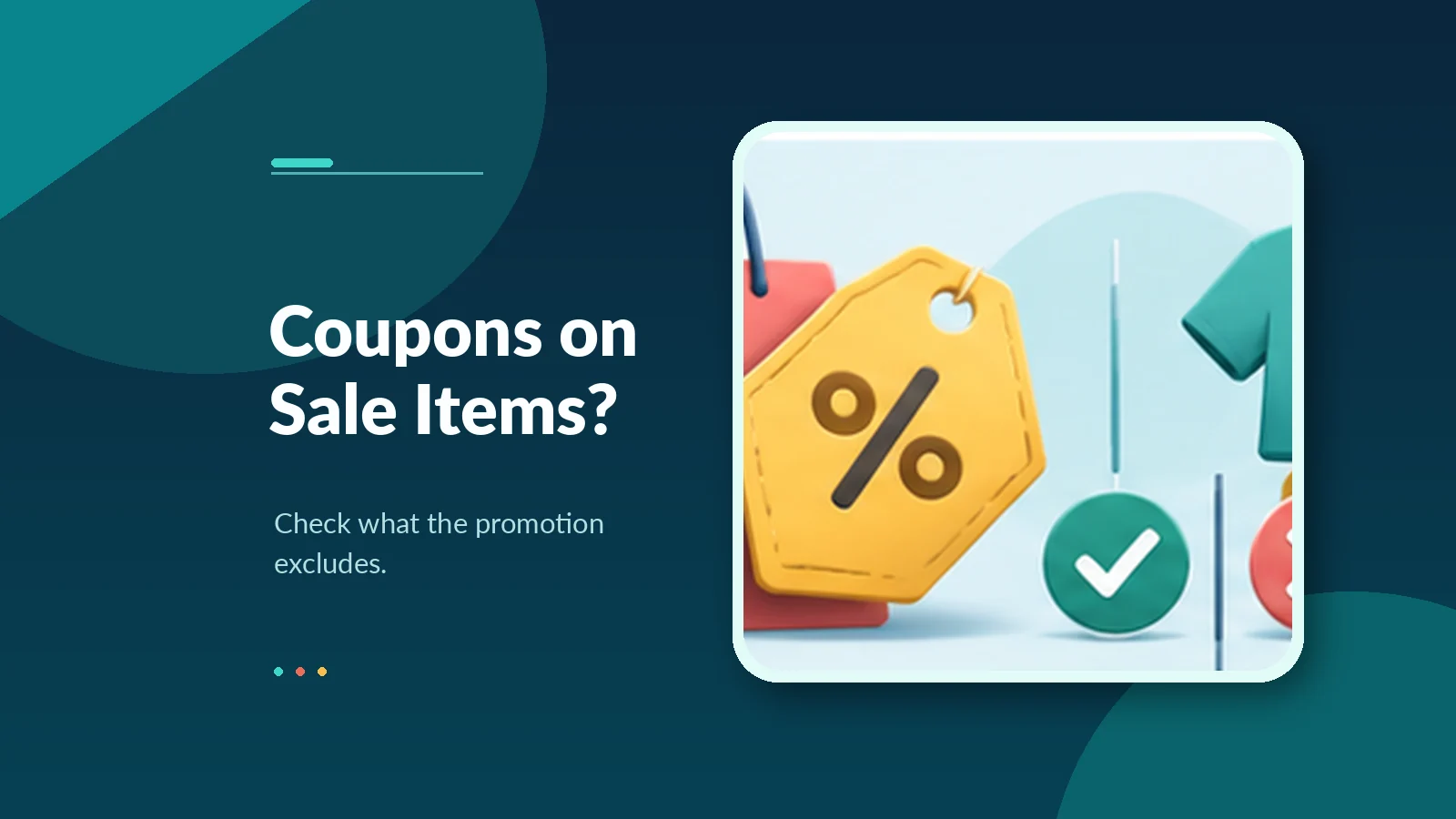
Yes, you can sometimes use coupons on sale and clearance items, but only when the merchant’s promotion rules allow it. A store may permit an extra code on marked-down merchandise, restrict it to full-price items, or apply the best permitted offer rather than stacking discounts.
The words “sale” and “clearance” describe a product’s pricing or inventory status, not a universal rule about coupon eligibility. To know whether a coupon helps, read the offer terms and confirm the actual discount at checkout.
Sale Price, Clearance Price and Coupon Code Are Different Things
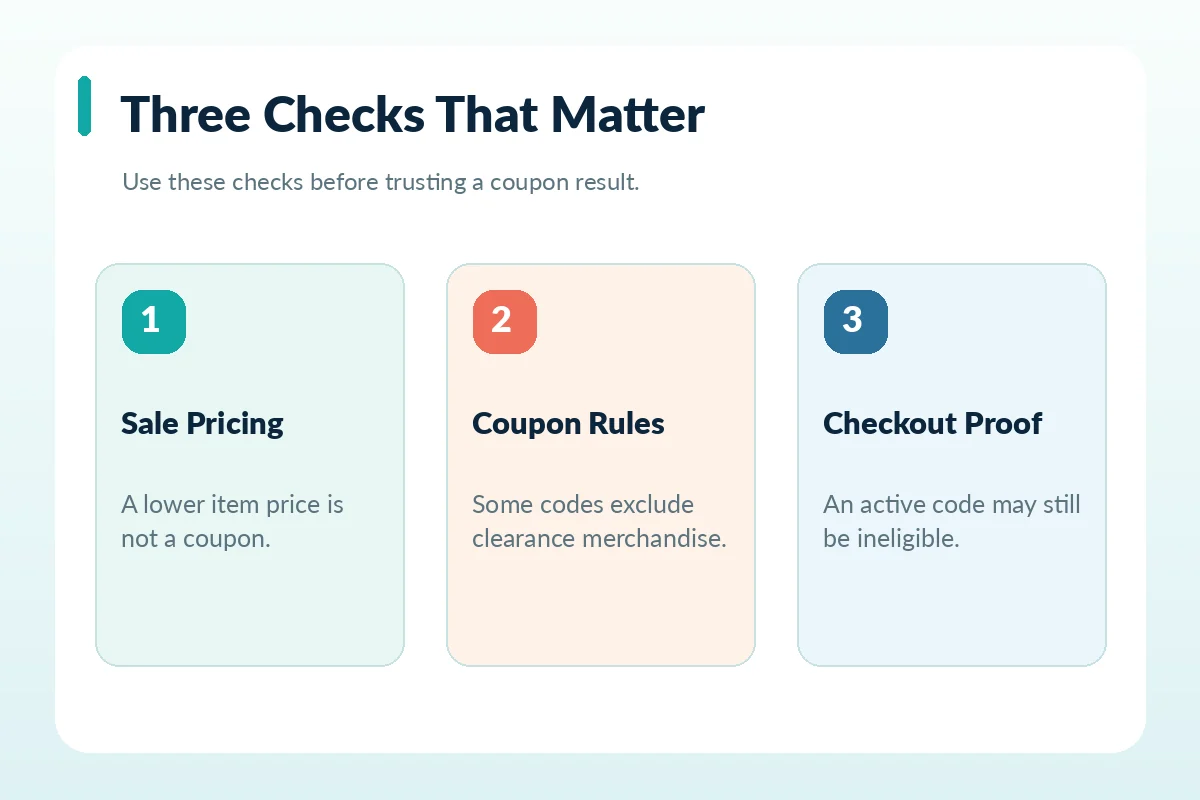
A sale price is the merchandise price currently displayed, sometimes compared with a previous or reference price. Clearance usually refers to merchandise the retailer wants to sell through, possibly with additional restrictions on returns. A coupon code is a separate promotion that may or may not apply to those items.
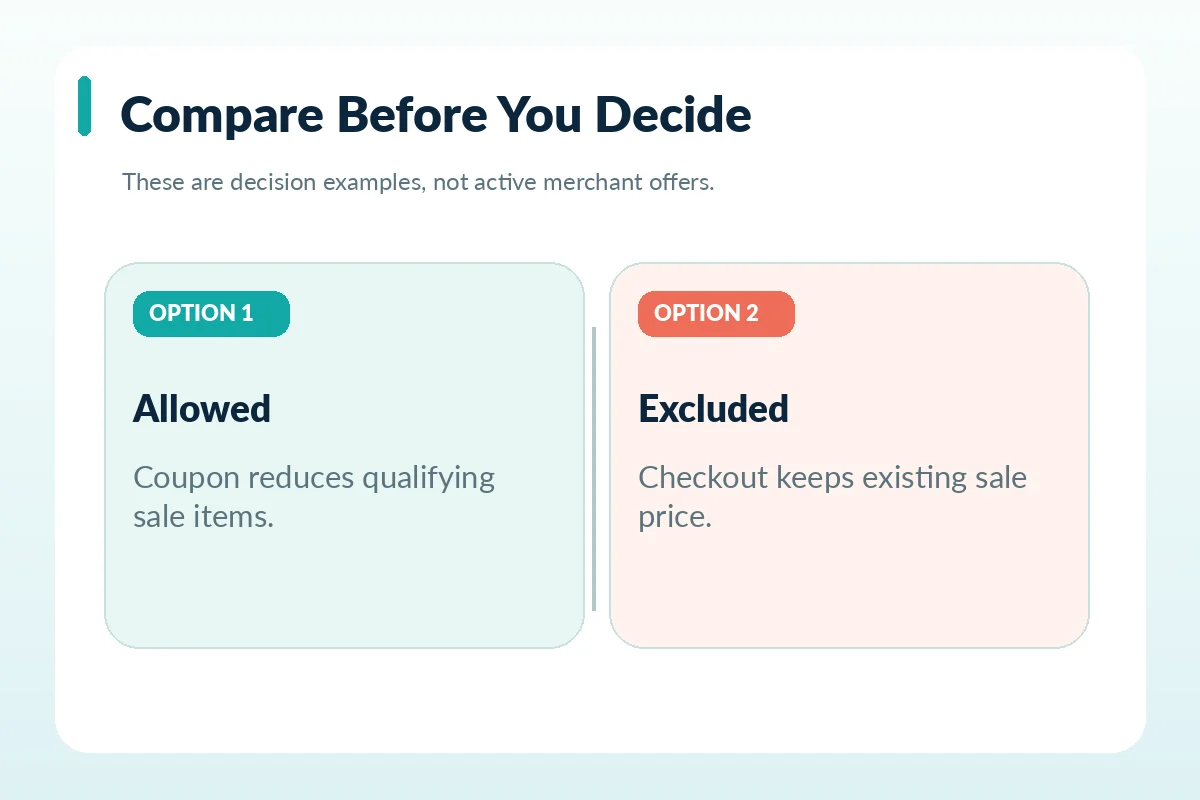
It is possible for a retailer to discount an already-sale-priced product further, but this is not guaranteed. A checkout can accept an order-level promotion while excluding certain line items from a product-specific coupon.
Why Some Stores Exclude Clearance Merchandise
Retailers choose which merchandise qualifies for promotions. They may restrict a code to selected collections, new arrivals, full-price items or specific variants. Clearance merchandise often carries a separate policy or might already be discounted beyond the terms of another campaign.
For example, Shopify allows merchants to specify eligible products, collections and variants, as well as validity dates and combination settings. That explains how an exclusion can be configured; it does not tell you what any individual store’s current sale policy is.
How to Read “Excludes Sale Items”
A coupon may state “not valid on sale or clearance items,” “full-price merchandise only,” or “select products excluded.” Those phrases are restrictions, not mere fine print. If an offer is limited to one collection, check the exact products and variants listed by the merchant.
Some offers exclude gift cards, bundles or items with promotional pricing. Others restrict use to first-time customers or a minimum eligible subtotal. A sale item may also fail to count toward that minimum, depending on the actual rules.
How to Test a Coupon on a Sale Item
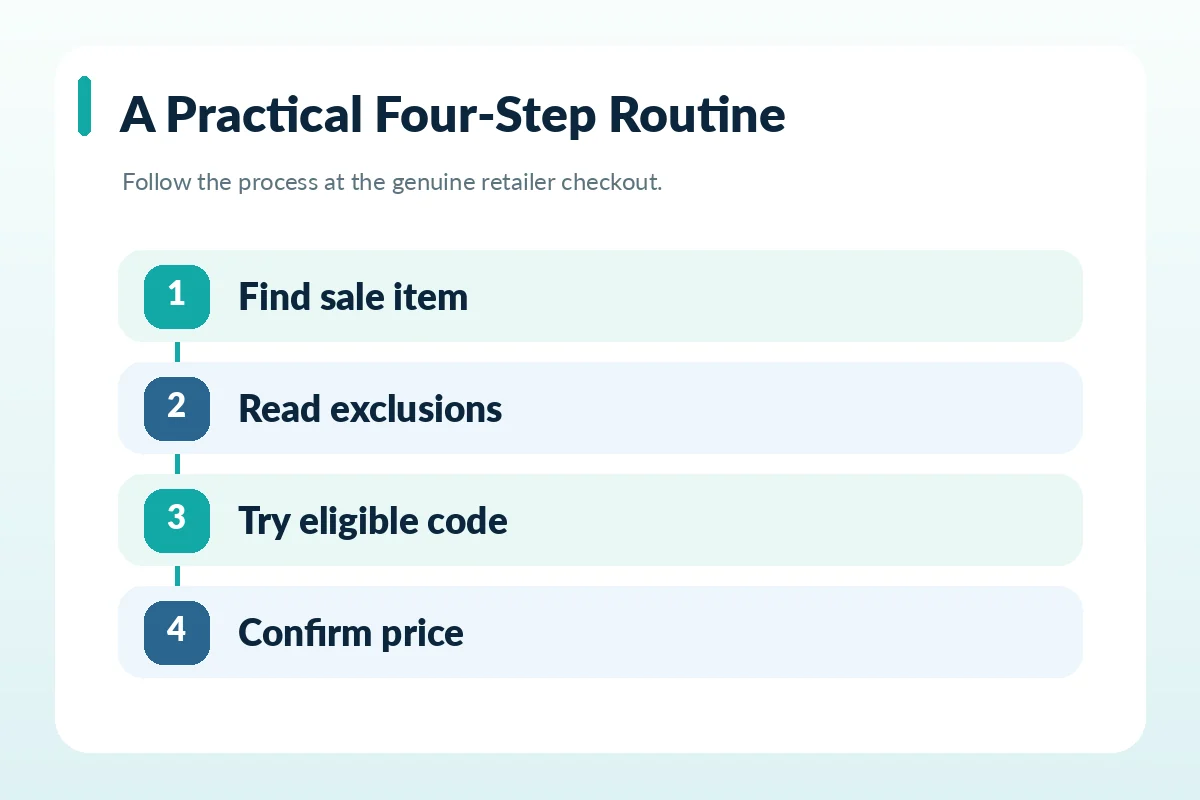
- Open the official retailer’s page and read the promotion conditions.
- Add the exact discounted item and chosen variation to your cart.
- Enter the code in the real cart or checkout if the merchant provides a field.
- Review the error or discount lines rather than assuming it worked.
- Confirm the complete final amount, including shipping and taxes, before paying.
If the code says it is not valid for the cart, check the exclusions before trying more codes. A rejection does not automatically indicate the code is fake or the checkout is broken.
What If the Store Allows Stacking?
Some retailers permit product, order and shipping promotions to combine, while others limit the combinations. An existing sale price might be compatible with an additional coupon, or the coupon could conflict with another automatically applied discount.
Shopify’s combination guidance describes how merchants choose supported discount combinations. Do not assume every Shopify store—or every other commerce platform—allows a second percentage reduction on already discounted merchandise.
A Hypothetical Double-Discount Example
Suppose a product was priced at $60 and is now on sale for $42. If an additional eligible 10% coupon applies to the current $42 price, it would save $4.20 and reduce the merchandise subtotal to $37.80 before separate shipping and taxes. This is illustrative arithmetic, not an active deal.
But if the code is only for full-price items, the additional reduction is zero. If the store calculates other discounts in a different order or restricts stacking, the actual result can also differ. Always inspect checkout.
Do Coupons Work on Final-Sale Items?
Final-sale status and coupon eligibility are different concepts. A retailer could permit a coupon on an item that cannot be returned, or exclude both at once. Read the return policy independently from the promotion’s terms.
The FTC advises shoppers to check refund policies for sale merchandise, because return and refund rules can differ for discounted or clearance products. Consider whether the product is a good fit before sacrificing return flexibility for a small extra saving.
When an Extra Clearance Coupon Is Not a Good Deal
An additional 5% reduction may not compensate for paying a large return shipping charge if the item does not fit. Nor is a discounted bundle useful if it contains products you do not need. Compare the actual item, delivery timing, seller trustworthiness and final payable amount rather than the number of price cuts advertised.
If the sale price is already lower than comparable alternatives, a separate coupon may be unnecessary. It can still be a good purchase without a code.
A Quick Sale-Coupon Decision Routine
- Confirm the marked-down product is the exact item you want.
- Read whether sale, clearance or final-sale goods are eligible.
- Check stacking and minimum-spend restrictions.
- Apply any qualifying code and verify final savings.
Frequently Asked Questions
Can you use a promo code on sale items?
Sometimes. It depends on the merchant’s product eligibility and promotion terms.
Can a clearance item count toward a coupon minimum?
Only if the store includes it in the qualifying subtotal. Terms and checkout calculations control.
Does a sale price automatically block another discount?
No universal rule says so. Some promotions combine; others do not.
Are clearance products always final sale?
No. Return policies vary by retailer and product. Read the exact conditions before buying.
The Bottom Line
Coupons can work on discounted merchandise when the retailer permits them. Read the exclusions and return rules, then verify the savings on your chosen items at checkout instead of assuming every sale can be stacked.