CouponF5 is an independent publisher. We may earn a commission when you purchase through our links, at no extra cost to you. Merchant terms apply.

In this guide
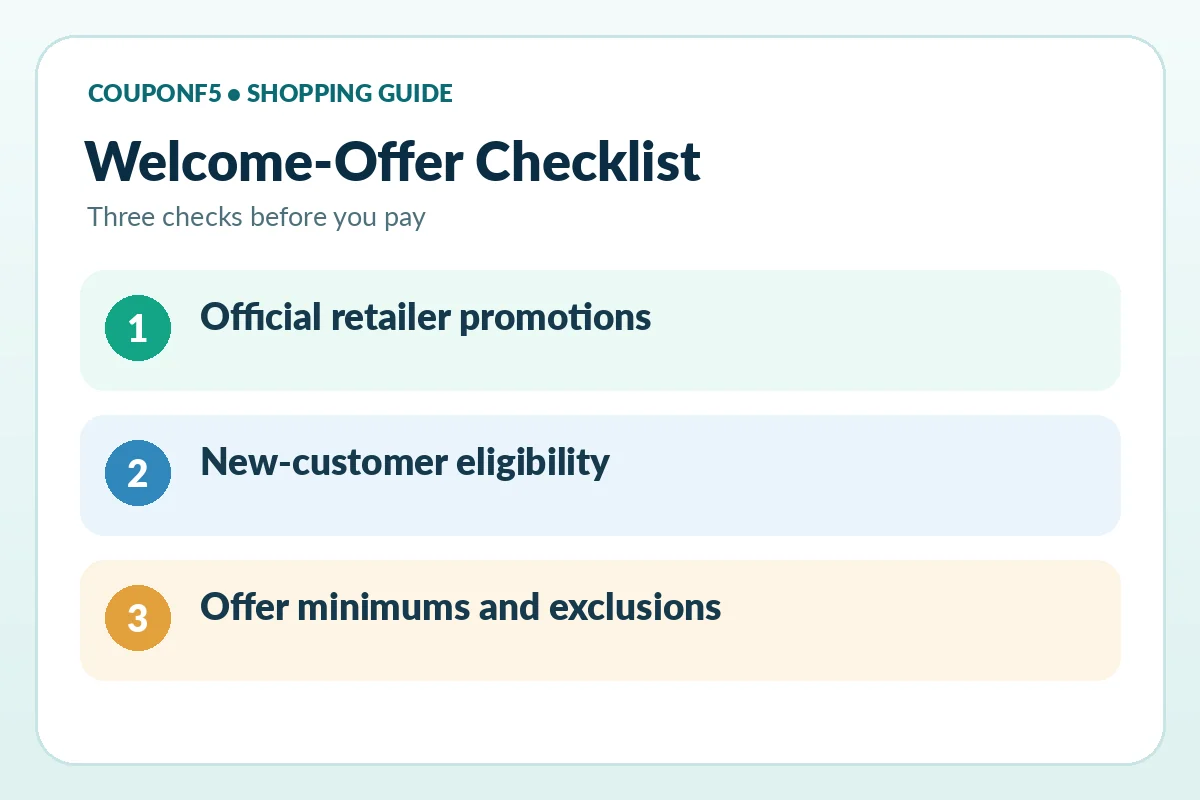
To find first-order discounts at online stores, start with the retailer’s official website, welcome offer page, legitimate email signup prompt or customer account benefits. Then confirm that you qualify as a new customer, that your intended items are included, and that the code actually reduces the checkout total. Not every store offers a welcome discount.
First-order offers can make a purchase you already planned more affordable, but they should not persuade you to create unnecessary accounts, spend more to reach a threshold or buy from an unreliable website.
What Counts as a First-Order Discount?
A welcome promotion may be offered to customers placing their first order, creating a new account, joining a newsletter or shopping through a designated sales channel. The retailer defines eligibility. “New customer” can refer to a first purchase, an account status or another campaign requirement rather than simply someone who has not used a particular code.
Benefits may be a percentage, fixed-dollar reduction or eligible delivery waiver. The way a promotion is activated—code, link or automatic checkout rule—is separate from the amount it provides.
1. Check the Official Store’s Promotions
Visit the genuine retailer website and look for a welcome banner, offers page, account section or promotion terms. A legitimate first-order discount can be communicated on a product page, in a checkout invitation or through a marketing signup. If the site shows no offer, do not assume an unknown coupon aggregator knows of a current universal one.
Type the store’s known domain or use a trusted bookmark before entering personal information. A popup claiming to represent a well-known brand on an unrelated website may be misleading.
2. Consider Whether Email Signup Is Worth It
Some retailers send a code after you voluntarily join promotional email. Check whether the message is from the real merchant and whether the discount terms suit your purchase. Consider the email frequency, privacy policy and unsubscribe options before giving your address.
A marketing signup is not guaranteed to produce a code, and it is not a reason to share an account password or payment information with an unfamiliar site. If you do not want ongoing marketing, it can be sensible to skip the small discount.
3. Read New-Customer Restrictions
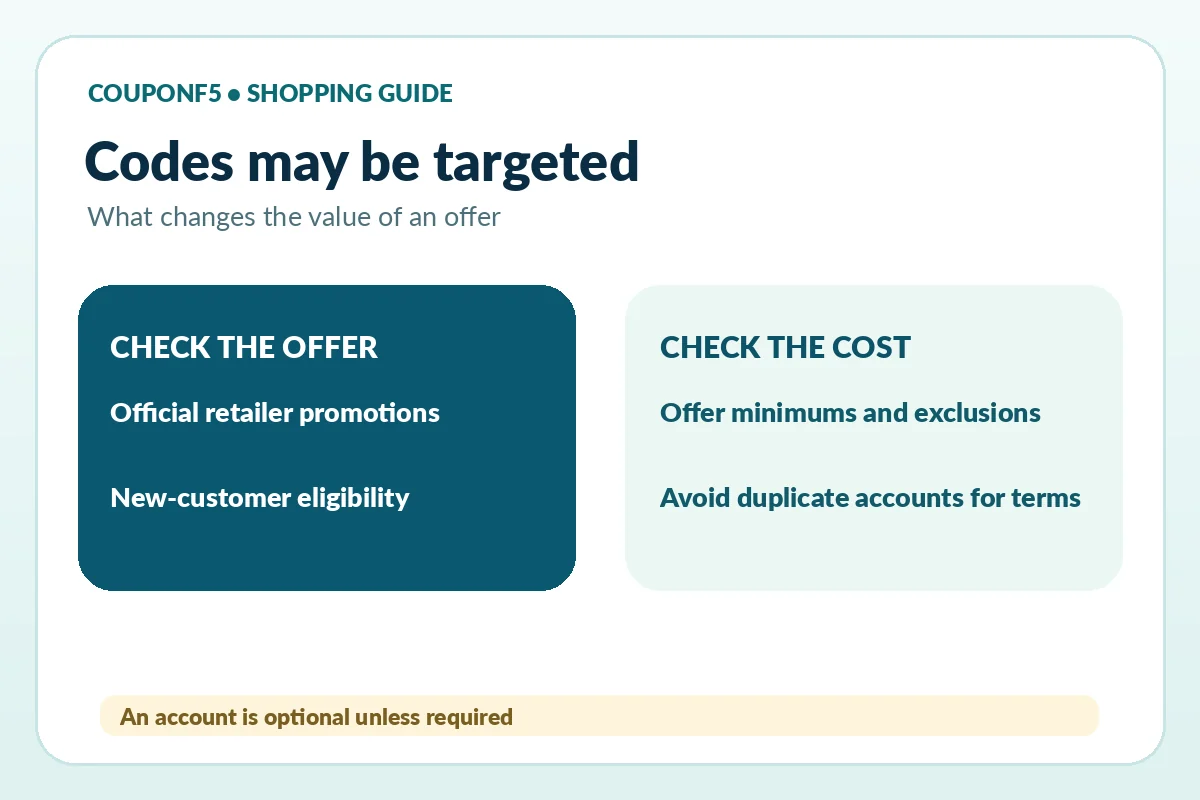
A first-order code may apply only to accounts with no completed purchases or to specifically invited recipients. Other requirements can involve a valid period, minimum eligible spend, selected collections, geographic regions and a maximum number of redemptions.
Shopify’s discount-code guidance
4. Check Minimums and Product Exclusions
A hypothetical $15-off welcome code requiring $100 in eligible items will not necessarily apply to a $90 cart. Taxes, shipping and excluded merchandise may not count toward the qualifying amount. Review the exact terms instead of assuming the visible cart total meets the threshold.
Do not add an unwanted $25 item simply to unlock $15 in savings. You would spend $10 more on merchandise than you originally intended, assuming the threshold is reached and no other conditions change.
5. Compare the Welcome Coupon With Existing Prices
A retailer might already have a competitive automatic sale, or another credible seller may offer the same product for less. A first-order code can be incompatible with another promotion. Compare final totals with the new-customer offer and without it, including delivery and tax where shown.
For a hypothetical $80 eligible subtotal, a 10% welcome discount saves $8. A separate free-shipping offer waiving $12 could be more valuable if only one may apply. These are examples, not current merchant offers.
6. Avoid Trying to Evade Eligibility
Do not assume creating duplicate accounts, changing email addresses or using another person’s personalized code is permitted. Those practices can violate the offer’s terms and may result in a rejected code or order problem. The goal is to find a promotion you legitimately qualify for.
If the store does not offer a first-order benefit for your situation, choose based on the normal price, product quality and seller reliability. A purchase does not need a coupon to be sensible.
7. Verify the Final Checkout Result
Add the products you actually intended to buy, enter the valid code as directed and read the updated order summary. Confirm the discount appears on eligible items or delivery and that the final amount due is lower than your realistic alternative.
If a welcome offer does not apply, check the error, account status, products, dates and minimum. Do not submit payment assuming a later manual refund unless the retailer expressly confirms that possibility.
When You Should Skip a First-Order Offer
A welcome code is less attractive if it requires a store account you do not want, excessive marketing, a larger order than planned or an unfamiliar seller. Consider what you are buying, not just what the popup promises.
Check whether a paid membership or subscription is attached. A one-time reduced price may be outweighed by recurring charges or stricter return conditions.
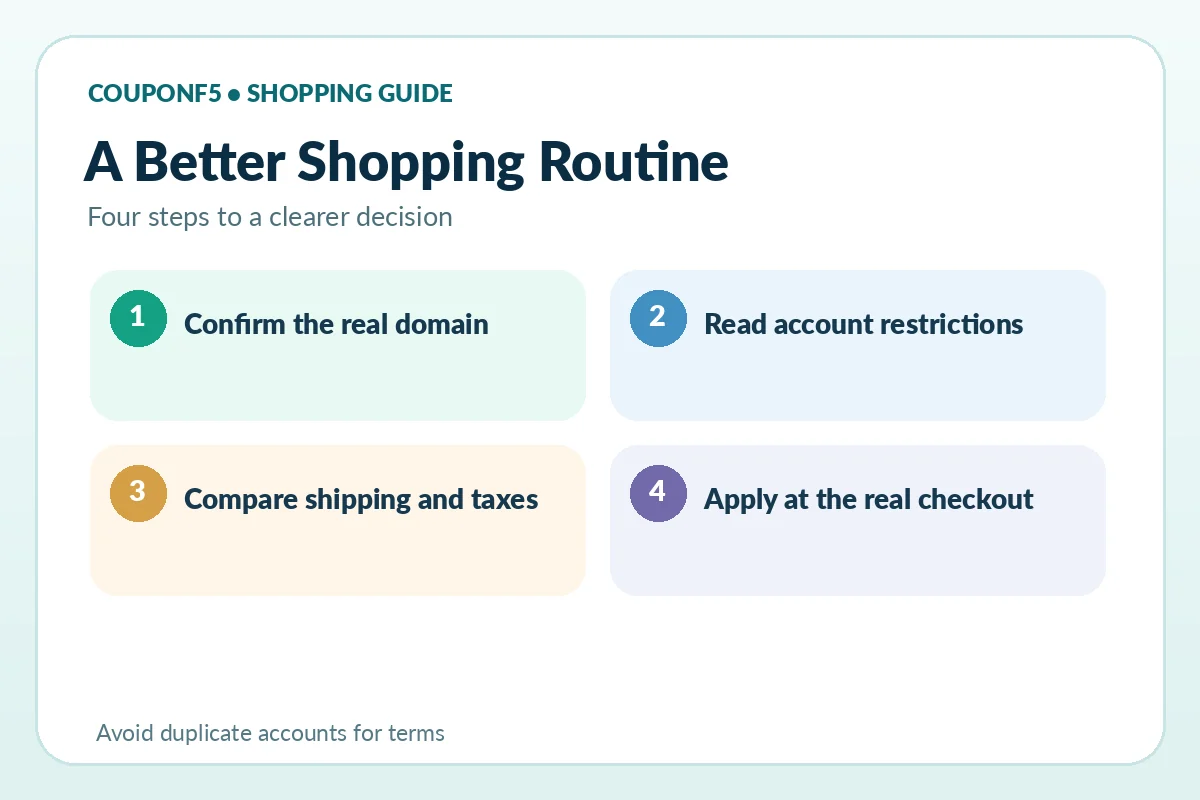
A Four-Step Welcome-Discount Routine
- Visit the real retailer and inspect official welcome promotions.
- Confirm first-order account and product eligibility.
- Compare the discount with shipping and existing prices.
- Verify the exact amount saved before placing an order.
Frequently Asked Questions
Does every online store offer a first-order coupon?
No. Availability, value and restrictions are decided by each retailer.
Do I need an account for a welcome discount?
Sometimes, depending on the merchant’s terms. Some codes work without registration; others are account-specific.
Can I combine a welcome code with a sale?
Only if the merchant permits the specific combination and products qualify.
Should I make another account to receive a first-order offer?
Do not try to bypass a retailer’s eligibility rules. Use offers you legitimately qualify for.
The Bottom Line
Look for first-order offers through official merchant channels and verify the terms. A welcome coupon is valuable when it reduces a planned purchase without unwanted obligations or extra spending.