CouponF5 is an independent publisher. We may earn a commission when you purchase through our links, at no extra cost to you. Merchant terms apply.
In this guide
Coupons influence shopping decisions by changing how a purchase feels, not just how much it costs. A discount can make a product seem more valuable, create a sense of urgency or encourage extra items to reach a spending threshold. Those effects can be useful when the purchase is planned—and costly when the promotion starts driving the decision.
Understanding the psychology behind a coupon helps you separate a genuine price reduction from the feeling that you are missing out. The goal is not to avoid every promotion; it is to choose products deliberately and use discounts only when they support that choice.
Coupons Change the Price You Notice First
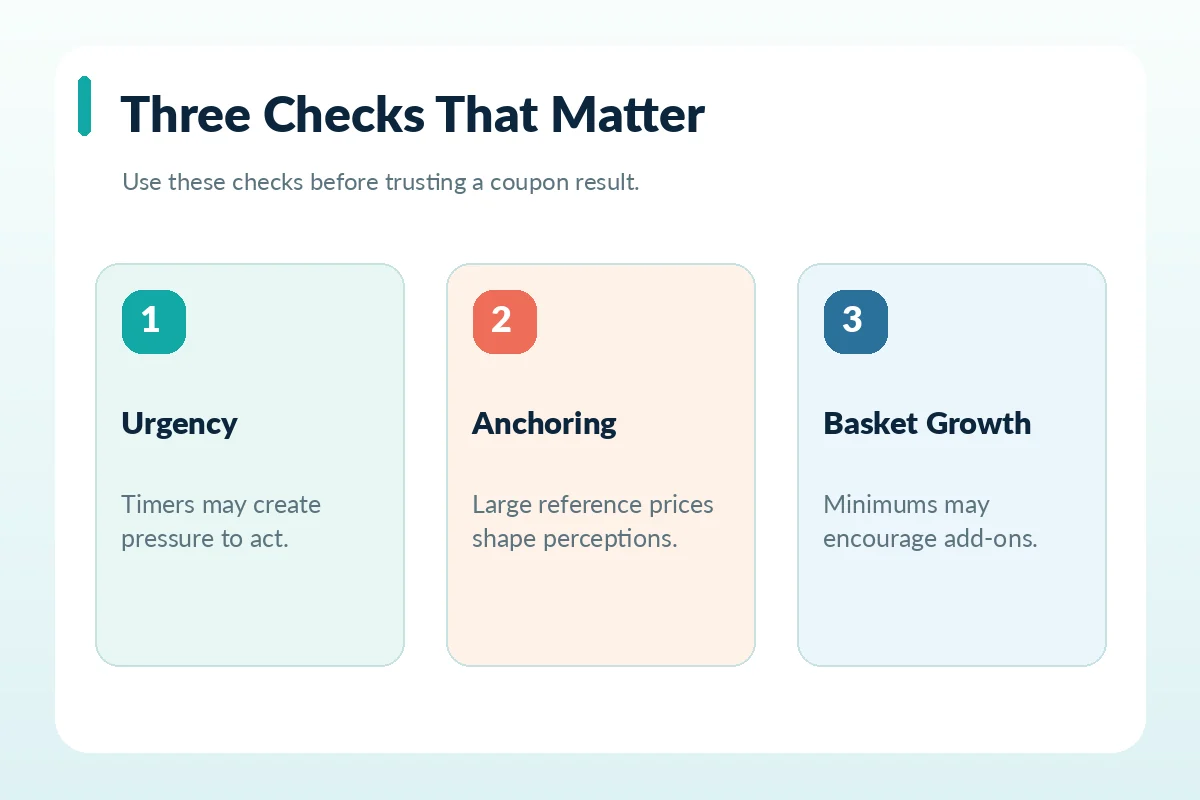
A shopper may see a large crossed-out reference price before noticing the final cost. This creates a reference point: a $100 item advertised as “reduced from $150” can feel more attractive than the same $100 item without the crossed-out label. That perception does not establish whether $100 is competitive.
Check prices for comparable products at credible retailers. A discount from an unusually high reference price may offer little real value even when the arithmetic is correct.
Percentage Framing Can Make an Offer Feel Bigger
People often react to the presentation of a discount. “30% off” may seem more impressive than “save $9,” even when both describe the same reduction on a $30 eligible item. Translate the headline into dollars and compare with the full price after shipping and other charges.
One peer-reviewed study of 3,827 online grocery customers in an Australian retail context found that percentage-framed general coupons were associated with larger baskets and more spending relative to dollar-off coupons. This finding is specific to that study’s customers and setting; it does not mean every consumer responds the same way.
Urgency Can Speed Up an Unplanned Purchase
Countdown clocks, “today only” messages and low-stock warnings can increase pressure to decide immediately. Some deadlines reflect genuine retailer campaigns, but an unsupported or resetting timer can manipulate the decision.
The OECD describes urgency messages and hidden information as examples of online dark patterns. Treat a timer as information to verify, not a reason to abandon ordinary questions about product fit, total price and return terms.
Minimum Spend Creates a Reason to Add More
Imagine a planned $45 cart and an offer for $10 off a $60 qualifying order. Adding a $20 item just to redeem the code produces $65 in merchandise before the reduction, or $55 afterward—$10 more than the original purchase. The coupon worked, but the change in behavior increased spending.
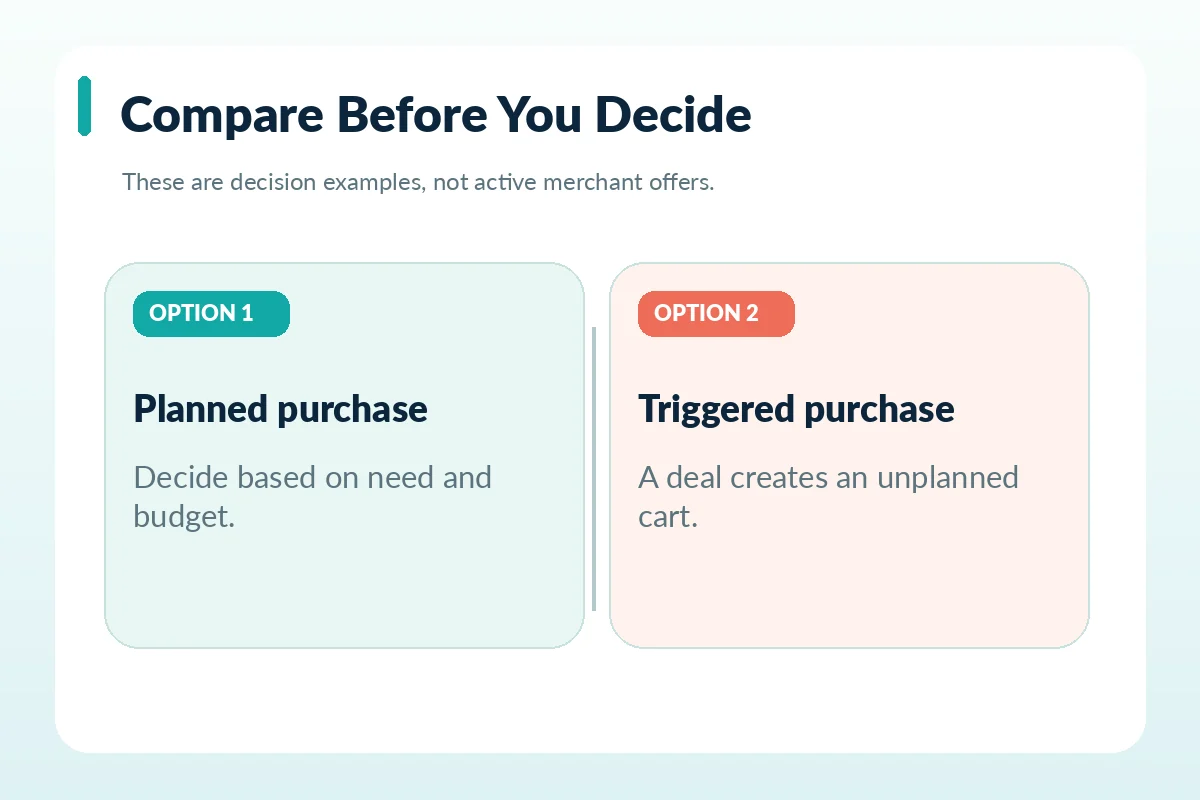
The decision is different if the extra item was already needed. A sensible coupon should lower the cost of a planned basket, not create a new basket purely to activate savings.
The “Free Gift” Effect Is Not the Same as Cash Saved
A bonus product can make an offer feel generous. But its usefulness depends on whether you actually wanted the item and whether the qualifying purchase remains sensible. A free gift that adds clutter has less practical value than a reduction in the cash paid for something you needed.
Similarly, buy-one-get-one offers may be useful for products you use repeatedly but a poor choice if you only wanted one. Count the additional quantity as a cost or benefit based on your real needs.
How Coupons Can Shift Your Shopping Plan
Promotions can make shoppers switch brands, add items or choose a retailer they had not considered. Some of those changes can lead to better value. Others introduce product or service compromises. Compare the model, quality, delivery timing and returns separately from the coupon’s appeal.
Do not treat a coupon as proof that the seller is reliable. Search for independent seller information and verify the full checkout destination before paying.
How to Keep Your Decision Independent of the Coupon
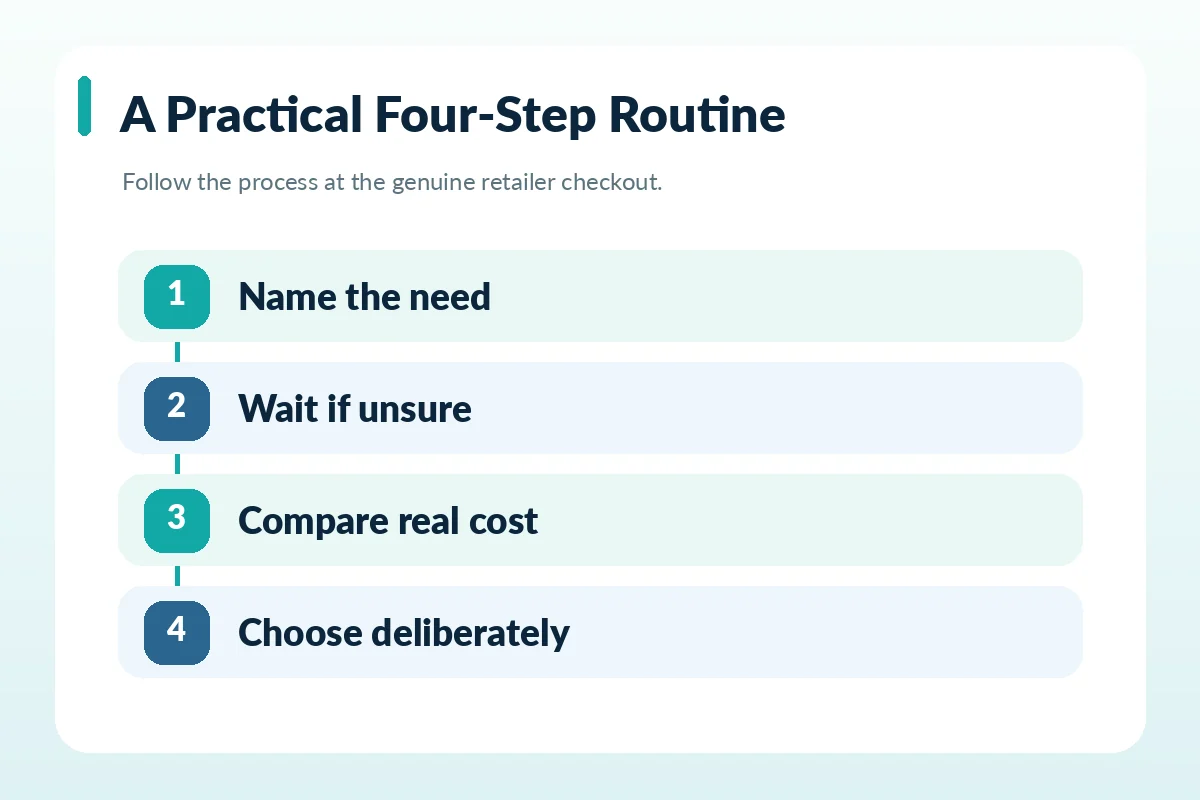
- Name the need. Write down the product or problem before browsing offers.
- Set a realistic maximum. Include shipping, taxes and any recurring costs.
- Ask the no-coupon question. Would you still buy the item at a reasonable price?
- Compare alternatives. Translate headline savings into actual dollars on eligible items.
- Delay if uncertain. For a nonurgent purchase, revisit after the initial excitement fades.
When Coupon Influence Is Helpful
Coupons can support a planned purchase, such as reducing delivery charges or lowering the cost of items already on a shopping list. A code does not become bad simply because it is persuasive. The useful distinction is whether it improves an existing decision or causes you to make a purchase you otherwise would not have made.
Respect the merchant’s terms and compare complete payable totals. A coupon that saves $10 on a needed item is different from a coupon that persuades you to spend $90 on something unnecessary.
Frequently Asked Questions
Can coupons make people spend more?
They can in some circumstances, particularly when they encourage larger baskets or unplanned purchases. The effect depends on the shopper and offer.
Why do big percentages feel attractive?
A large displayed number can make the promotion seem important, even though its dollar value depends on the qualifying amount.
Are countdown timers always misleading?
No. Some deadlines are real, but deceptive urgency can pressure decisions. Verify the terms and do not skip normal comparison steps.
How do I avoid discount-driven impulse buying?
Decide what you need first, set a budget, evaluate the final total, and pause when the offer creates an unplanned purchase.
The Bottom Line
Coupons can influence how you perceive value, time and spending. Notice the nudge, calculate the actual benefit and keep the original shopping goal in control.