CouponF5 is an independent publisher. We may earn a commission when you purchase through our links, at no extra cost to you. Merchant terms apply.
In this guide
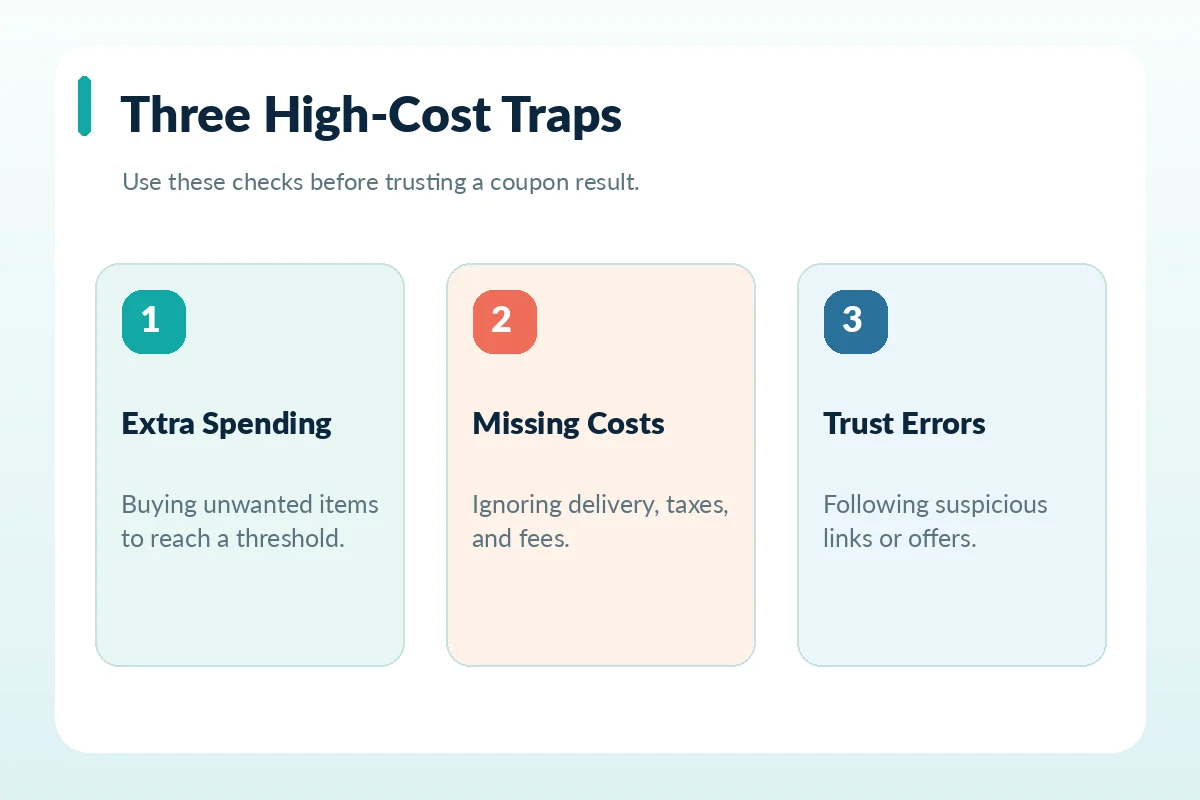
The most costly coupon mistakes are spending extra to qualify for a promotion, ignoring the final checkout total, and treating a large advertised discount as proof of a good price. A coupon can reduce an eligible line item while still leaving you worse off than if you bought only what you needed.
Here are ten distinct errors to watch for when shopping online, with practical ways to avoid them. The example prices below are hypothetical and do not describe current merchant offers.
1. Adding Unwanted Products to Reach a Minimum
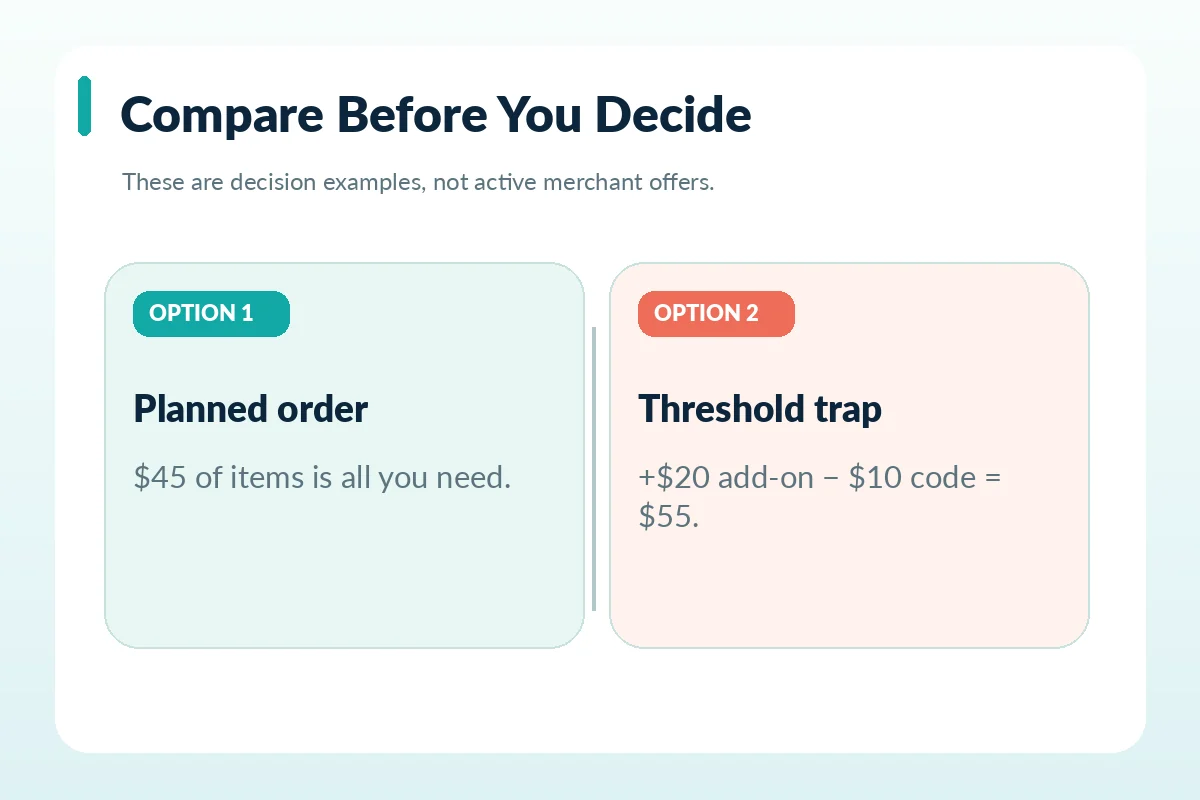
Suppose you intend to buy $45 of merchandise. To use a hypothetical $10-off code requiring $60 of eligible items, you add a $20 product you do not need. Your new merchandise subtotal becomes $65, and the discount reduces it to $55. You still spend $10 more than the original $45 plan.
If the additional item is genuinely needed, buying together may make sense. The mistake is counting an extra purchase as a saving simply because the discount amount appears on the receipt.
2. Comparing the Coupon to an Inflated Reference Price
A dramatic crossed-out price is not automatically a reliable benchmark. Compare the actual price with credible sellers offering the same model, size, and service. A product discounted from a stated $150 to $100 can still be poor value if the same product is normally available for $85 elsewhere.
Do not assume a “50% off” graphic means the seller is cheaper than competing merchants. The FTC recommends checking full prices and different sellers before buying.
3. Ignoring Shipping, Handling and Tax
A $10 coupon may look great until you see a $12 delivery charge that another seller does not impose. Taxes, handling and mandatory fees also belong in the comparison. The important number is the final amount payable for equivalent items and delivery conditions.
If you compare a pre-tax subtotal on one website with a final total on another, the result will be misleading. Evaluate the same checkout stage and actual destination when possible.
4. Forgetting Return Costs and Final-Sale Restrictions
Some sale or clearance items have different return windows, nonrefundable delivery fees or restocking charges. An item that might not fit is riskier when it cannot be returned. Check policies before the purchase, not after the coupon has encouraged you to click Pay.
Discounts do not automatically compensate for a product you cannot use or exchange.
5. Assuming the Entire Cart Is Eligible
A 20% code may exclude most of your items. On a hypothetical $100 cart where only a $30 product qualifies, the actual product saving is $6, not $20. Check the checkout lines before claiming the advertised rate applies to the order.
Likewise, a shipping coupon may only waive standard delivery, not the service you need. The terms define what you can save.
6. Ignoring an Existing Automatic Discount
When you enter a new code, some systems may reject it or replace another promotion. Do not assume stacking is always allowed. Try eligible alternatives and compare final totals rather than celebrating the number of coupon fields filled in.
Different stores have different combination rules, including restrictions on products already receiving discounts.
7. Using an Expired or Unverified Code as a Buying Reason
Search listings can remain visible after the campaign ends. A code that was reported working months ago may no longer qualify. Check current merchant terms and read the checkout response before relying on a planned discount.
An invalid code alone is not proof the coupon website is a scam, but it does mean the anticipated savings should not be included in your purchase decision.
8. Signing Up for an Unwanted Recurring Commitment
Some introductory offers apply to subscriptions or paid memberships. A discounted first shipment does not necessarily mean later deliveries are cheap. Review renewal pricing, cancellation terms, minimum commitments and any notice requirements before signing up.
If you need only one item, compare the one-time price with the total expected subscription cost. A low first-order price may not justify ongoing charges.
9. Letting Countdown Timers Dictate the Purchase
Urgency can make an offer feel more valuable than it is. Some limited-time promotions are genuine, but deceptive or resetting timers can mislead consumers about availability. The OECD describes countdown timers and hidden information as examples of design tactics that can pressure online shoppers.
For nonurgent items, give yourself permission to compare other stores or wait. A false sense of urgency should not replace product research.
10. Treating a Coupon Site or Link as Automatically Trustworthy
Some coupon directories are useful, but a familiar logo and a “verified” badge do not prove a merchant link is genuine. Check the destination domain before entering personal information. Avoid installing unknown software or providing passwords just to reveal a code.
The savings from an ordinary coupon are not worth exposing sensitive account information to a suspicious third party.
What a Better Coupon Routine Looks Like
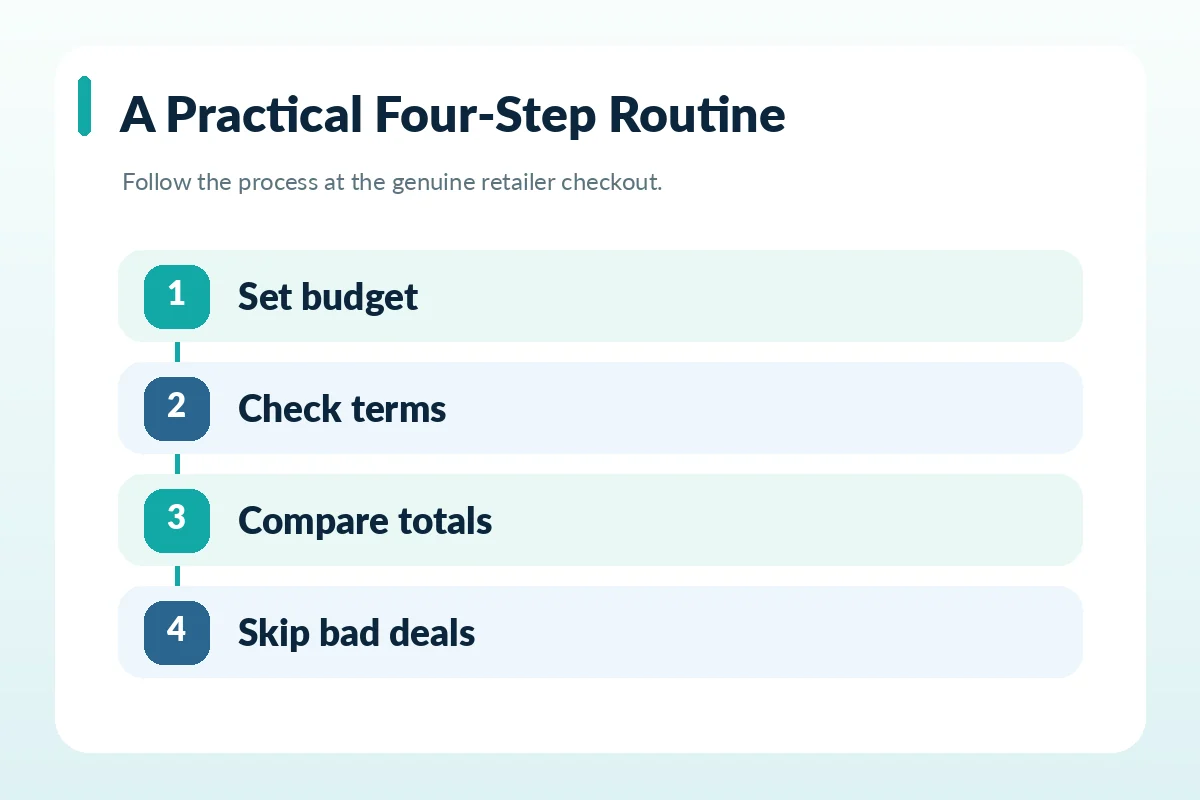
- Decide which products you actually need.
- Compare credible retailers and full delivery costs.
- Read the code’s eligibility, timing and combination rules.
- Check the discount in the real merchant’s order summary.
- Stop if the total or obligations no longer fit your plan.
Frequently Asked Questions
Is using coupons always worth the effort?
No. They are useful when they reduce a planned purchase without extra spending, risk or unwanted obligations.
Why do minimum-spend coupons cause overspending?
They can encourage adding items you would not otherwise buy, erasing part or all of the discount.
Is a failed coupon necessarily fake?
No. It may be expired, limited or ineligible for your particular cart.
What is the most reliable measure of savings?
Compare the final amount you pay for the same planned products under comparable delivery and return conditions.
The Bottom Line
A good coupon reduces the cost of a purchase you already wanted. Resist threshold traps, read the terms, compare full prices and keep the final total—not the discount headline—at the center of your decision.