CouponF5 is an independent publisher. We may earn a commission when you purchase through our links, at no extra cost to you. Merchant terms apply.

In this guide
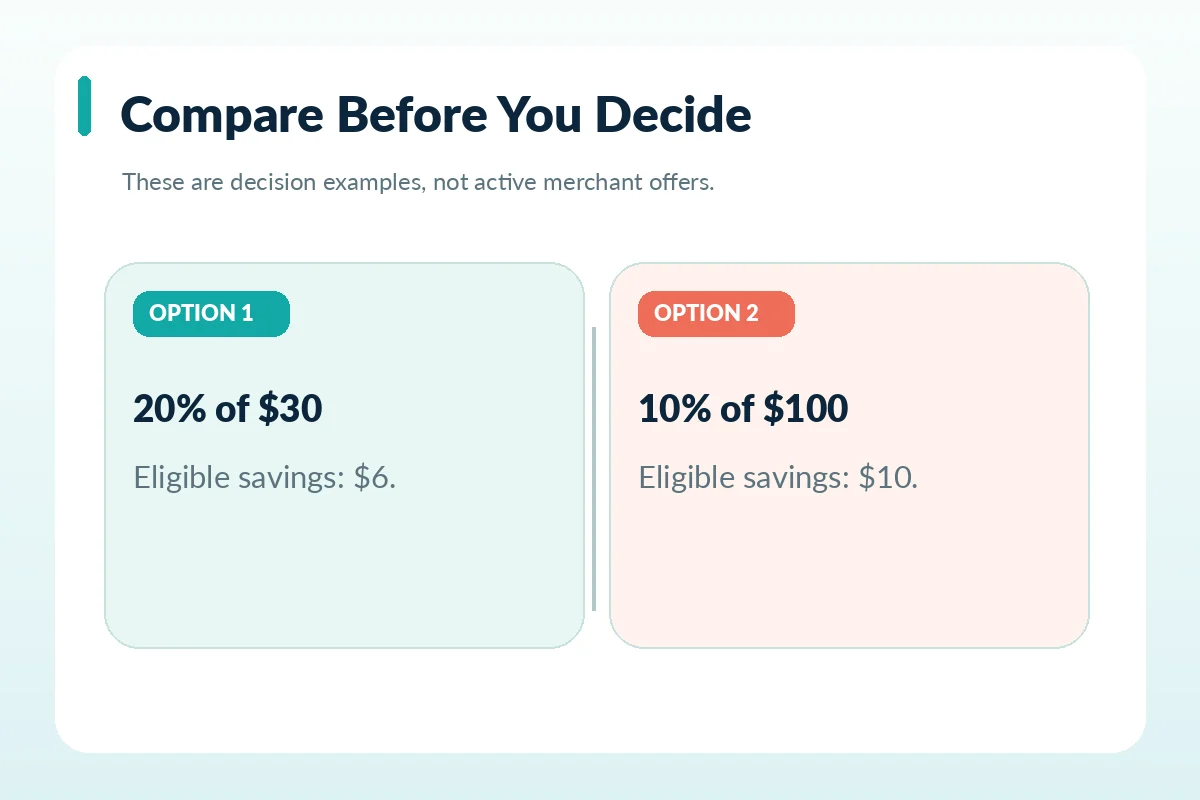
A bigger discount does not guarantee a better deal because the percentage is only one part of the calculation. The actual savings depend on the eligible price, exclusions, maximum discount, shipping charges and what comparable sellers charge. A 30% coupon on a $20 qualifying item saves $6, while a 10% coupon on a $100 eligible purchase saves $10.
Those two illustrative purchases are not substitutes for each other, but the math demonstrates why the headline rate alone cannot tell you the value of an offer. Here is how to compare discounts more carefully before paying.
1. The Eligible Price Base Matters
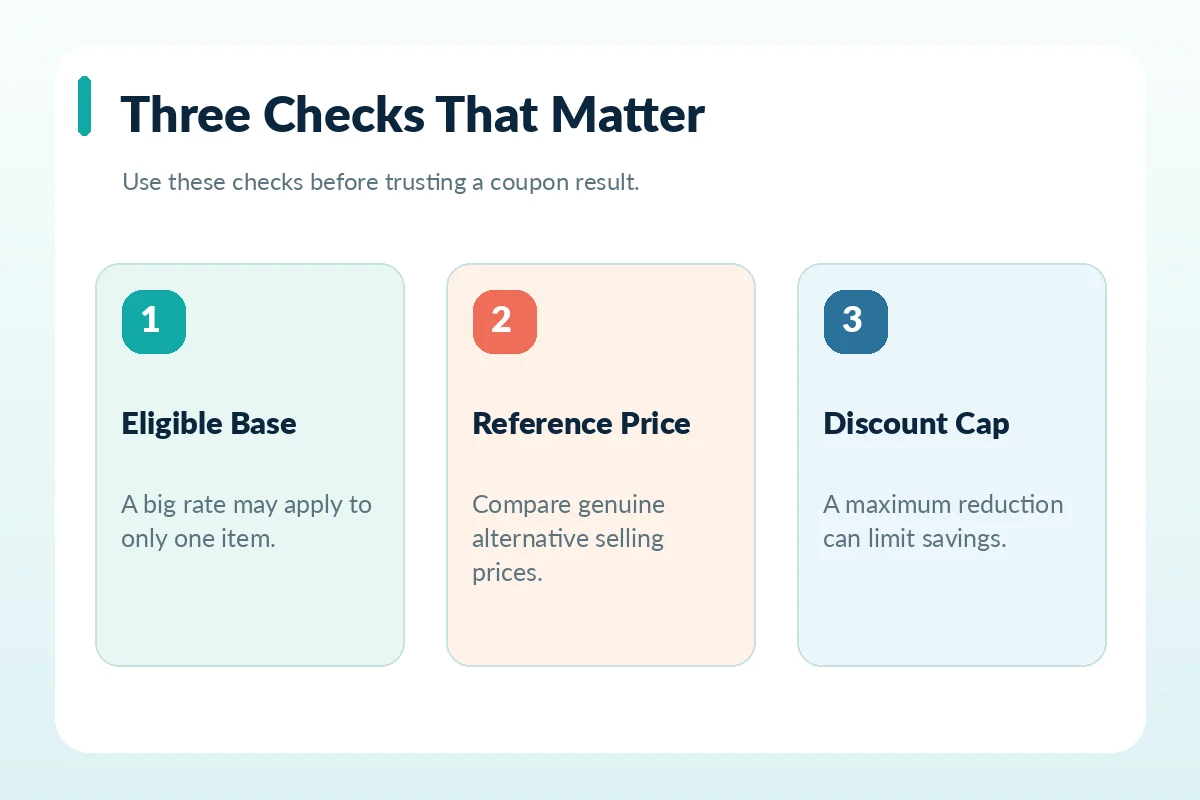
Percentage savings are calculated on qualifying merchandise, which may be only part of a cart. If a store advertises 25% off but restricts it to a $24 accessory in a $200 order, the reduction is just $6 on that eligible item. A different 10%-off order code could be more valuable if it covers the full qualifying subtotal.
Ask which products, collections or variations qualify. Do not multiply the headline rate by the entire basket without reading the terms.
2. Fixed-Dollar Discounts Can Beat Larger Percentages
On a $60 eligible order, a $12-off coupon is worth $12. A 15% offer saves $9. On a $100 eligible order, 15% saves $15 and exceeds the fixed amount. The break-even subtotal equals the fixed discount divided by the percentage rate written as a decimal: $12 ÷ 0.15 = $80.
The calculation assumes both promotions apply without caps, minimums or incompatible discounts. A theoretically better coupon is useless if your order does not qualify for it.
3. A Cap Can Shrink a Large Percentage Offer
Suppose a hypothetical promotion says “30% off, up to $15.” On $100 of eligible merchandise, 30% would normally save $30, but the cap reduces the benefit to $15. A separate $20-off coupon may be better if it is eligible under comparable conditions.
Read phrases like “up to” closely. They can describe a maximum savings amount, limited product set or another condition rather than a guaranteed deduction.
4. The Starting Price May Be Poor
A sale banner might show a large reduction from a reference price even though competing stores already sell the same item for less. Suppose a retailer presents a hypothetical “40% off” price of $90, while an independent credible seller has the identical product for $82 before comparable shipping. The larger discount label does not make the $90 price better.
FTC pricing guidance distinguishes genuine former-price comparisons from fictitious or inflated reference prices. Rather than assuming every merchant’s comparison price proves savings, check what the same item realistically costs across credible sellers.
5. Delivery Charges Can Reverse the Winner
Consider two hypothetical sellers with identical items. Store A offers a $15 item discount but adds $13 shipping. Store B offers a $10 reduction and $4 shipping. All else equal, Store B has the lower combined item-plus-shipping cost by $4 relative to Store A, even though Store A advertises the larger coupon amount.
Use the exact shipping method and delivery destination you would choose. Do not compare an express-delivery total at one store with a standard-delivery subtotal at another without noticing the difference.
6. Minimum-Spend Rules Can Create Extra Spending
A generous coupon may require a larger basket than you planned. Adding an unwanted $25 item to unlock $15 off leaves you spending $10 more on merchandise than your original plan, assuming the purchase qualifies. The discount exists but does not save money on what you wanted.
A threshold can be worthwhile if it matches items you truly needed. The mistake is interpreting a savings banner as a reason to buy unnecessary goods.
7. The Seller, Product and Return Terms Matter
Some large advertised discounts are attached to outdated models, unwanted variants or items with restrictive return terms. Check product condition, compatibility, delivery estimates, warranty handling and return costs. A larger discount on the wrong product does not create better value.
The FTC’s comparison-shopping advice emphasizes full costs and seller research. A bargain is not established merely because a price tag has a big number crossed out.
8. An Automatic Discount May Already Be Better
A typed coupon can be incompatible with a retailer’s existing promotion. Some systems select the best permitted combination; others reject a code. Inspect the actual checkout totals before and after entering it, rather than assuming the percentages add together.
When an offer is not valid for your cart, its advertised magnitude has no practical value for that transaction.
A Better Way to Judge Discount Value
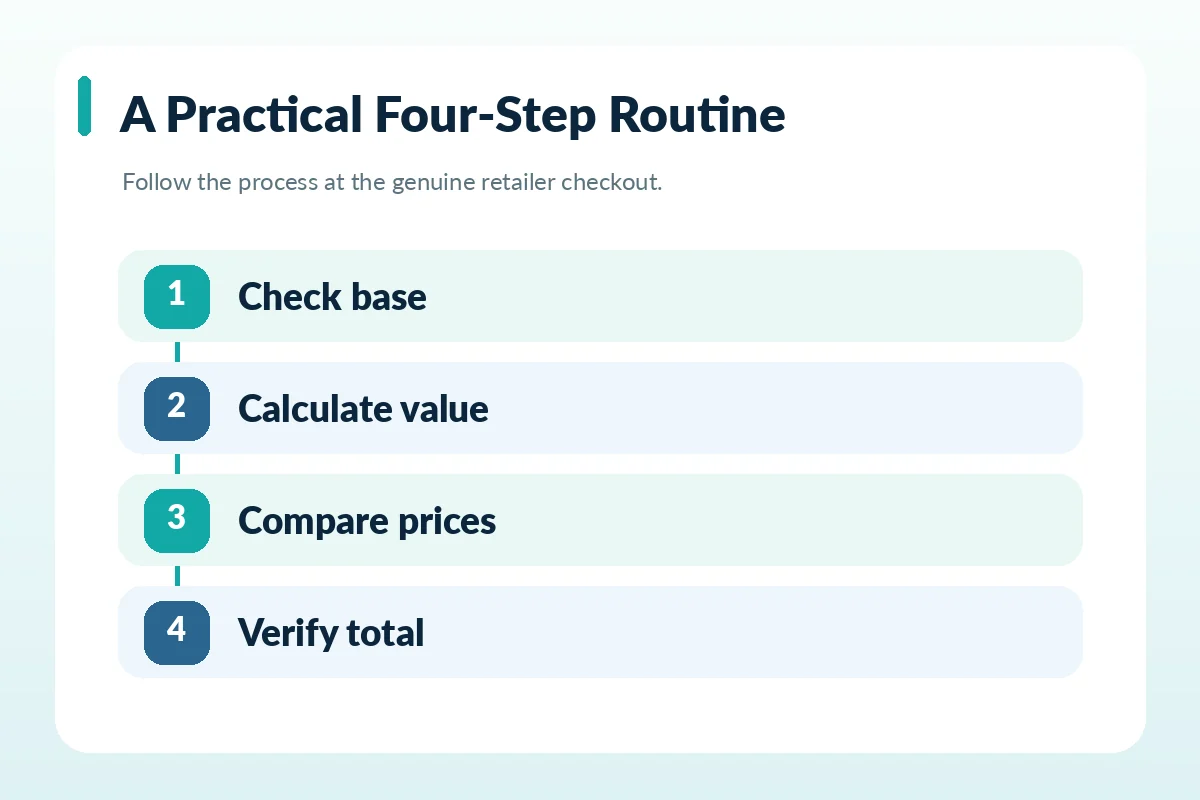
- Compare the same exact product with trustworthy alternatives.
- Calculate savings on the actually eligible items.
- Apply any cap, minimum, tax or shipping restriction.
- Check return and delivery conditions.
- Choose the lower final payable total without unwanted purchases.
Frequently Asked Questions
Is 30% off always better than 20%?
No. Different eligible amounts, caps and costs can change which offer has more value.
How do I compare discount percentages?
Multiply each percentage by its eligible price base, then compare complete checkout totals.
Is a huge crossed-out price proof of a bargain?
No. Compare the actual selling price with other credible sellers and relevant recent prices.
Does free shipping change the comparison?
Yes. The waived delivery fee can exceed a merchandise discount, depending on the cart and terms.
The Bottom Line
Judge deals by real, eligible dollar savings and the full purchase experience. Big percentages can be useful, but they do not replace careful comparison of prices, restrictions and total cost.