CouponF5 is an independent publisher. We may earn a commission when you purchase through our links, at no extra cost to you. Merchant terms apply.
In this guide
To compare deals across different online stores, start with the same exact product and calculate each retailer’s complete checkout total after eligible coupons, shipping, taxes, and other required fees. Then consider delivery time, return terms, and seller reliability. The lowest advertised price is not always the best purchase.
Comparing stores becomes especially important when one has an attractive discount code but another has a lower regular price or cheaper delivery. A simple side-by-side table can stop headline promotions from distracting you from what you will actually pay.
1. Match the Product Before Comparing Prices
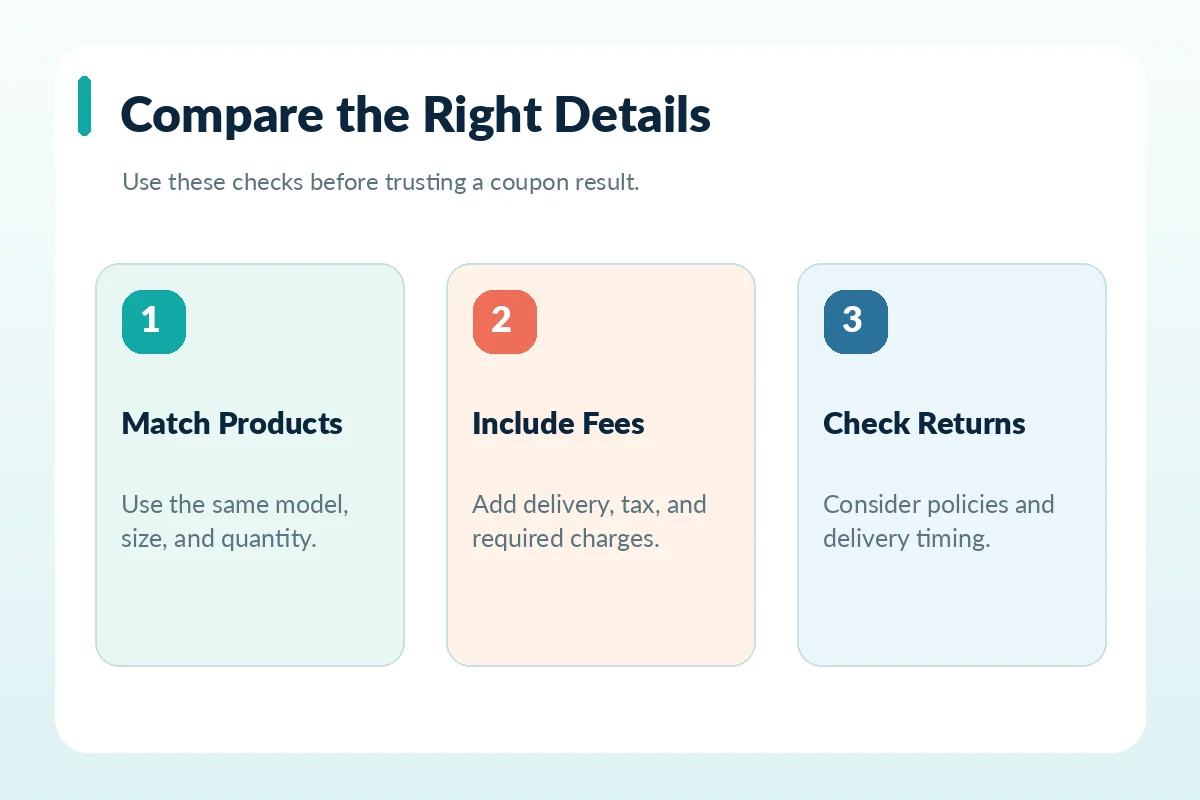
Use the same manufacturer, model number, size, color, quantity, and included accessories. Similar-looking products can differ in material, storage capacity, warranty coverage or bundled components. A cheaper variant is not automatically a bargain if it does not meet your requirements.
For services or subscriptions, compare the same term length and features instead of treating a first-month promotional price as equivalent to an annual plan. Write down the differences that might matter to you.
2. Identify a Credible Seller
Before comparing coupons, establish that the retailer is genuine. Read return and contact information and seek independent reports from several sources. Be wary of a dramatic price on an unfamiliar site that only accepts hard-to-reverse payment methods.
The FTC recommends checking seller and product information, being skeptical of ratings, and searching a company’s name with terms such as “complaint” or “scam.” Those checks are especially relevant when a marketplace seller or a new online shop is unfamiliar.
3. Calculate the Complete Price
Record merchandise, item-level discounts, shipping, handling, taxes, and other unavoidable charges. Use the destination and delivery service you would actually choose. A retailer offering free shipping may still charge more for the item, while a coupon may apply only to one qualifying product.
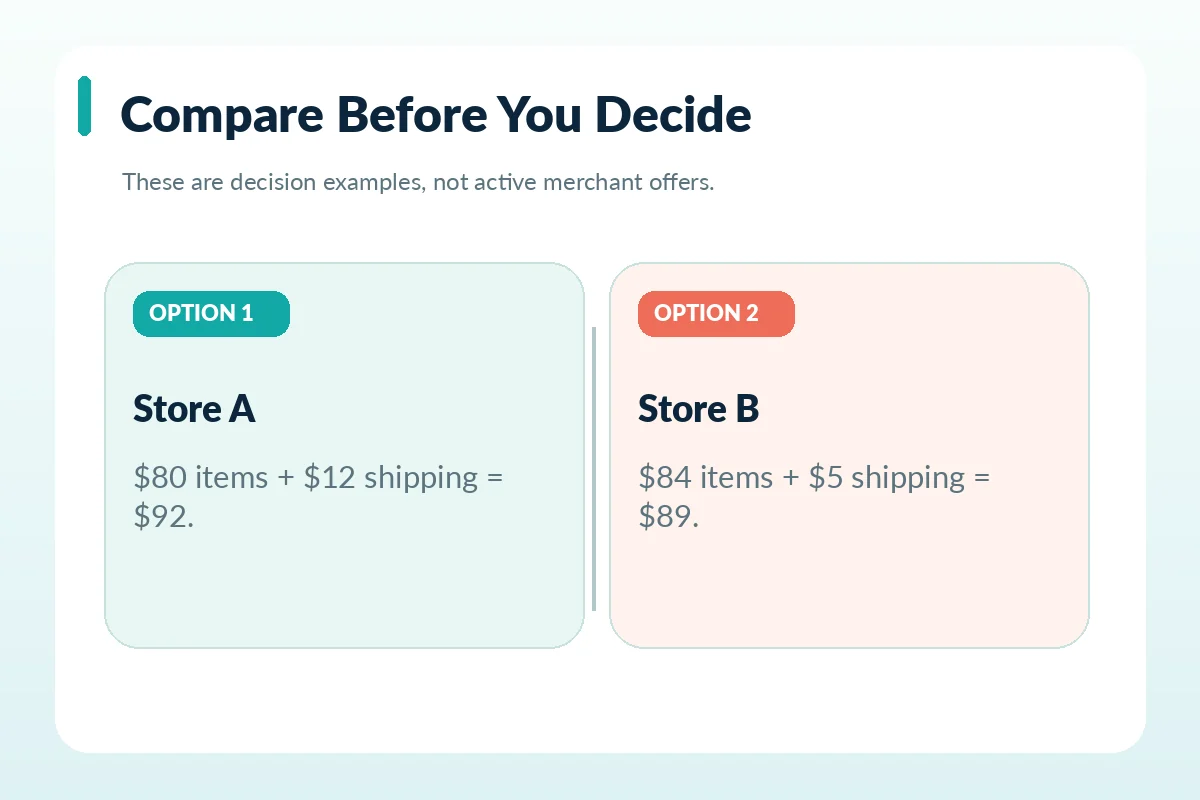
Here is a hypothetical comparison, excluding taxes because they can vary by destination and transaction: Store A charges $80 for the item plus $12 shipping, totaling $92. Store B charges $84 plus $5 shipping, totaling $89. Store B is $3 cheaper despite the higher item price.
| Comparable cost | Store A | Store B |
|---|---|---|
| Merchandise | $80 | $84 |
| Shipping | $12 | $5 |
| Total before tax | $92 | $89 |
The prices are examples, not retailer quotes. Always confirm live amounts before paying.
4. Compare Coupon Rules Rather Than Headline Discounts
A store advertising 20% off may exclude the exact item you want. Another may offer a smaller but genuinely applicable fixed-dollar code. Check dates, qualifying subtotal, account eligibility, discount caps, and whether an automatic sale already applies.
For each retailer, calculate the final payable amount after the best permitted offer. Do not add multiple coupon values together unless the merchant’s checkout actually permits stacking.
5. Include Delivery Reliability and Timing
Standard shipping, expedited delivery and pickup may have different prices and delivery estimates. If you need an item for a particular event, a cheaper option that arrives too late may have little value. Check whether delivery dates are estimates or guarantees and whether tracking is available.
Also compare the full cost of express shipping if you intend to use it. A “free shipping” promotion may only cover the slowest service and therefore not meet your needs.
6. Study Returns, Refunds and Warranty Service
Before choosing the cheaper seller, check how long you have to return an item, who pays return postage, whether restocking fees apply, and whether clearance products are final sale. Review the manufacturer’s warranty and the seller’s stated service obligations separately.
Some deals are attractive only if you are certain you will keep the purchase. If fit, compatibility or satisfaction is uncertain, a slightly more expensive seller with workable returns may offer a better practical outcome.
7. Avoid Misleading Comparison Shortcuts
Do not assume a crossed-out reference price proves a product is cheaper than competitors. Do not compare one seller’s before-tax total with another’s final checkout. And do not treat affiliate comparison rankings as independent unless the website explains how it selects and orders sellers.
Make a small spreadsheet or note with seller name, item specification, checkout total, arrival estimate, return window, and anything unusual. You can often eliminate inferior options quickly.
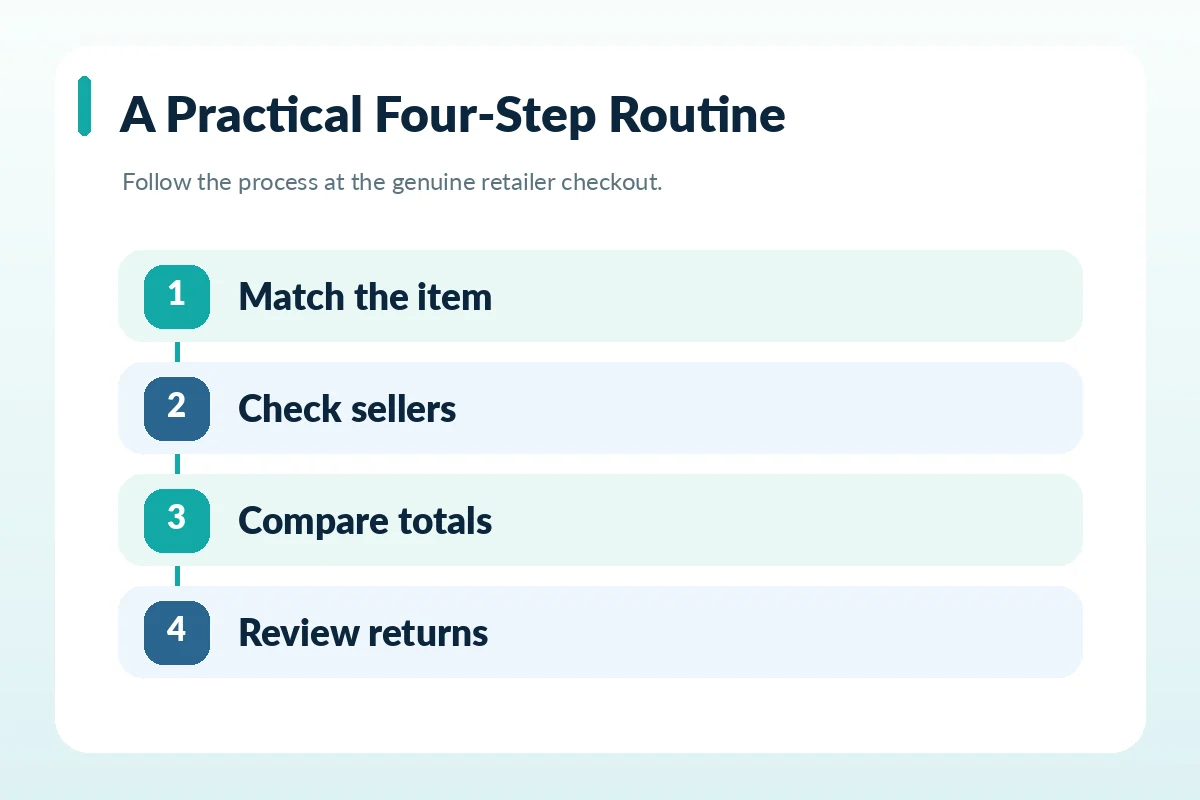
A Four-Step Store Comparison Method
- Match the identical product and confirm each seller is legitimate.
- Apply only eligible offers and calculate all required charges.
- Compare shipping timing, return terms and service.
- Choose the option that best fits your budget and actual needs.
Frequently Asked Questions
Is the lowest item price always the best deal?
No. Shipping, fees, delivery timing and returns can change the total value of the purchase.
Should I compare before or after applying coupons?
Compare complete, realistic totals after any eligible coupon or automatic discount at each store.
What if two stores have similar final prices?
Consider delivery reliability, product fit, return policies, and seller reputation.
Can I compare offers with different shipping services?
You can, but describe the service difference rather than treating the orders as identical.
The Bottom Line
Use like-for-like products, full costs and credible sellers as the basis of deal comparison. A coupon can help, but the best store is the one that offers a trustworthy purchase at a total cost and service level that fit your needs.