CouponF5 is an independent publisher. We may earn a commission when you purchase through our links, at no extra cost to you. Merchant terms apply.
In this guide
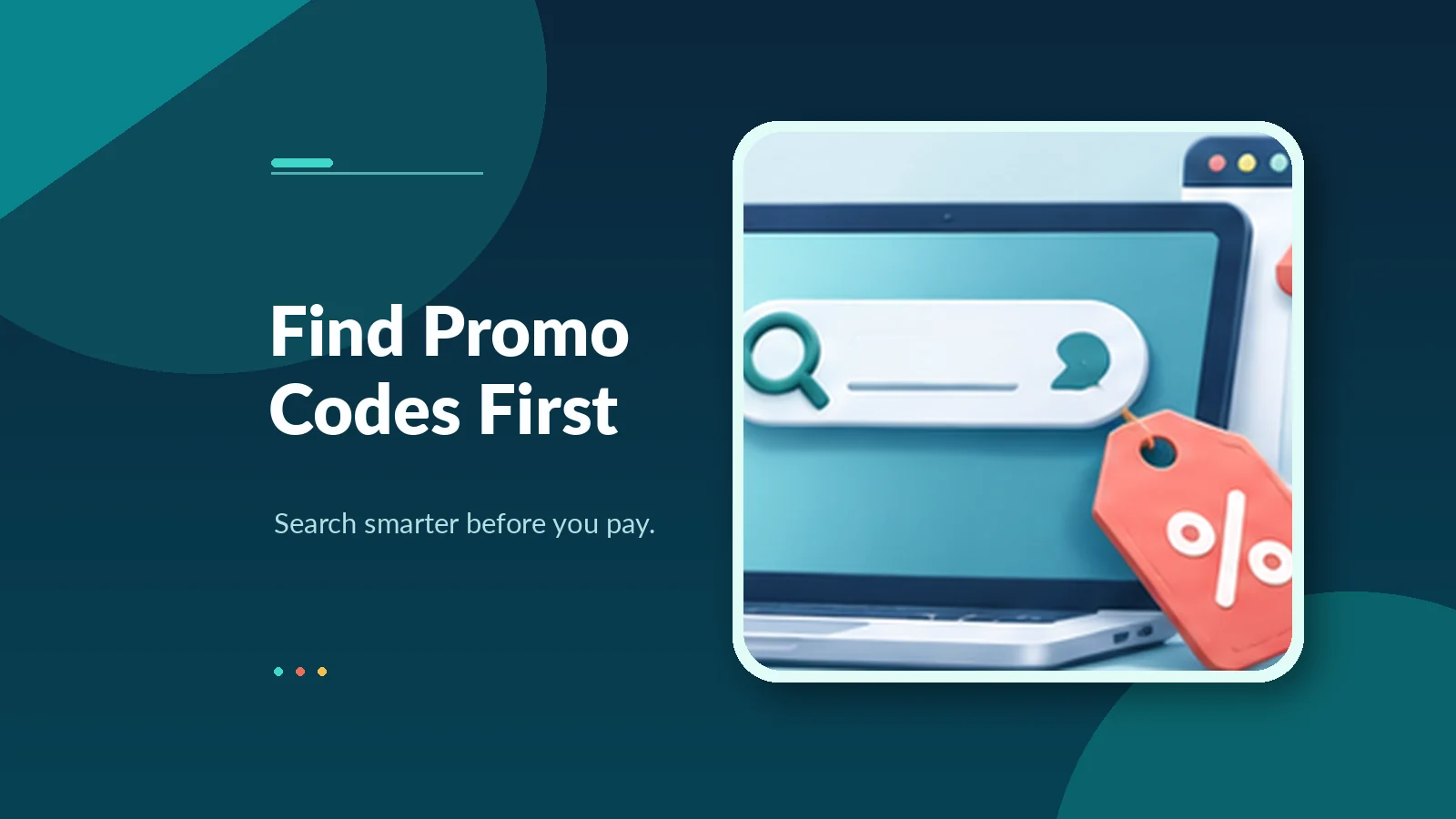
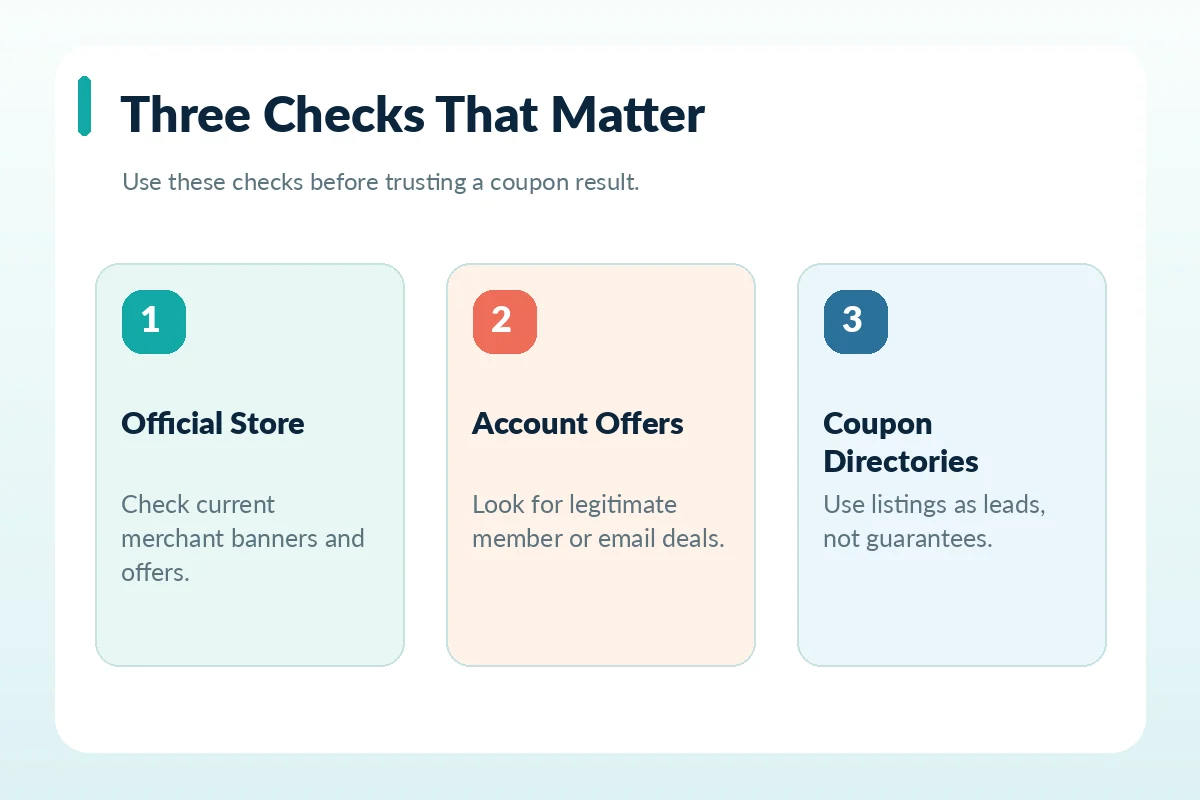
The quickest way to find promo codes before buying online is to check the store’s official offers first, then account or email promotions, followed by trustworthy coupon listings. Search for the merchant’s name plus “promo code” or “free shipping,” but treat search results as leads, not proof a code is usable.
A repeatable five-minute search is more useful than visiting dozens of questionable sites. It can help you find discounts on a purchase you already planned without relying on a code that expired months ago or demands unrelated personal information.
Start With a Specific Item and Store
Decide what you want to buy and which retailer you trust before looking for codes. Record the item price and expected delivery charge. Otherwise, a dramatic coupon headline can push you to change merchants or products without checking whether the replacement fits your needs.
For the same model sold at multiple stores, compare the initial prices and delivery conditions first. A coupon is only one part of the total cost and should not replace normal product research.
1. Search the Retailer’s Official Website
Look for current promotions in the store’s homepage banner, sale section, promotions page, or cart. Some merchants provide automatically applied offers, so there may be no code to copy. Product pages can also contain exceptions or a link to full terms.
Start by typing the store’s known address rather than following an unsolicited message. A familiar logo on a third-party coupon page does not prove the page belongs to the merchant.
2. Check Your Legitimate Store Account
If you already use the retailer, sign in through its real website and inspect the account’s offers, rewards, or wallet section. Member benefits, first-order discounts, and targeted campaigns may appear only after login.
Do not create unnecessary accounts to bypass a new-customer restriction. A code that is personalized for a recipient or account may not work for the general public even when it has been copied onto a coupon directory.
3. Review Emails You Actually Requested
If you opted into the brand’s messages, check recent promotion emails for a valid code and readable conditions. Look at the real sender and merchant domain rather than trusting the logo alone. Do not respond to an unfamiliar message asking for a password or payment details just to redeem a coupon.
Emails are not always current: a legitimate campaign sent last month can be expired now. Check the stated deadline and confirm at checkout.
4. Search Coupon Listings Carefully
A reputable coupon discovery site can surface potential offers, but its “verified” or “working” label may reflect a past observation rather than your order today. Check the listing’s date, minimum spend, eligible items, customer restrictions, and whether it points toward the real merchant.
If a website requires an unknown browser extension, payment, or sensitive personal information simply to display a supposed code, leave it. A normal promo-code search should not require you to surrender account credentials to a third party.
5. Use a Focused Search Query
Searches such as “[store name] promo code,” “[store name] free shipping,” or “[store name] first order offer” can reveal official pages and relevant listings. Add the product category when the promotion is likely to be restricted. Compare source dates because old articles often remain searchable after their codes expire.
The FTC advises comparison shopping and calculating total costs, including shipping and other fees. A lower product price from a credible seller can beat a coupon on a more expensive site.
How to Test a Found Code Without Paying
Add the products you actually want to the legitimate merchant’s cart, enter the exact code in the checkout field, and select Apply. Read the response and inspect the discount line. Stop before payment if you are only verifying whether the offer applies.
Shopify documentation confirms that merchants can configure validity dates, minimums, usage limits, product eligibility, and allowed combinations. A code can therefore exist and still be unusable on your order.
What Makes a Promo-Code Lead Worth Trying?
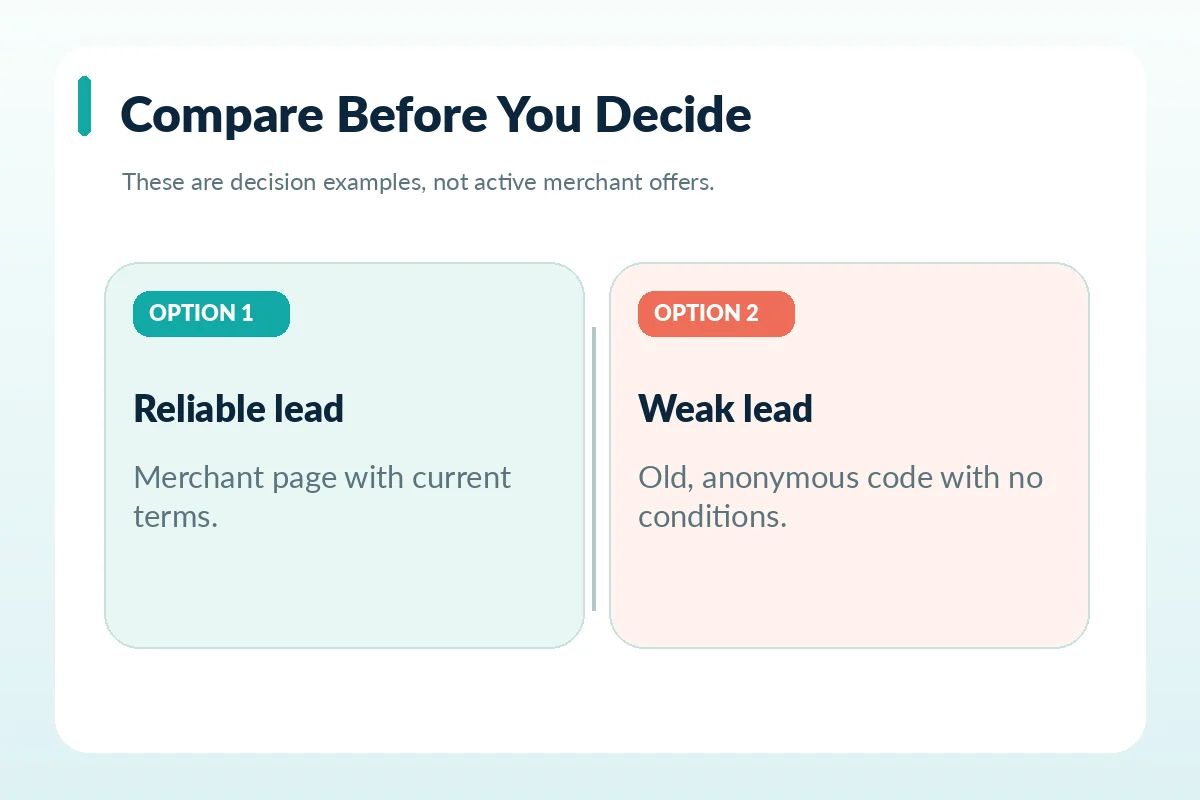
Prioritize a current merchant-issued promotion with clear terms and a direct route to the genuine checkout. A code with no date, no merchant source, and an implausible promise of unlimited savings deserves more skepticism. If the promotion is real but not relevant to your cart, skip it instead of buying extra things to qualify.
Consider the amount saved in actual dollars. Free shipping may be more useful than a modest product discount if your delivery costs are high, while a fixed-dollar reduction may beat a percentage on a small eligible subtotal.
A Fast Pre-Buying Search Routine
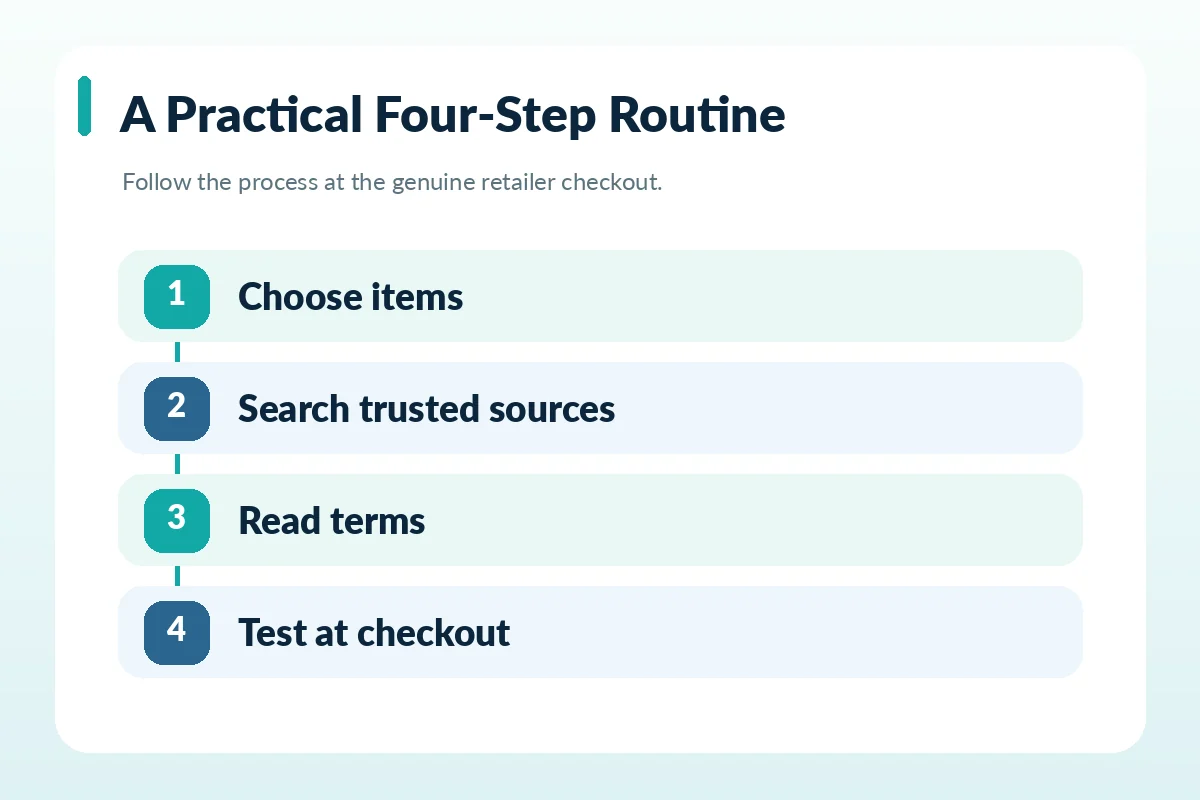
- Choose the item and record the realistic starting total.
- Check official store banners and account offers.
- Review recent merchant communications you requested.
- Use trustworthy coupon listings as additional leads.
- Confirm the eligible savings at the real merchant checkout.
Frequently Asked Questions
Are promo codes from search results guaranteed?
No. They can be outdated, restricted, or copied without the relevant terms. The merchant’s checkout determines whether they apply.
Do I need an extension to find codes?
No. Official store offers, email and account promotions, and a normal browser can be sufficient.
What is the safest place to start?
Use the retailer’s official promotions page or legitimate messages and accounts you already recognize.
What if there are no working promo codes?
Compare the regular final total with other credible stores rather than forcing a discount that does not apply.
The Bottom Line
Find promo codes through sources you can verify, and finish the search at checkout. A worthwhile code makes an intended purchase cheaper without adding risk or unnecessary spending.