CouponF5 is an independent publisher. We may earn a commission when you purchase through our links, at no extra cost to you. Merchant terms apply.
In this guide
Mago Maga
Roma Pro V1.6 Smart Home Coffee Roaster | Black Friday Event – 10% OFF (-$48.80)
The MAGO MAGA Roma Pro V1.6 roasts green coffee beans in small batches; it does not brew coffee.
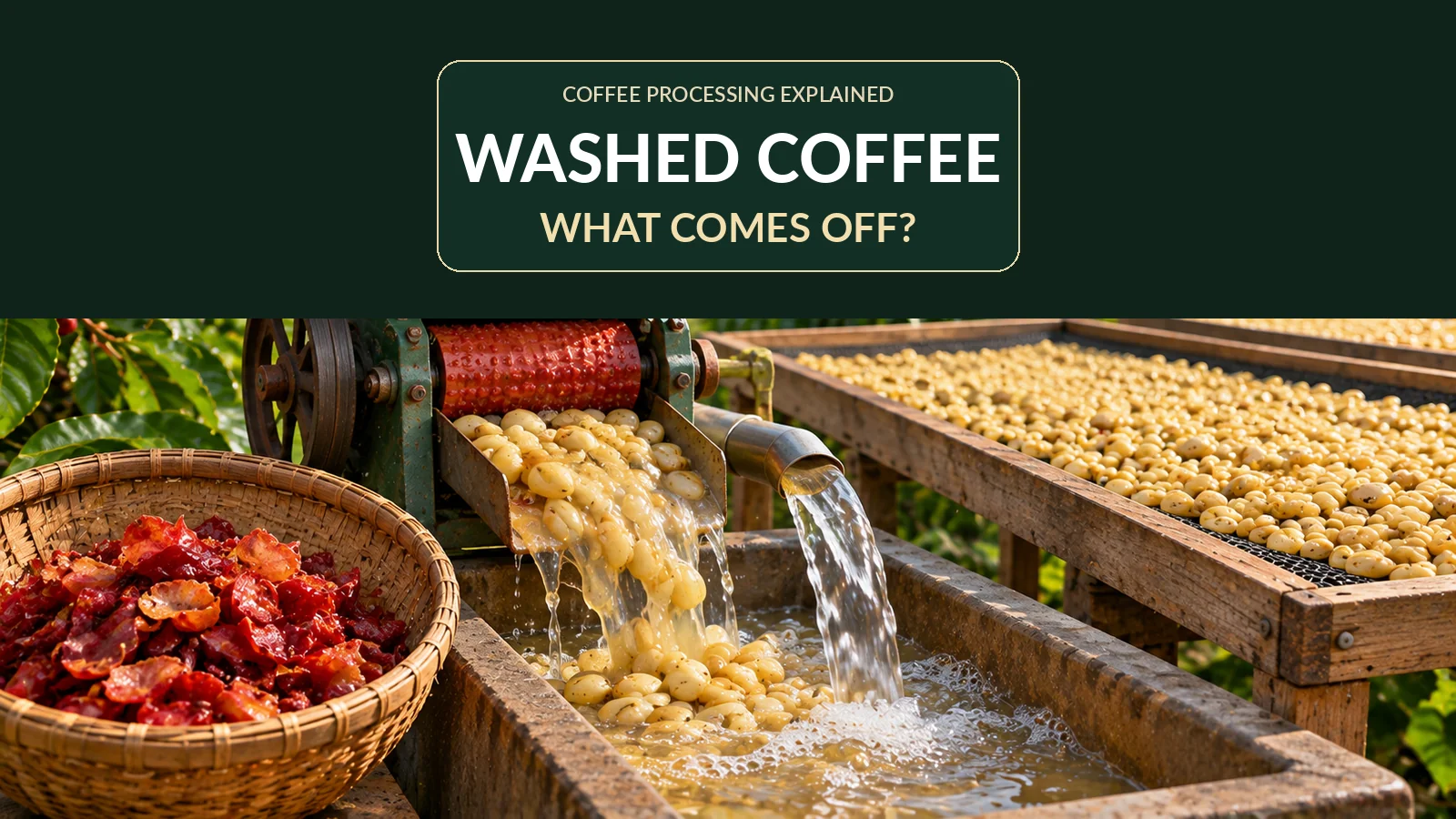
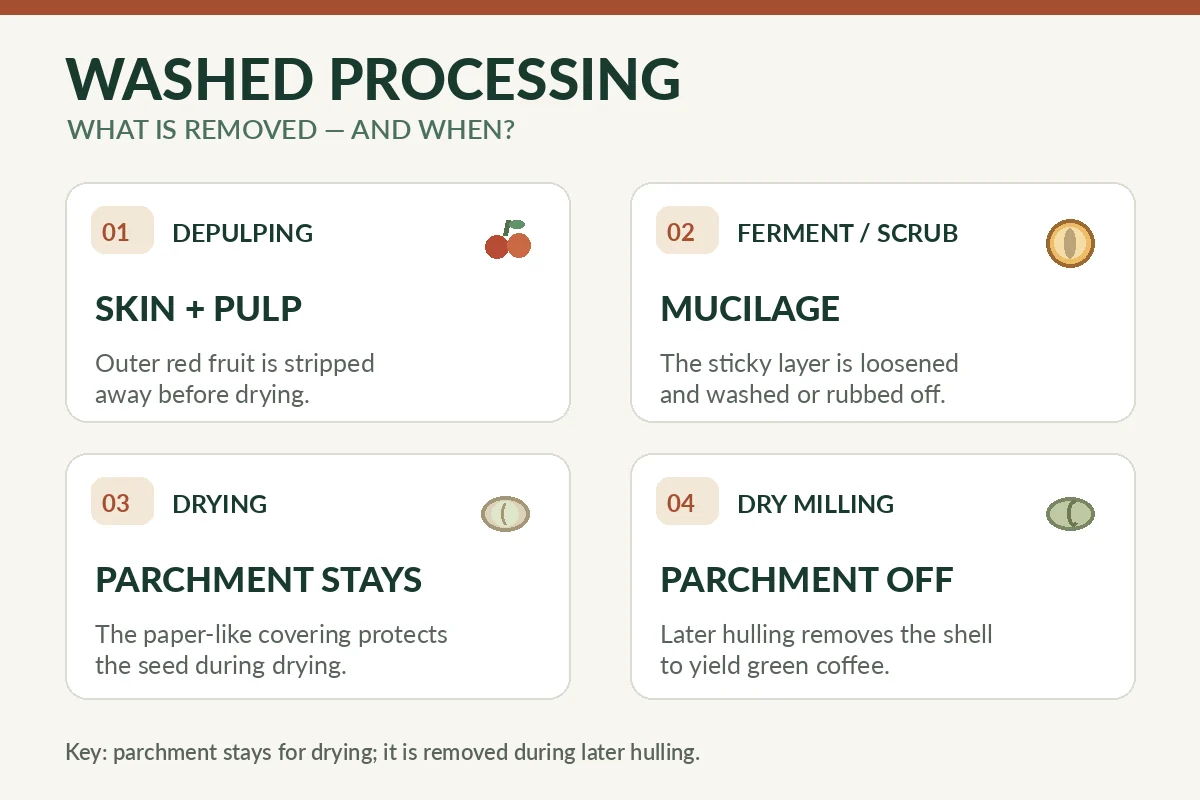
Washed coffee processing removes three main parts of the coffee cherry before drying: the outer skin, most of the fleshy pulp, and the sticky layer called mucilage. A pulper separates the skin and pulp; fermentation, mechanical action, and washing help remove mucilage. What is left is the coffee seed inside its thin, paper-like parchment covering. The parchment usually stays on during drying and comes off later at the dry mill.
That last detail is the most common misunderstanding. Washed coffee is not a bare green bean rinsed until it loses caffeine or acidity. It is a post-harvest method for separating fruit material and making stable green coffee that can eventually be roasted.
What are the layers of a coffee cherry?
Despite the word “bean,” the part we roast is a seed inside a fruit. Moving inward, a ripe coffee cherry has outer skin, fleshy pulp, sticky mucilage, a parchment-like endocarp, a thin silverskin, and usually two seeds. Not every layer is removed at the same moment.
The skin and pulp are the larger, visibly red or yellow fruit layers. Mucilage is a slippery, sugar- and pectin-containing coating clinging to the parchment after depulping. Parchment is a protective, papery shell around the seed, and silverskin is an even thinner covering that can remain on the green seed and partly detach during roasting.

Exactly what gets removed, step by step?
1. Depulping removes the skin and most pulp
Producers first sort harvested cherries and run them through a pulper. This machine separates the outer fruit from the parchment-covered seeds. Some mucilage remains attached, so the resulting material is still sticky. Depulping is a mechanical separation, not the same as removing every fruit-related substance from inside the seed.
2. Fermentation or mechanical demucilaging loosens the sticky layer
In a conventional fully washed process, microorganisms and enzymes help break down the mucilage over a controlled period. A producer can then wash away the loosened material. Other operations use mechanical demucilagers, sometimes alongside shorter fermentation, to rub off mucilage. The FAO’s Arabica processing manual describes these as different routes to preparing clean parchment coffee for drying.
3. Washing removes the loosened mucilage
Water is used to rinse away the remaining sticky layer and other loose fruit residues. Washing channels may also help separate material by density, depending on the mill. The purpose is not to dissolve the coffee seed. Removing surface mucilage changes the conditions under which the coffee dries, while fermentation and soaking may already have altered some compounds associated with the seed.
4. Drying removes moisture—but not the parchment shell
After washing, the coffee is dried, usually while the parchment remains intact. Drying reduces water content so the coffee can be stored more safely. Only later, during dry milling or hulling, does equipment remove the parchment. This distinction is also explained in the Specialty Coffee Association’s cherry-to-cup mass-flow overview.
What remains after washing?
At the end of the wet-mill washing step, the main remaining material is the coffee seed protected by parchment, sometimes with thin silverskin underneath. The seed still contains naturally occurring caffeine and many chemical components that later influence roasting and brewing. Washed processing is not decaffeination and does not wash away the coffee’s genetic identity, all acids, or all potential flavor.
It is also useful to separate two kinds of water removal: the final wash carries away loose mucilage, whereas the subsequent drying step evaporates moisture from the parchment coffee. Both affect the mass of the material, but they serve different purposes.
Does washed coffee still go through fermentation?
Often, yes. Traditional fully washed coffee can include a fermentation stage specifically to help loosen mucilage. That process involves yeasts and bacteria interacting with the fruit coating and processing environment. A mechanically demucilaged lot may remove much of the mucilage without the same conventional tank fermentation. Therefore, “washed” does not prove that fermentation never happened or that all washed coffees follow the same timeline.
Scientific work summarized by the Specialty Coffee Association’s fermentation research feature shows that microorganisms and the seed’s own metabolism can change compounds during wet processing. Washing or soaking may reduce some fermentation-related compounds at the seed surface, but it does not erase every chemical change that occurred beforehand. Those effects depend on the actual process and handling conditions.
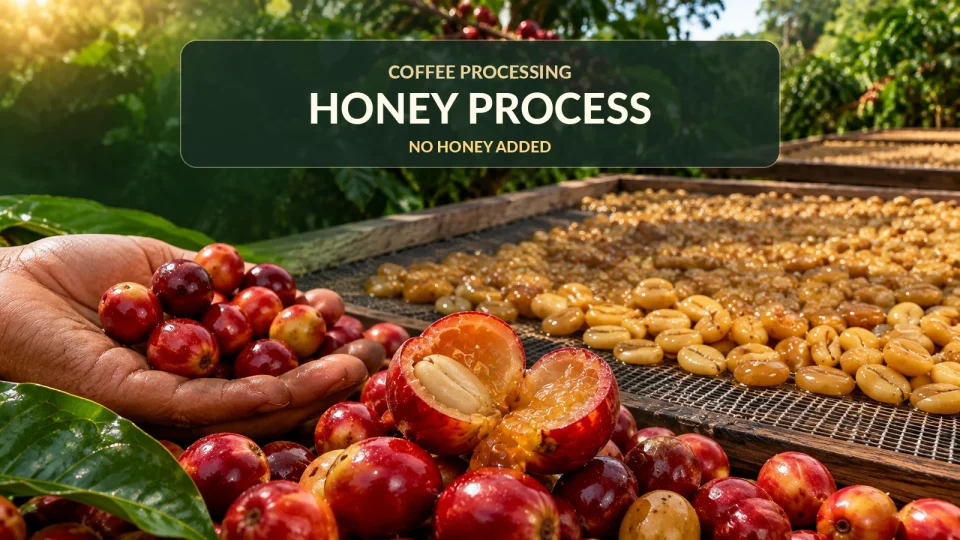
How is washed different from honey and natural coffee?
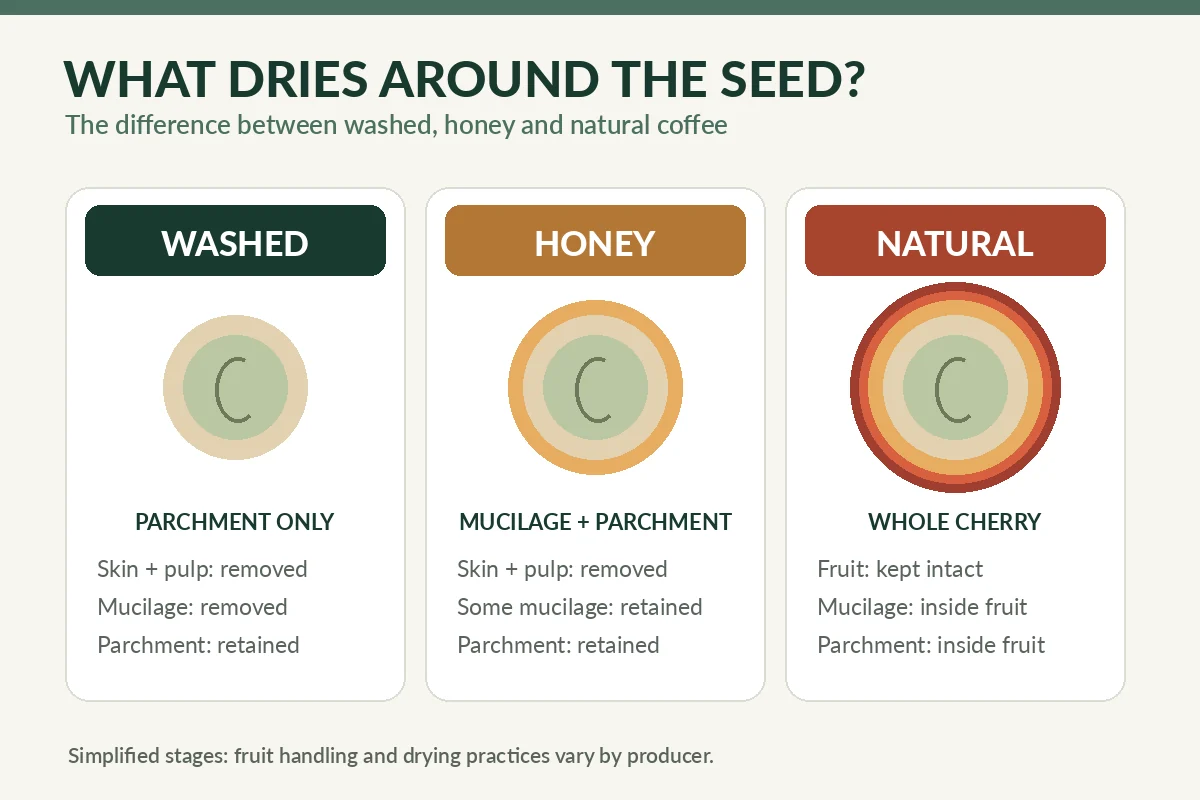
The clearest comparison is what surrounds the seed while it dries, not whether a cup will taste “clean” or “fruity.”
| Method | Removed before drying | What dries around the seed? |
|---|---|---|
| Washed | Skin, pulp, most mucilage | Primarily parchment |
| Honey | Skin and pulp; some mucilage | Parchment plus retained mucilage |
| Natural | Generally none of the outer fruit first | Whole cherry, including skin and pulp |
All three pathways eventually need suitable drying and milling to produce green coffee. The names describe broad approaches; individual farms may combine mechanical removal, fermentation, soaking, shade, and other variations.
Does removing the fruit make washed coffee taste cleaner?
Washed coffees are often described as having more distinct acidity, defined aromas, or less overt fruit-fermentation character than some natural lots. This can be a useful shopping clue, but it is not a guarantee. Coffee variety, harvest ripeness, microorganisms, drying consistency, roast development, and brewing all influence the cup. A washed Ethiopian coffee can still have vivid floral or berry notes, while a natural coffee can be balanced rather than intensely wine-like.
“Cleaner” in this context is a sensory description, not a claim that other processing methods are dirty or unsafe. Well-managed natural and honey coffees can be excellent. Conversely, washed processing can produce defects when fermentation, rinsing, water management, or drying are poorly controlled. No method automatically earns a higher quality score.
What happens to the removed pulp and mucilage?
These materials become processing by-products that farmers and mills must manage. Fruit pulp may be composted or directed to other permitted uses. The sugary, organic-rich water from washing and fermentation needs responsible handling because uncontrolled discharge can create environmental problems.
Traditional wet milling can require substantial water, but water use varies widely by equipment and local practice. Mechanical mucilage removers and water-reuse systems can reduce demand. The SCA’s discussion of water-saving mucilage removers explains why processors weigh water, labor, fermentation control, and cup quality together. The fact that coffee is called “washed” does not by itself establish the liters of water used on a particular farm.
Three questions to ask when buying washed coffee
- Was it fully washed or mechanically demucilaged? Both remove fruit layers, but fermentation and water-management steps may differ.
- What does the roaster actually taste? Use specific tasting notes, variety, roast, and producer information rather than assuming every washed coffee is acidic or delicate.
- Can you compare a matched lot? Washed and natural versions from the same farm and harvest make a more informative tasting comparison than unrelated coffees roasted differently.
If you’re starting with washed coffee, try it alongside another process using the same brew ratio and similar roast level. Note aroma, acidity character, sweetness perception, and finish separately from which cup you personally prefer.
Bottom line: washed removes fruit material, not coffee character
Washed coffee processing removes the outer cherry skin, pulp, and sticky mucilage before drying. It generally leaves the parchment around the seed until later hulling. The process helps prepare stable coffee for roasting, but it does not strip away caffeine or guarantee one flavor profile. Remember the sequence: depulp → remove mucilage → rinse → dry in parchment → hull. That sequence is more useful than imagining the green bean being scrubbed flavorless.
Editorial methodology: This independent educational article uses FAO guidance, Specialty Coffee Association research and mass-flow explanations, and peer-reviewed post-harvest processing studies checked November 21, 2026. We did not visit a wet mill, process a cherry lot, measure water use or blind-cup the coffees discussed. The featured art is conceptual, and the two inline diagrams simplify the process rather than document a specific farm.
Mago Maga
Roma Pro V1.6 Smart Home Coffee Roaster | Black Friday Event – 10% OFF (-$48.80)
The MAGO MAGA Roma Pro V1.6 roasts green coffee beans in small batches; it does not brew coffee.