CouponF5 is an independent publisher. We may earn a commission when you purchase through our links, at no extra cost to you. Merchant terms apply.
In this guide
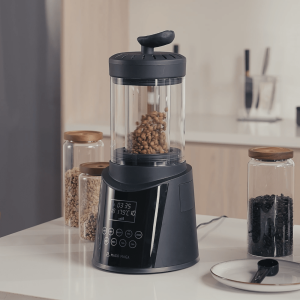
Mago Maga
Roma Pro V1.6 Smart Home Coffee Roaster | Black Friday Event – 10% OFF (-$48.80)
The MAGO MAGA Roma Pro V1.6 roasts green coffee beans in small batches; it does not brew coffee.
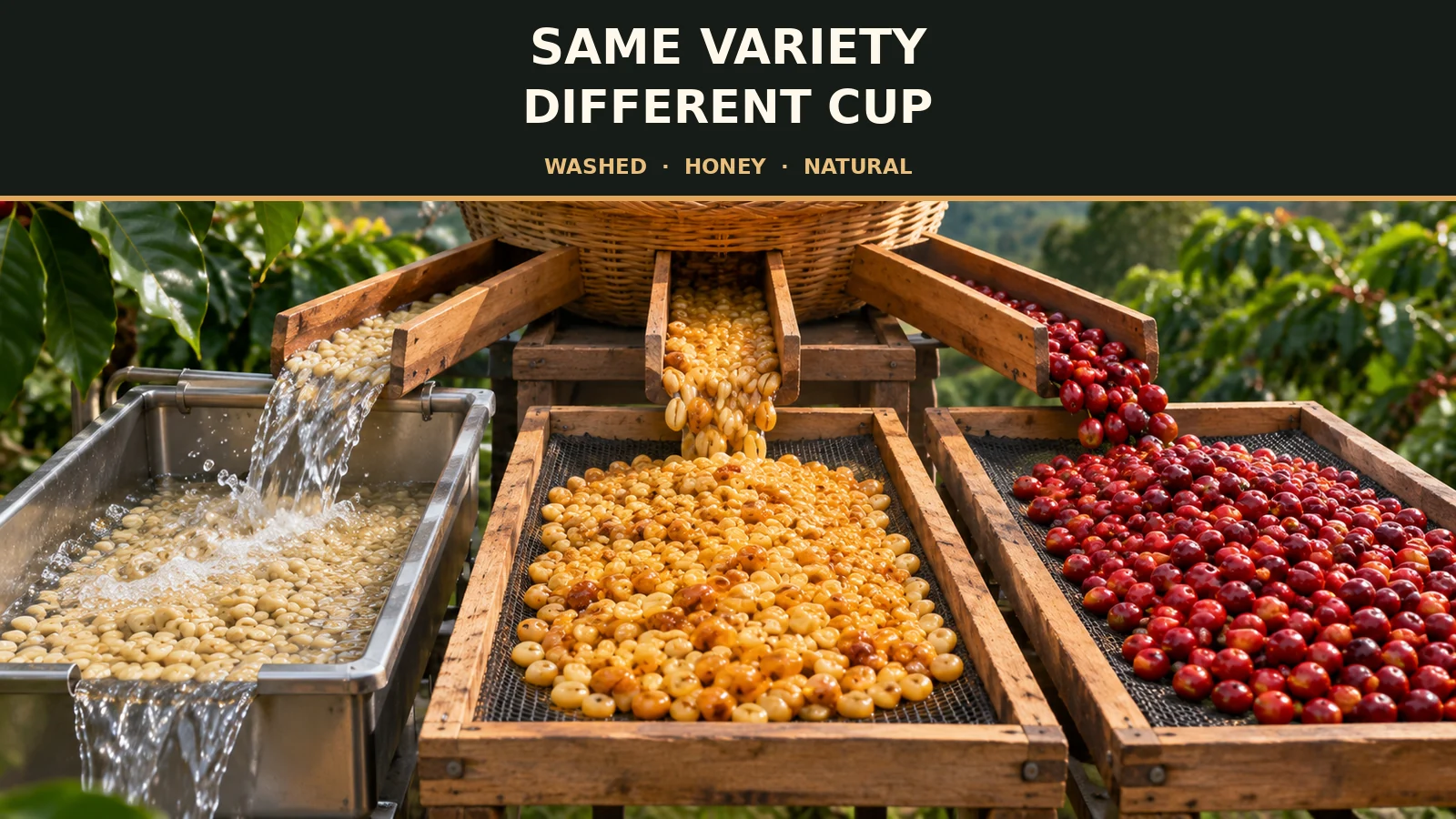
Coffee processing methods can make the same variety taste noticeably different—even when the cherries come from the same farm and harvest. A washed lot may emphasize a clean, clearly defined acidity; a natural lot may present more intense fruit-like or wine-like aromas; a honey lot can occupy a different balance of sweetness, body and acidity. These are tendencies, not laws. Processing can change the compounds that later develop into roasted-coffee flavors, but it cannot guarantee a particular tasting note or a higher quality score.
So how much can processing change the same coffee variety? Enough to produce recognizably different sensory profiles under controlled conditions. Not enough to justify a universal percentage such as “processing determines 60% of flavor,” or to say that natural, washed, honey or anaerobic is always best. The most useful comparison starts with the same variety and the same harvested lot, then measures what differs after processing while keeping roasting and tasting conditions comparable.
Why can identical coffee genetics lead to different flavors?
A coffee variety describes the plant’s genetic background; it does not freeze its final cup profile. Ripeness, altitude, growing conditions and storage already affect the harvested fruit. After picking, the producer must remove the skin, pulp, sticky mucilage and parchment or outer dried layers to create stable green coffee. The route taken changes how long the seed remains in contact with fruit tissue, microorganisms, moisture and oxygen.
That matters because yeasts, bacteria and the bean’s own chemistry can change levels of organic acids and other flavor precursors during fermentation and drying. Roasting then transforms those precursors into many aromatic substances. Processing is therefore neither a simple flavor additive nor merely a cleaning step. It interacts with the initial bean and later roast. World Coffee Research’s multi-origin variety work provides additional evidence that a cultivar’s sensory potential also varies with its environment.
Washed vs natural vs honey: what actually changes?
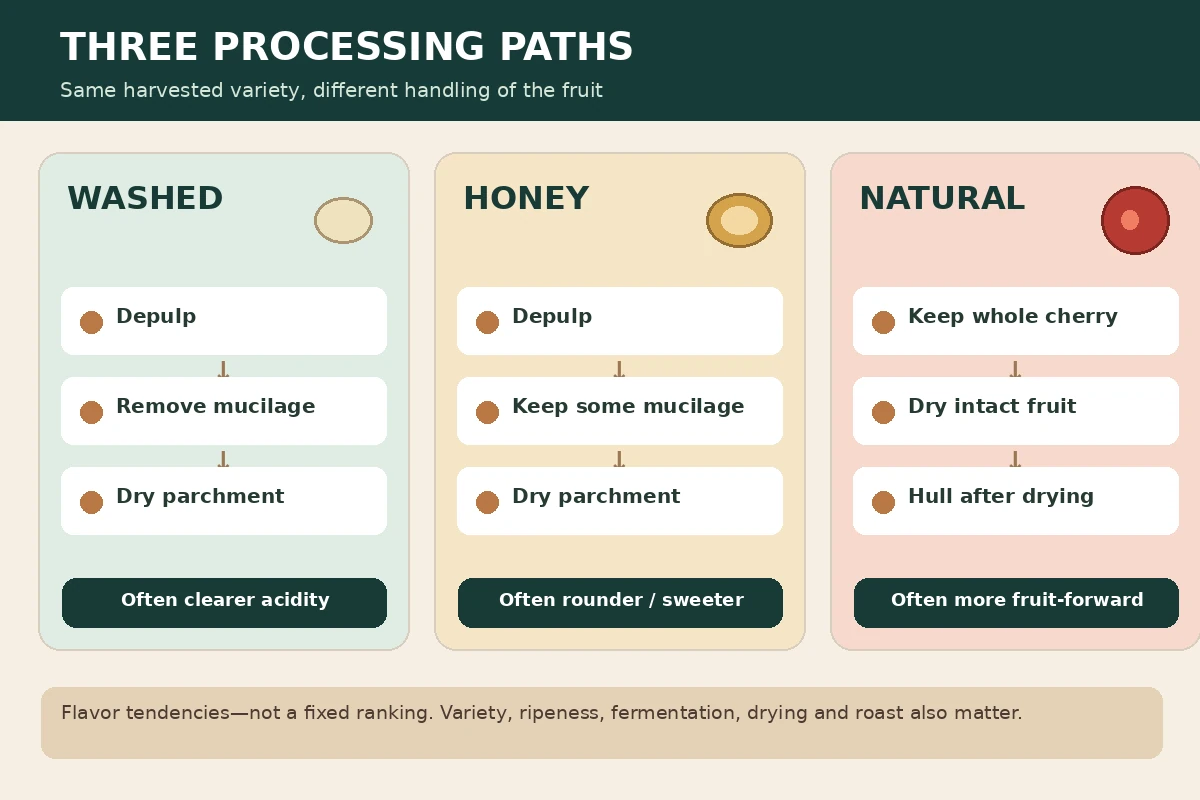
The central distinction is how much coffee fruit remains around the seed during fermentation and drying. These three broad method names describe handling pathways, not precise standardized recipes; producers may use different fermentation times, water practices or drying schedules within each category.
Washed: the fruit and mucilage are removed before drying
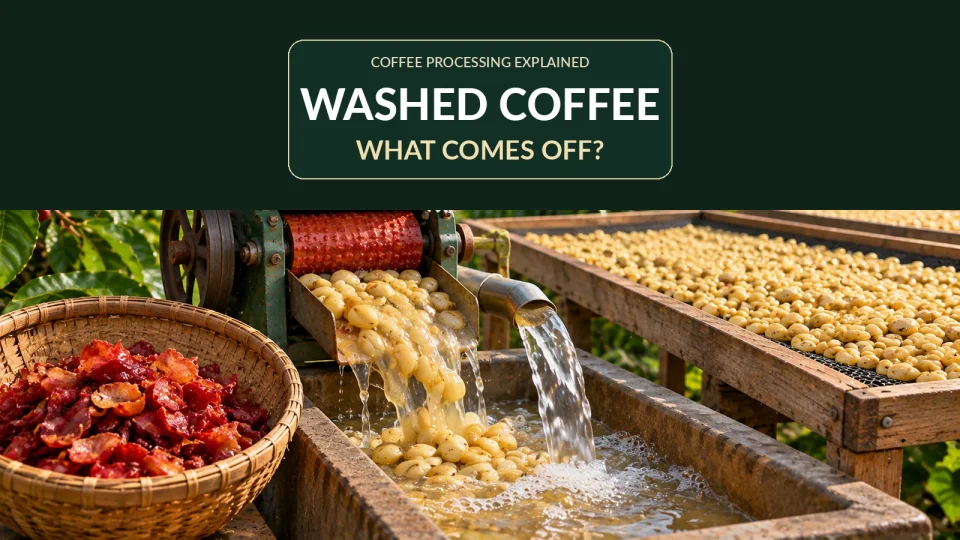
In a typical washed process, ripe cherries are depulped and the remaining mucilage is broken down by fermentation or removed mechanically, followed by washing where applicable and drying the parchment-covered seeds. Many washed coffees emphasize flavor clarity and defined acidity, but a washed coffee can still have substantial sweetness and body. The process is not inherently free of fermentation, and washing does not create a fixed citrus flavor.
Natural: the coffee cherry dries around the seed
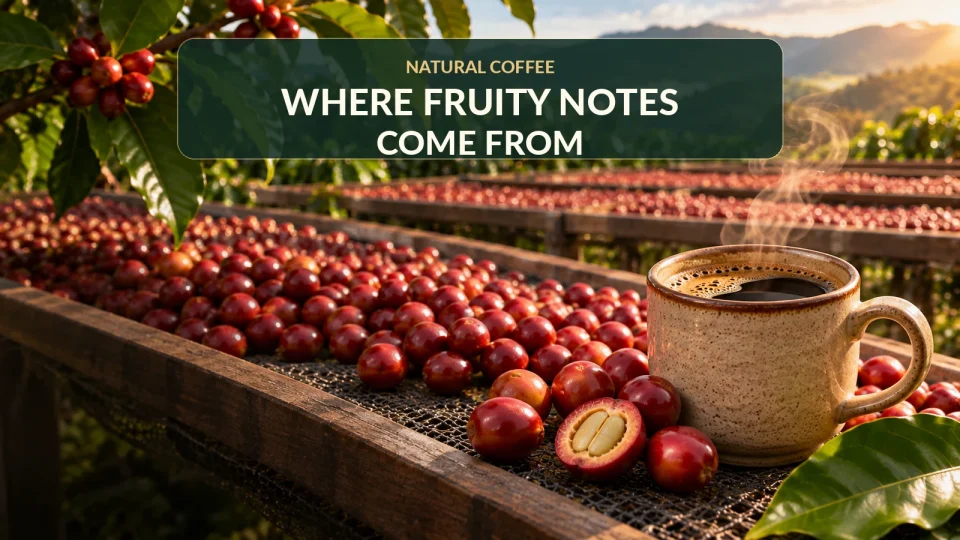
Natural or dry processing keeps the fruit largely intact while it dries. This longer contact can contribute to fruit-forward, wine-like or fermented aromas, depending on ripeness, microbial conditions and drying control. A well-managed natural may be clean and balanced; an inadequately dried one can develop defects. “More fruit” is not synonymous with “better.”
Honey: depulped coffee dries with some mucilage attached
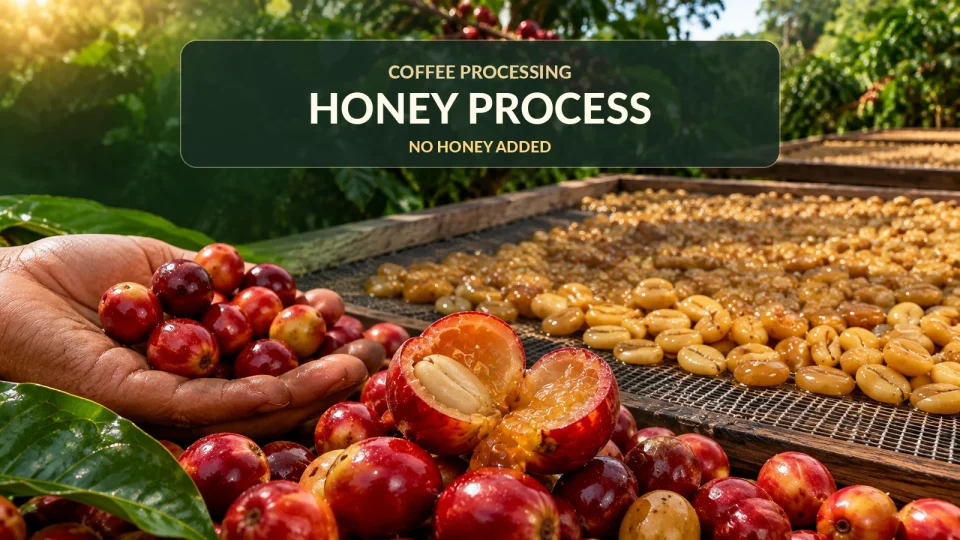
In honey processing, producers remove the outer skin and pulp but retain some sticky mucilage during drying. Despite the name, honey is not necessarily added. The method can yield a range of cup profiles, and labels such as yellow, red and black honey are not a universal numeric scale. Actual mucilage retention, shade, drying time and local terminology vary.
How big were the differences in actual same-variety studies?
Three research examples make the answer more useful than a generic “processing changes flavor” claim. The designs and assessment methods differ, so their results should not be averaged into a single magic number.
Same Caturra farm, lot and harvest: different sensory profiles
A 2026 Caturra study divided coffee from the same farm, harvested lot and harvest period into washed, natural and honey treatments, with three independent processing replicates per method. Its expert panel described washed coffee as balanced and pleasant, natural coffee as more fragrant and wine-like, and honey coffee as higher in acidity with sweet and citrus descriptors. Chemical measurements also differed across treatments. That is a particularly relevant result because it reduces some of the usual differences between farms and cultivars, although its panel and specific processing conditions do not represent every producer.
One Catimor comparison: several points apart, but not every attribute changed
A 2023 study of Catimor coffee in Peru reported total cup scores of 82.88 for honey, 84.00 for washed, 85.75 for natural and 87.38 for its anaerobic treatment, with a separate untreated control at 82.50. That is a 4.50-point span between the four listed processing treatments in this experiment—not an expected gain from choosing one process. Importantly, the authors found that only fragrance and body were significantly different among the individual sensory attributes they evaluated. The numbers use that study’s cupping approach and should not be treated as a universal ranking or directly equated with newer sensory frameworks.
Same Yellow Caturra, changed fermentation vessels: profile changed more than score
Another 2026 study on Yellow Caturra compared closed fermentation in plastic bags, plastic tanks and stainless-steel vessels under broadly standardized on-farm conditions. Researchers identified different volatile profiles: some samples leaned toward chocolate and sweetness, while another group had more diverse yellow- and red-fruit descriptors. Yet the overall cupping scores clustered between 84.00 and 84.50 and did not differ statistically. This study isolates fermentation-vessel conditions rather than comparing washed with natural processing; it illustrates why a flavor shift does not automatically mean a quality-score jump.
Does anaerobic processing guarantee a fruitier cup?
No. “Anaerobic” refers to restricted-oxygen fermentation conditions and can be applied in more than one processing pathway. The result also depends on whether whole cherries or depulped coffee are fermented, the microbial community, temperature, time, available sugars and the handling after fermentation. Carbonic maceration and other closed-vessel processes have additional specific details; their labels are not interchangeable with a promise of certain flavor notes.
Research reviews emphasize that no single fermentation setup consistently improves coffee quality in every environment. A strongly fermented lot can be compelling to someone who enjoys vivid fruit and wine-like notes but distracting to someone seeking a clean, tea-like cup. The process should be evaluated for defects, balance and the intended audience—not by the fashionable name alone.
Why “same variety” is not automatically a fair comparison
Two coffees labeled Caturra are not necessarily matched samples. They might come from different farms, elevations, harvest dates or ripeness distributions. One might have been stored longer, roasted darker or prepared with different water. Any of those differences can influence the cup. Comparing bags from unrelated producers may show that they taste different, but it cannot isolate what processing alone caused.
Even a same-farm split lot needs records: harvesting and sorting, cherry ripeness, the mass assigned to each treatment, fermentation times and temperatures, drying conditions, final moisture, green storage and sample roasting. Replicates matter, because one uncontrolled batch cannot reveal how consistent a processing method is across repeated batches or seasons. Roasting every sample using the identical timed profile is not always sufficient if the beans develop at different rates; compare similar roast development and document relevant differences.
How can you taste the processing difference at home?
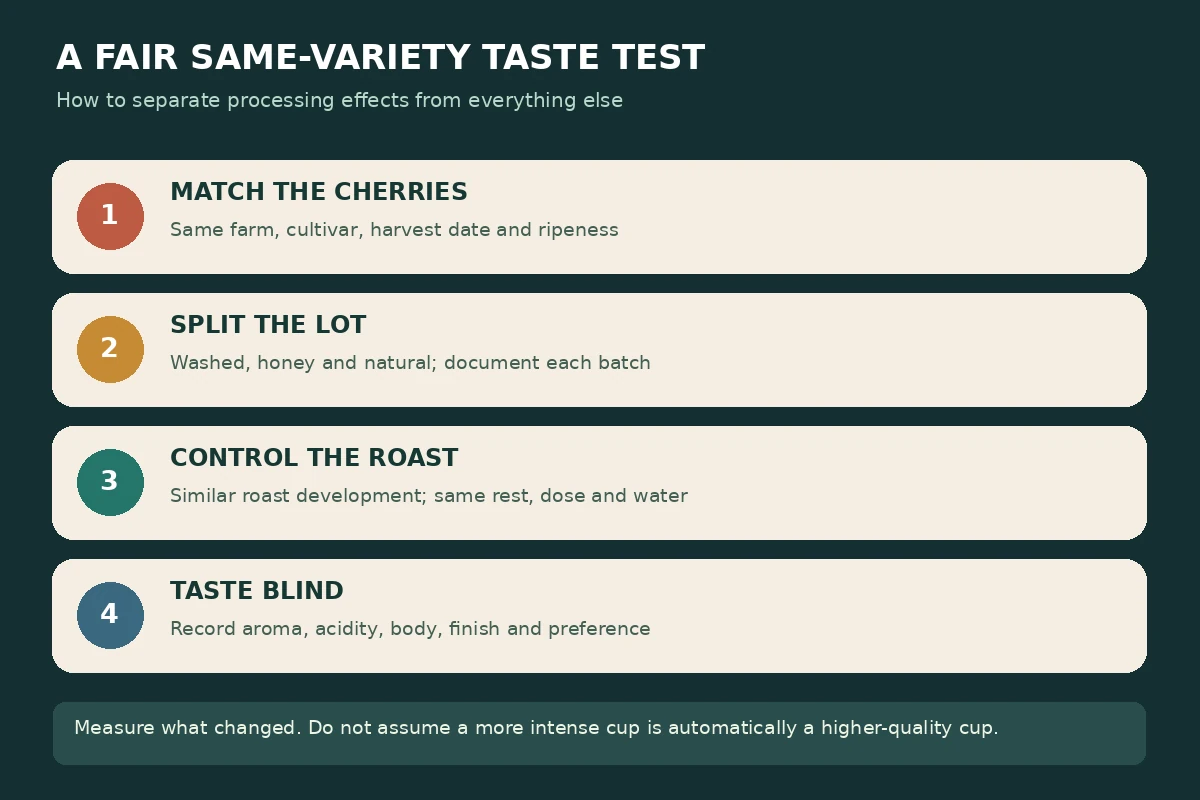
You do not need a laboratory to learn from a thoughtfully designed comparison. Find a producer or roaster offering two or three processing versions of one named cultivar from the same farm and harvest. The closer the sourcing information, the more informative the exercise.
- Choose matched coffees. Prefer the same cultivar and farm, similar harvest and explicit processing labels. If that is impossible, label your tasting an informal comparison rather than a controlled experiment.
- Match the preparation. Use a comparable roast level, similar rest after roasting, the same coffee-to-water ratio, grinder, brewing temperature and tasting cups. Avoid flavored additives and different brew methods.
- Taste blind when possible. Label cups A, B and C and have someone else keep the key. Note fragrance, aroma, acidity character, mouthfeel, aftertaste and any unpleasant notes before revealing the processes.
- Separate description from preference. “More berry-like” describes an impression; “I prefer it” is a personal judgment. More intense flavor is not necessarily greater quality.
- Repeat on another day. Even informal repeated tastings help distinguish a lasting contrast from the effect of brew variation or expectation.
For a more structured framework, the Specialty Coffee Association’s Coffee Value Assessment separates descriptive sensory assessment from affective judgments about quality or preference. Home drinkers can borrow that distinction without presenting their notes as professional certification or an official SCA score.
Which processing method should you buy?
Use the processing label as a starting clue, not a substitute for origin, roast date and the seller’s actual tasting notes. If you often enjoy crisp and clearly articulated acidity, try a washed version. If you enjoy pronounced fruit character and do not mind some fermentation-like notes, compare a natural. If you want a potential middle ground, explore honey coffees—but do not assume every honey is sweeter or less acidic than every natural. With anaerobic and experimental fermentation, ask what was fermented, for how long and under what controls.
Price is not a reliable shortcut to sensory superiority. Processing can require different labor, water, infrastructure, space, drying time and risk management. Those factors may influence a farm’s cost, while rarity and marketing influence retail pricing. A more expensive lot can be better aligned with a particular palate without being objectively better for everyone.
Can processing improve quality—or only change flavor?
Both are possible, but they must be evaluated separately. Processing can reduce defects and preserve a clean, stable lot when drying and sorting are well managed. It can also introduce undesirable fermentation, mold-related problems or inconsistent outcomes if conditions are uncontrolled. Chemical differences do not prove a change in health benefit, safety or cup preference. Likewise, a higher sensory score in one experiment does not demonstrate that a method will outperform alternatives across cultivars, farms and climates.
The strongest conclusion is more measured: processing is a powerful lever for flavor differentiation within a variety, while quality depends on execution and the whole production chain. A good study records multiple sensory attributes, chemistry and processing conditions, not simply a marketing adjective or a single score.
Bottom line: how much change should you expect?
Expect the possibility of a clearly recognizable change in aroma, acidity character, sweetness perception, body and finish, even with the same variety. Do not expect a predictable number of points, a fixed percentage of flavor or a guaranteed winner. For a meaningful experience, seek a same-farm, same-harvest comparison, taste blind under matched brewing conditions and decide which profile you actually enjoy.
Editorial methodology: This guide synthesizes published academic studies and SCA/WCR educational material reviewed November 19, 2026. It contains no first-hand coffee tasting, producer interviews, laboratory measurements, product endorsements or fabricated trial data. The featured image is an illustrative artwork, not a documentary photograph of one verified farm or experiment.
Mago Maga
Roma Pro V1.6 Smart Home Coffee Roaster | Black Friday Event – 10% OFF (-$48.80)
The MAGO MAGA Roma Pro V1.6 roasts green coffee beans in small batches; it does not brew coffee.