CouponF5 is an independent publisher. We may earn a commission when you purchase through our links, at no extra cost to you. Merchant terms apply.
In this guide

Mago Maga
Roma Pro V1.6 Smart Home Coffee Roaster | Black Friday Event – 10% OFF (-$48.80)
The MAGO MAGA Roma Pro V1.6 roasts green coffee beans in small batches; it does not brew coffee.
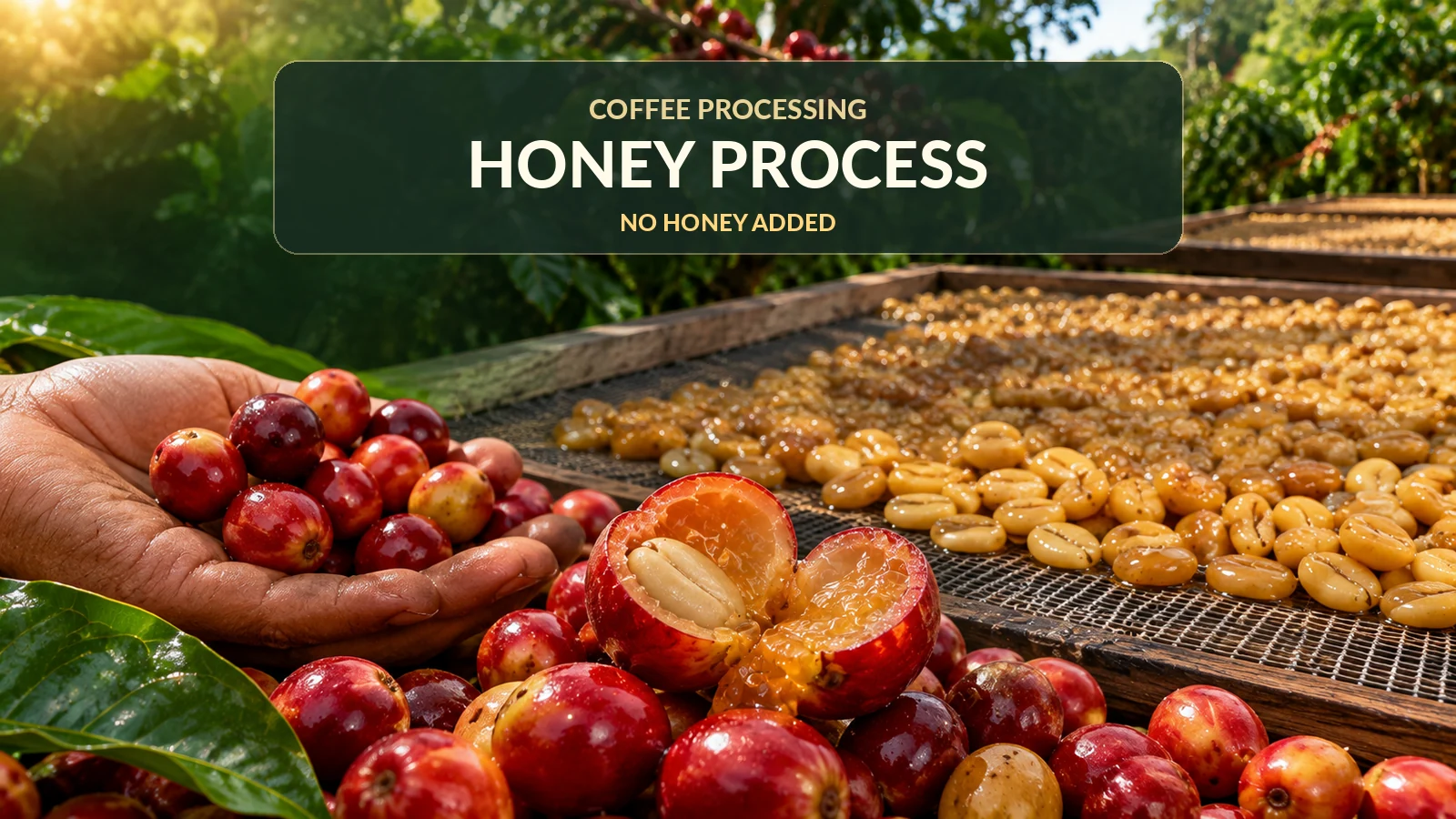
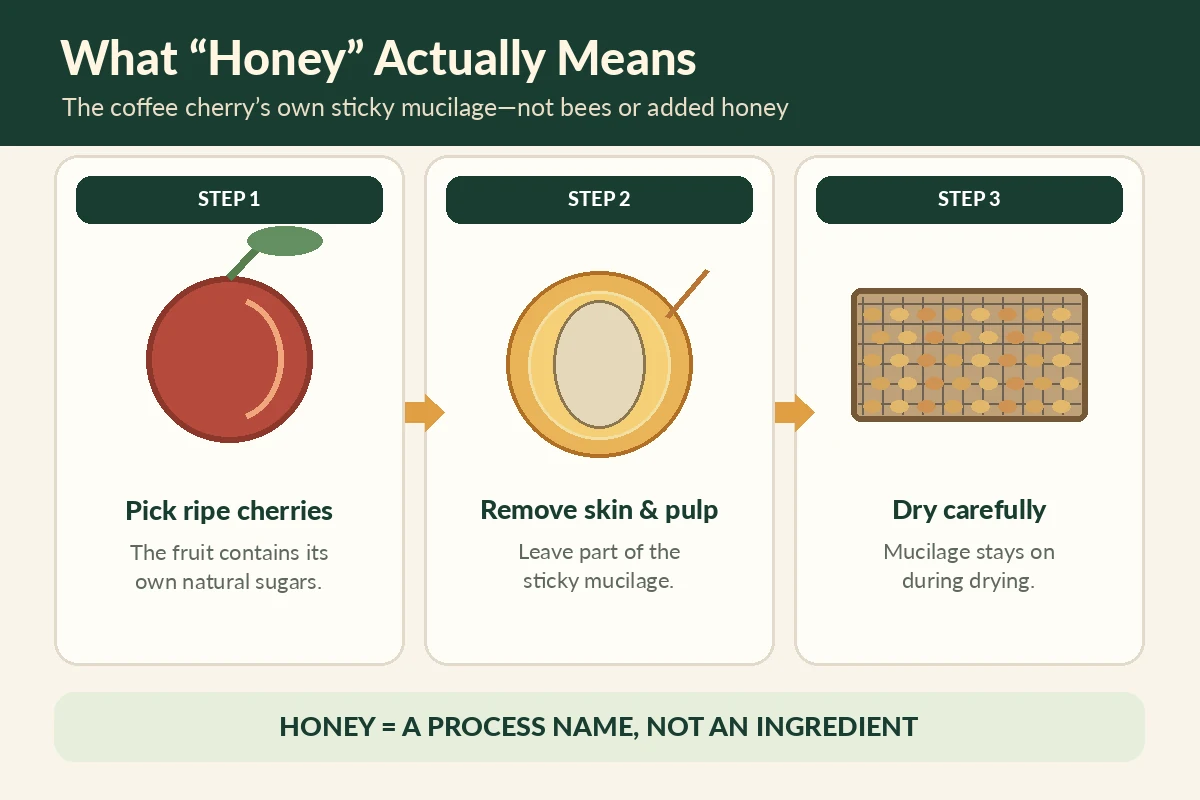
Honey-processed coffee does not contain added honey. The word honey describes a way of handling freshly picked coffee cherries—not an ingredient supplied by bees. After the outer skin and pulp are removed, some of the fruit’s naturally sticky, sugary mucilage remains around the parchment-covered coffee seed as it dries. That glossy coating resembles honey, which is how the method got its name.
Honey processing can influence the aroma, body, and perceived sweetness of coffee, but it does not guarantee a honey flavor, extra sugar in your cup, or better quality than washed or natural beans. Here is what actually happens, what the colors on a bag mean, and how to choose a coffee without confusing its processing method with a sweetened drink.
Why is it called honey coffee if no honey is used?
A coffee cherry has an outer skin, fleshy pulp, a sticky mucilage layer, parchment, and the seed that eventually becomes a roasted coffee bean. In a honey process, a machine typically removes the cherry skin and most of the pulp. The producer deliberately leaves some or all of the mucilage on the parchment during drying.
The mucilage contains naturally occurring sugars and pectic substances, and it can look glossy and feel sticky. That appearance, rather than any added honey, explains the label. Peet’s Coffee’s processing explainer explicitly distinguishes the sticky fruit coating from real honey. Honey processing is also called pulped natural or semi-dry in some contexts, although those terms can overlap with locally different practices.
What you buy is still coffee. If a separate product is advertised as “honey-infused coffee,” “honey latte,” or “coffee with honey,” read its actual ingredients: those names may describe a sweetener or flavoring, not the post-harvest processing method.
How honey-processed coffee is made
- Harvest and sort ripe cherries. Producers aim to reduce the proportion of unripe, damaged, or defective fruit. Cherry quality influences what happens during fermentation and drying.
- Remove the skin and outer pulp. Depulping reveals parchment-covered seeds surrounded by mucilage. The equipment and settings influence how much sticky material remains.
- Retain the chosen amount of mucilage. Unlike a conventional fully washed pathway, the producer does not necessarily remove this layer before drying. No bee honey or syrup is required.
- Dry the coffee carefully. Coffee is spread on beds or other suitable drying surfaces, with turning and environmental control intended to reduce uneven moisture and spoilage risk. Microbial activity can occur during this stage.
- Finish drying, hull, sort, and eventually roast. Drying and hulling prepare stable green beans for storage and roasting. The sticky fruit material does not remain as a spoonful of honey in the finished bag.
Exact time, shade, air movement, moisture targets, and handling differ by producer. Honey is a family of processing approaches rather than a single identical recipe used worldwide.
How is honey processing different from washed and natural?
Washed coffee
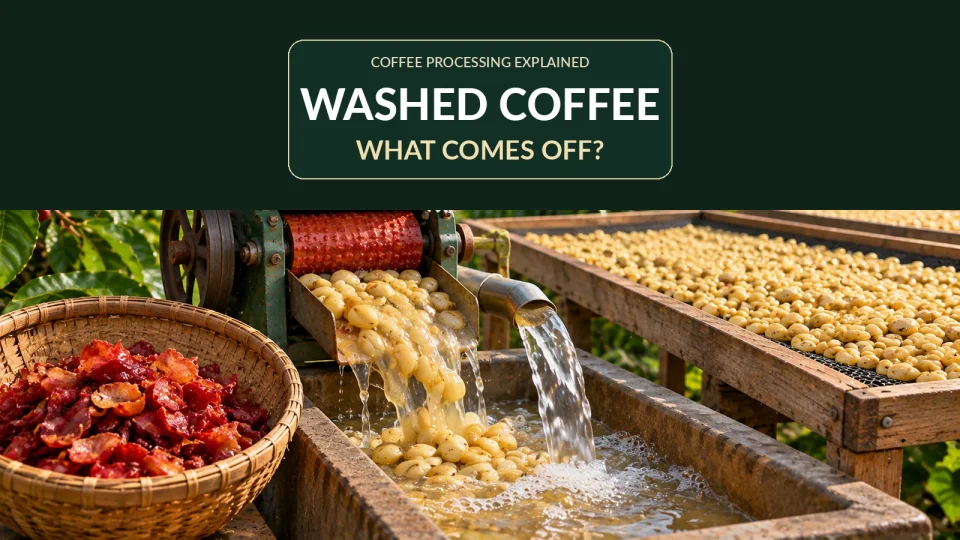
In a typical washed process, the skin and pulp are removed and most mucilage is eliminated through fermentation, mechanical treatment, and/or washing before the parchment dries. Many washed coffees show relatively distinct acidity and clearly defined flavors, but that is a tendency—not a universal tasting result.
Natural coffee
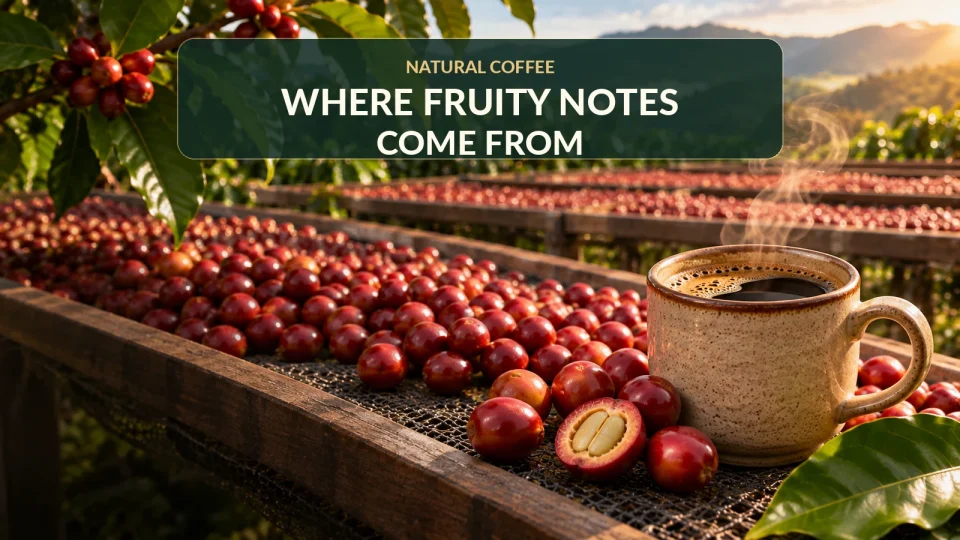
Natural processing generally dries the coffee inside the intact cherry before the dried fruit layers are removed. Extended fruit contact can contribute prominent fruity, wine-like, or fermented impressions. Poor drying control may also create defects, so intense flavor is not automatically higher quality.
Honey coffee
Honey processing removes the outer fruit but retains some sticky mucilage while drying. It lies between washed and natural methods in terms of fruit material remaining around the seed. Sensory results can also occupy an intermediate range, but a honey coffee may be brighter than a particular washed coffee or less fruity than a particular natural; variety, ripeness, fermentation, roasting, and brewing all matter.
What do white, yellow, red, and black honey mean?
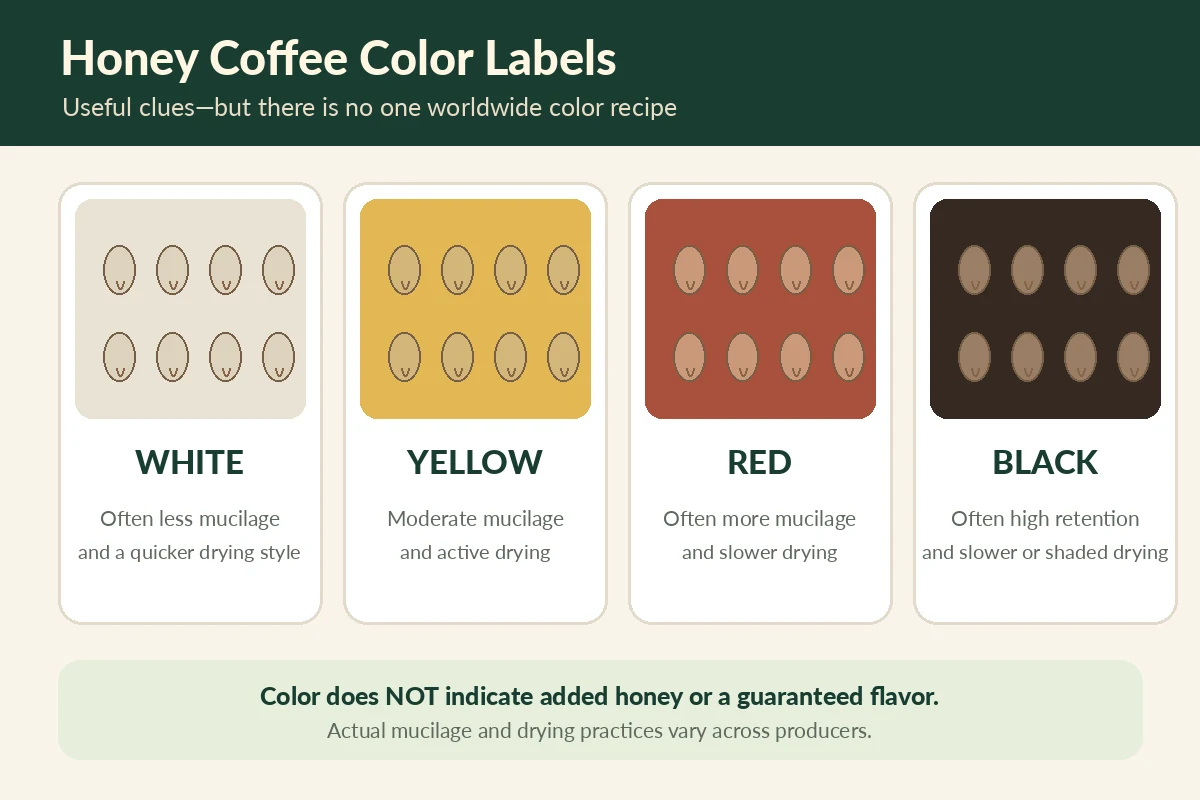
The color names usually describe differences in mucilage retention, drying speed, exposure to sun or shade, and the appearance of the coffee as it dries. They do not refer to white, yellow, red, or black varieties of bee honey being added.
As broad shorthand, white honey often involves less retained mucilage and a faster or more exposed drying style; yellow can involve more retained material; red often indicates greater retention or slower drying; and black commonly describes high retention and slower, sometimes shaded, drying. However, farms and researchers use different thresholds and practices, so a color alone cannot tell you an exact percentage of mucilage.
One peer-reviewed Arabica experiment deliberately compared several mucilage-retention treatments under labels including white, yellow, red, and black honey, and examined differences in microbes and volatile compounds. The researchers’ controlled definitions are useful for understanding that study, but should not be treated as mandatory worldwide rules for every coffee bag.
Will honey-processed coffee taste like honey?
It might evoke honey, caramel, ripe fruit, or a round sweetness, but the process does not guarantee any one note. “Sweet” in a tasting description frequently means an impression arising from the balance of flavors, acidity, aroma, and body. It does not mean that a producer poured honey onto the beans or that the brewed drink contains a measured dose of added sugar.
Honey processing can change what happens during fruit contact, microbial activity, and drying, while roasting subsequently creates and transforms many aroma molecules. A scientific review of post-harvest processing and coffee aroma discusses how wet, dry, and semi-dry pathways differ in chemical precursors and eventual aroma development. None of that establishes that every honey coffee is sweeter than every washed coffee.
If you want to discover the difference yourself, compare coffees from the same farm, cultivar, and harvest processed in different ways. Use a similar roast and brewing method, then taste the cups blind if possible. That is more informative than comparing an unrelated light-roast honey coffee against a dark-roast washed blend.
Does honey processing add sugar, calories, or caffeine?
No sweetener is added by the honey-processing method itself. The fruit’s natural sugars are involved in post-harvest transformations; that is different from sweetening brewed coffee. Do not assume the word “honey” on a bean bag guarantees a specific sugar or calorie count. For nutrition questions, distinguish plain roasted coffee from drinks or flavored products with added syrups, sugar, milk, or actual honey.
The name also says nothing definitive about caffeine. Caffeine content and the caffeine extracted into a cup depend on factors including coffee species, bean characteristics, serving size, grind, and brewing method. Honey-processed does not mean caffeine-free, low-caffeine, or decaffeinated.
Is honey-processed coffee vegan?
For ordinary unflavored honey-processed coffee, the technique does not use bee honey, so the processing name alone does not imply an animal-derived ingredient. But a final consumer product can have separately added flavors or ingredients. If you avoid honey for dietary or personal reasons, check the package and any drink-shop recipe rather than relying only on the processing label. Claims about allergen absence or special dietary certification should come from the product seller, not from the word “honey.”
Does honey coffee always undergo a separate fermentation step?
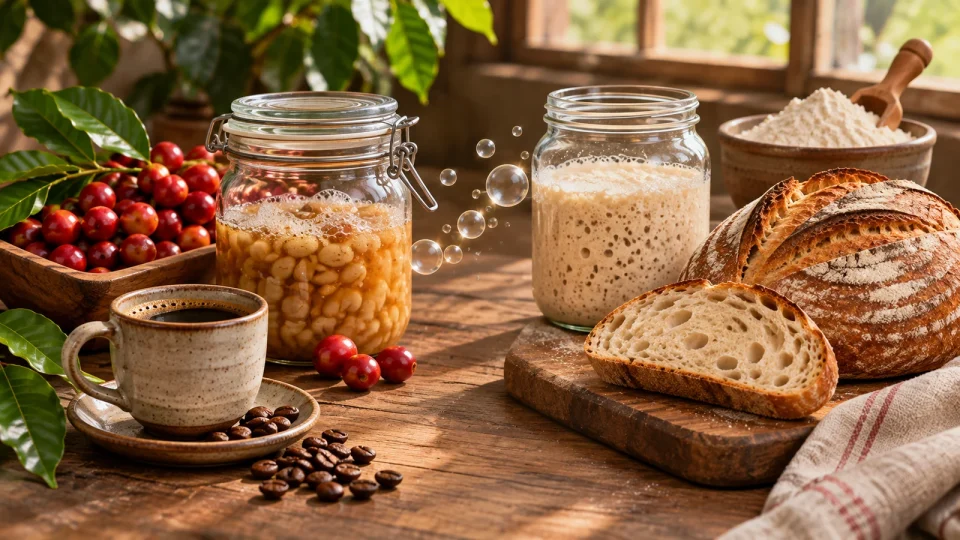
No. Some producers depulp and move the coffee directly to drying beds, where microbial activity may continue while the mucilage remains attached. Others deliberately manage a fermentation interval before or during drying. Honey processing describes fruit handling and mucilage retention more directly than it specifies a single fermentation tank, oxygen level, or duration.
That distinction matters because a dramatic term such as “anaerobic honey” describes additional processing choices, not another kind of honey ingredient. It is reasonable to ask the roaster whether the coffee was fermented in a vessel, how it was dried, and how its cleanliness and moisture were managed. A processing label alone cannot authenticate an exact fermentation protocol or promise quality.
How to shop for honey-processed beans
Look beyond a color name. A useful product description gives the coffee’s origin, producer or farm, variety where known, processing method, roast level, and specific tasting notes. Consider these questions before choosing a bag:
- What do you like? Choose by the seller’s actual flavor description, not the expectation that all honey coffees taste like syrup.
- What was done? If the roaster provides details about mucilage retention and drying, use them to compare coffees more meaningfully.
- Can you make a fair comparison? A washed and honey lot from the same producer and harvest is more informative than unrelated coffees roasted differently.
- What is the total value? A labor-intensive process can justify a different price, but the highest price or darkest honey label does not guarantee the most enjoyable cup.
- Does the product have other ingredients? Verify this especially for flavored beans, premixed beverages, and coffee-shop drinks.
For a first taste, consider a small bag of honey-processed coffee from a reputable roaster, and brew it using the seller’s starting guidance. Adjust grind and ratio based on extraction rather than assuming honey processing needs its own universally different brewing recipe.
Bottom line: honey is the name of the process
Honey-processed coffee does not contain bee honey simply because it is honey-processed. Its name describes sticky coffee-fruit mucilage left around the seed during drying. That choice can influence aroma and perceived sweetness, while washed, natural, and different honey color styles offer other possibilities. If a coffee actually contains honey as an ingredient, that should be a separate product or drink specification—not something inferred from the processing label.
Editorial research note: This independent educational guide is based on coffee-roaster explanations and published processing research reviewed November 20, 2026. We did not visit a mill, process cherries, conduct cupping tests, or verify any specific retail coffee’s ingredient label. The Featured Image is original conceptual artwork, not a documentary photograph of a specific farm; inline diagrams are simplified educational graphics.
Mago Maga
Roma Pro V1.6 Smart Home Coffee Roaster | Black Friday Event – 10% OFF (-$48.80)
The MAGO MAGA Roma Pro V1.6 roasts green coffee beans in small batches; it does not brew coffee.