CouponF5 is an independent publisher. We may earn a commission when you purchase through our links, at no extra cost to you. Merchant terms apply.
In this guide
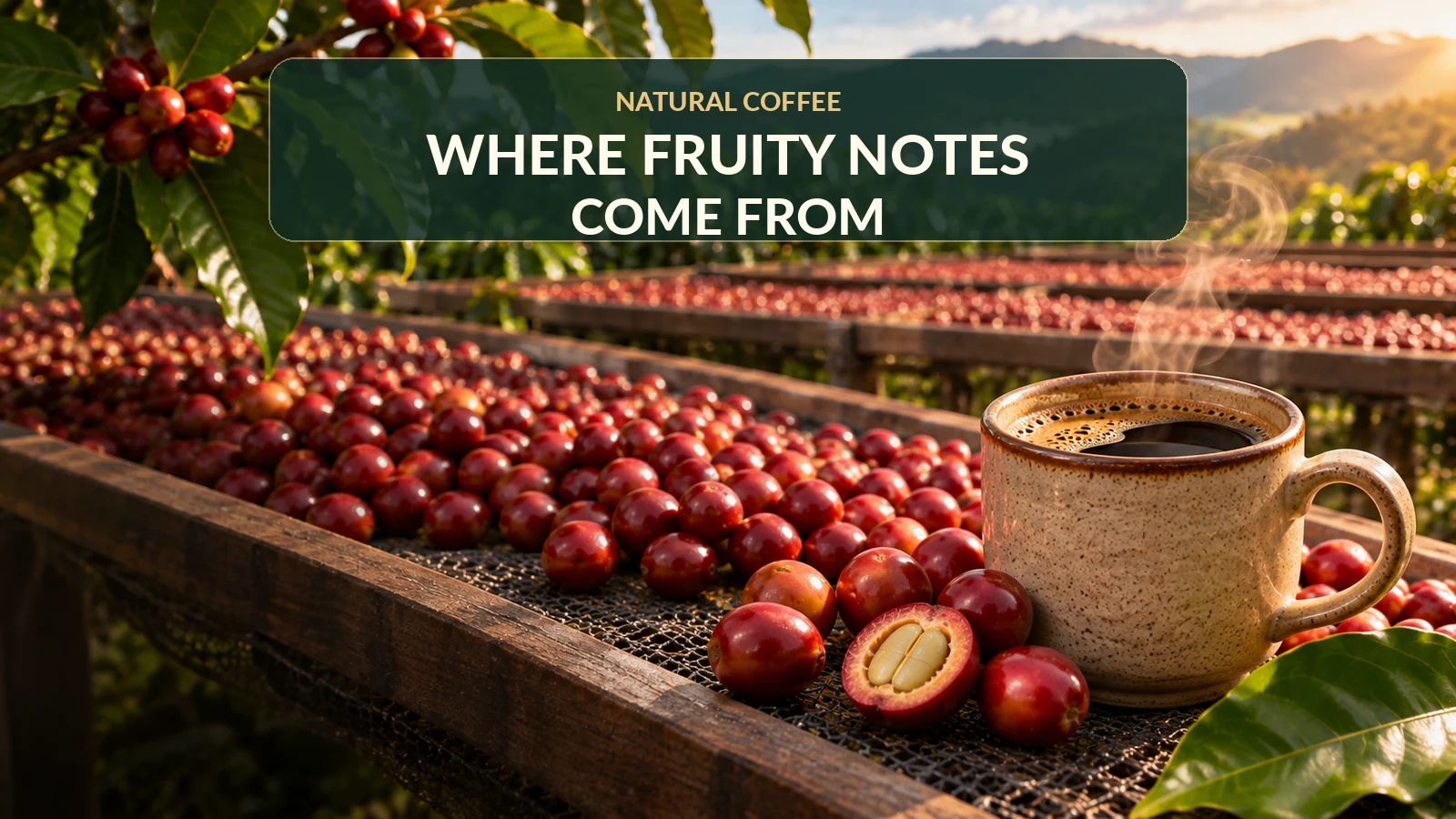
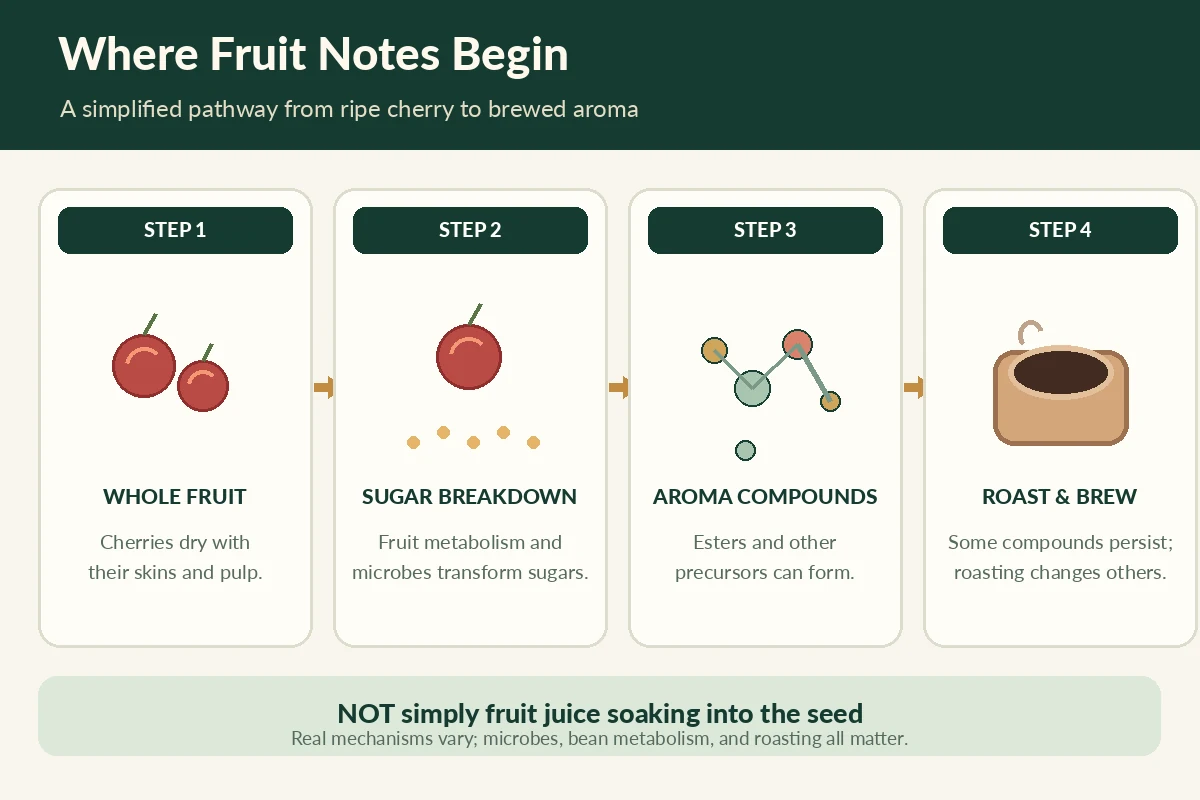
Fruity notes in natural coffee come primarily from chemical changes that happen after ripe coffee cherries are picked. Because natural-processed coffee dries inside the whole fruit, the cherry’s own metabolism and the activity of yeasts and bacteria can generate fruity-smelling compounds, especially esters, and alter the raw seed’s flavor precursors. Some fermentation-related compounds survive roasting; others influence what forms during roasting. The result can remind drinkers of berries, tropical fruit, or wine—without anyone adding strawberries or blueberries to the coffee.
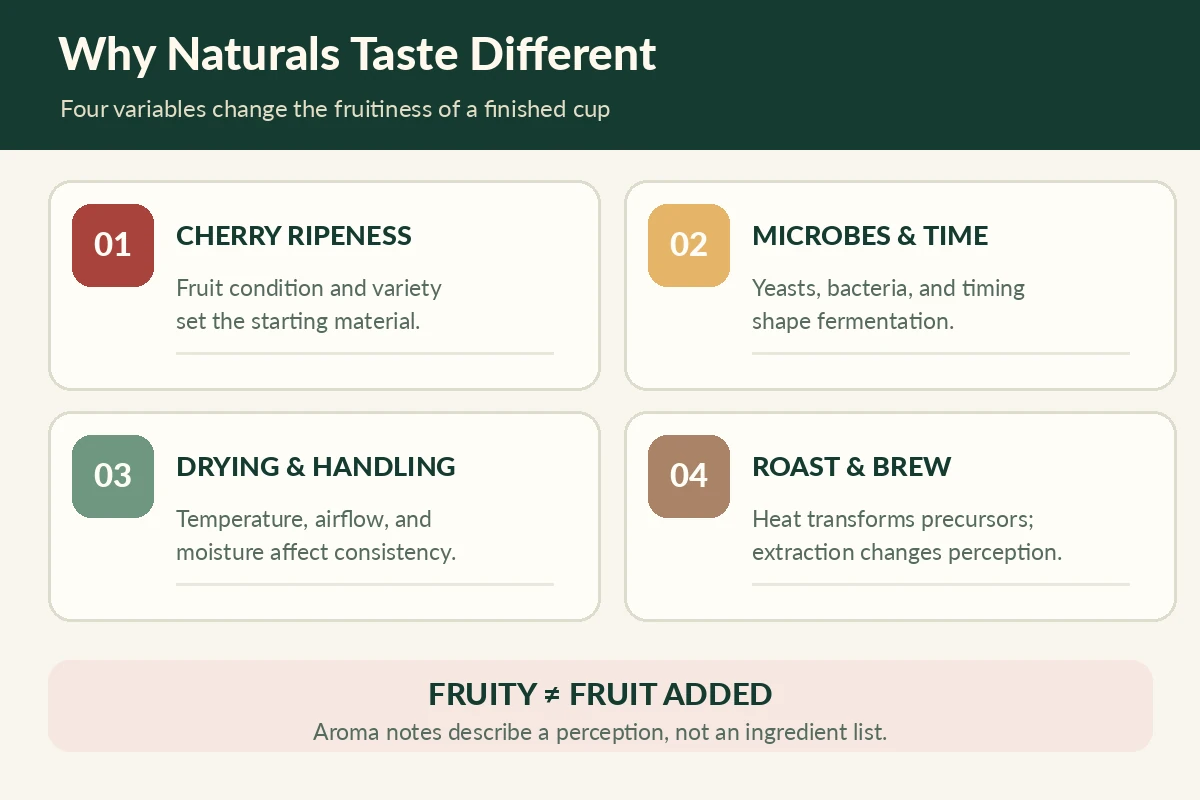
That is the short answer to where the fruity notes in natural coffee come from. The more interesting answer is that the familiar story about fruit juice simply soaking into the bean is incomplete. Fruit ripeness, microorganisms, drying conditions, the coffee variety, and the roast all affect how fruity the final cup actually tastes.
What does “natural-processed coffee” mean?
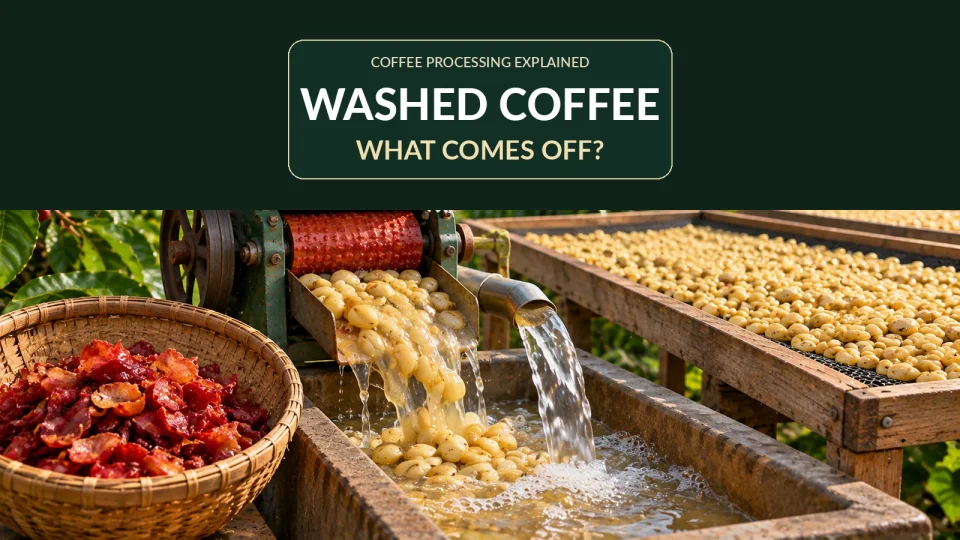
Natural, or dry-process, coffee is made by drying freshly harvested coffee cherries with their skin and pulp still around the seeds. Producers sort cherries and spread them on patios or raised beds, then control turning, airflow, moisture and drying conditions before removing the dried fruit layers. In a typical washed method, much of the outer fruit is removed before the coffee is dried, so the path of post-harvest transformation is different.
Long contact with the intact cherry matters because the pulp and mucilage supply compounds that microorganisms can metabolize while the coffee dries. But natural processing is not one fixed recipe. Two farms may use the same word on their labels while managing ripeness, drying time, shade and microbial conditions in very different ways. Nor does “natural” automatically mean organic certification, no fermentation or an entirely intervention-free process.
Where do berry and tropical-fruit aromas come from?
1. Microbes transform sugars into aromatic molecules
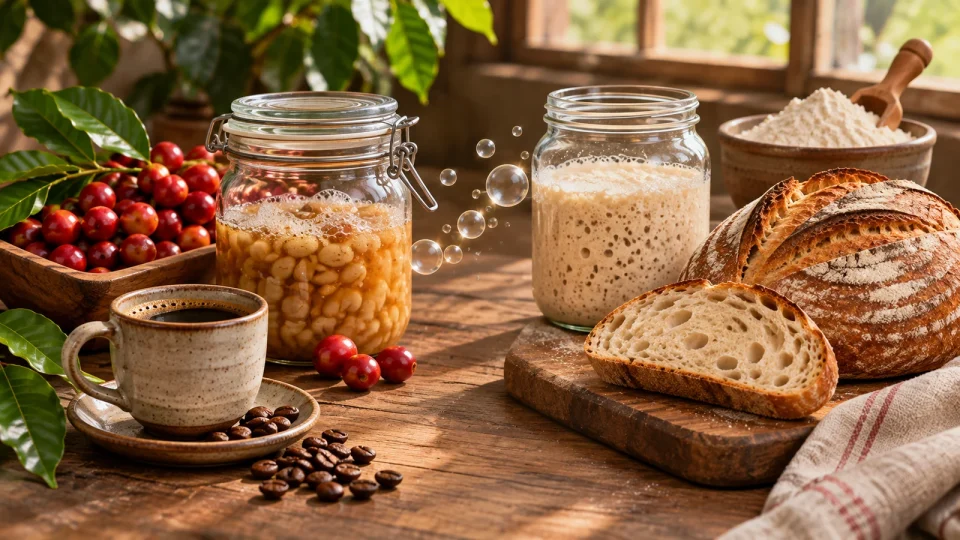
Yeasts and bacteria are present on coffee fruit and in the processing environment. During post-harvest fermentation they can use available sugars and generate alcohols, organic acids and other metabolites. Reactions involving those compounds help create esters, a class of molecules often associated with fruity aromas. Different esters and their concentrations can shift the impression from bright or floral to berry-like, wine-like or tropical.
The Specialty Coffee Association’s 2026 explanation of fruit-dried coffee describes this process in approachable terms, including research that associated particular esters with strawberry- and blueberry-like descriptors. Importantly, those names are aroma analogies: a blueberry note does not mean blueberry molecules or blueberry juice were placed into the coffee. Many odor-active compounds combine to create the overall perception of a cup.
2. The cherry and the seed keep changing after harvest
Microorganisms are not acting alone. Once cherries are detached from the plant, their own enzymes and metabolism continue to change sugars and other compounds while the fruit dries. Some fermentation-related molecules can enter or affect the seed; other changes occur within green coffee itself. This is more plausible than imagining the cherry’s original flavor being copied directly into the seed, because the raw coffee cherry does not necessarily taste like the blueberry or strawberry note later perceived in the brew.
The useful distinction is between fruit already containing a flavor and new fruity-smelling compounds forming during processing. A natural-process coffee may develop aromas the fresh cherry never had in the same form.
3. Roasting develops—and sometimes preserves—the difference
Green coffee does not yet have the full aroma of a brewed cup. Heat drives reactions among sugars, amino acids and other precursors, creating recognizable roasted-coffee character. Fermentation changes the starting material for those reactions. Some aromatic esters generated before roasting can also remain detectable in roasted coffee, although roasting can diminish or alter others.
A 2026 chemical study of three Kenyan coffee-processing treatments found elevated fermentation-associated ethyl and acetate esters in green coffee from an anaerobic whole-cherry treatment, with some ethyl esters still present after light roasting. It also identified changes in sugars, amino acids and organic acids that could affect roasted aroma. That experimental treatment was not identical to conventional natural drying, so its strong fruitiness cannot be claimed for every natural coffee. It does, however, support the broader link between post-harvest chemistry and the flavors people experience in the cup.
Is the fruity flavor just coffee-cherry juice soaking into the bean?
No—not as a complete explanation. Because the coffee seed develops inside the cherry, it is tempting to picture a sponge absorbing sweet juice throughout drying. But the distinctive strawberry or blueberry aroma of a finished natural coffee is not simply the flavor of fresh cherry juice transferred unchanged. New volatile aroma compounds can form through microbial activity and metabolic breakdown, while the seed’s own chemical precursors change. Later roasting adds another set of reactions.
Researchers are still distinguishing exactly how much of any given compound diffuses into the seed versus forms within the seed or during roasting. The answer can vary by compound and processing method. Saying “fermentation and related changes help produce fruity aroma” is more accurate than claiming either that fruit sugars directly turn into sweetness in the cup or that nothing moves between cherry and seed.
What does the research show about natural coffee fruitiness?
Research on dry-processed Arabica has documented changing microbial communities and chemical compounds during whole-cherry drying, consistent with the idea that processing is an active biochemical stage rather than passive dehydration. Experimental work has also shown that the combination of whole-fruit handling and fermentation duration changes sensory and volatile profiles. In one 2026 comparison of pulped-fruit and whole-fruit processing across several fermentation times, whole-fruit treatments were associated with different, often fruitier profiles—but sensory quality did not improve indefinitely as time increased.
That last detail matters: a process may intensify certain notes without producing a higher-quality coffee. Studies vary by cultivar, origin, microbial conditions, roast and tasting method. There is no credible universal number for how much of a coffee’s fruitiness “comes from processing,” and a result from one experimental lot should not be treated as a recipe for all farms.
Why doesn’t every natural coffee taste like blueberries?
The answer is a combination of biology and processing. Ripe cherries, different varieties and different farms offer distinct starting materials. The organisms present, oxygen exposure, local weather, temperature and drying speed shape what develops afterward. Slow or poorly controlled drying can also increase the risk of defects, which is why a strong fermented aroma is not automatically a positive quality signal.
Roasting and brewing create still more variation. A lighter roast may allow some fruit-related impressions to remain clearer alongside acidity and floral notes, whereas a darker roast can make roast-derived bitterness and smoky or chocolate-like characters more prominent. Extraction changes perception too: water chemistry, grind, brewing ratio and temperature may make two preparations of the same beans taste surprisingly different.
Finally, tasting words are descriptors, not ingredient labels. One person may say “blueberry,” another “mixed berries,” and a third “winey.” Sensory vocabulary and expectations can affect how a complex aroma is described, even when the beverage is the same.
Natural vs. washed vs. honey: what should you expect?
Processing labels are clues to fruit handling, not flavor guarantees:
| Method | Fruit handling | Common sensory tendency |
|---|---|---|
| Natural | Whole cherry dries around the seed | Can emphasize fruit-like, winey or fuller impressions |
| Washed | Outer fruit and most mucilage removed before drying | Often more clearly delineated acidity and flavor |
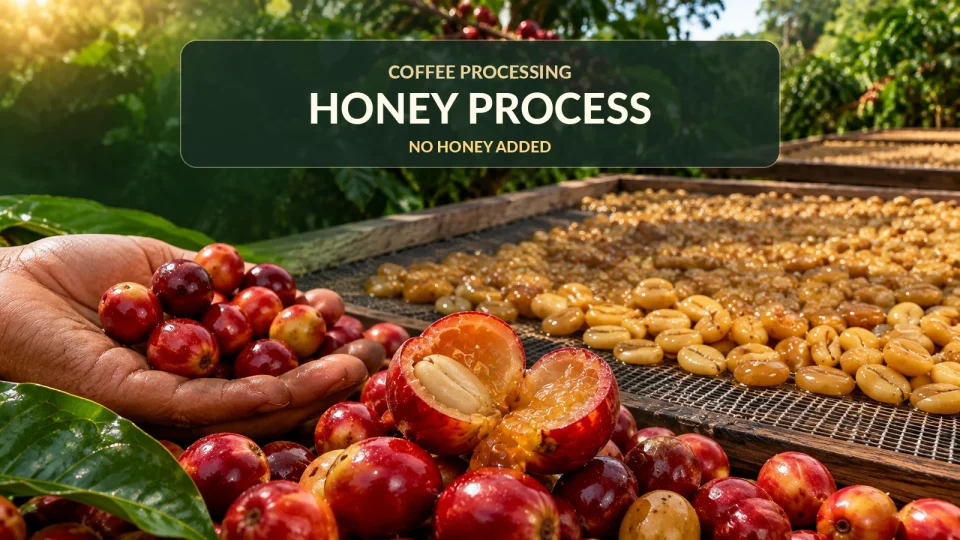
| Honey | Depulped seed dries with some mucilage | Varies widely; may balance fruit character and clarity |
A clean washed coffee can be very fruity, and a natural coffee can be chocolate-forward. Variety, harvest and processing skill make direct generalizations unreliable. If you’re comparing two products, favor detailed producer notes over a blanket ranking of processing methods.
When is fruitiness a defect rather than a desirable note?
Well-made natural coffees can combine intense fruity aroma with clean acidity, sweetness perception and balance. By contrast, off-putting solvent-like, moldy, rotten or aggressively vinegary impressions may suggest problems with fermentation, drying, storage or another part of the production chain. A descriptive term such as “fermented” does not by itself prove either quality or spoilage, and consumers cannot diagnose a food-safety issue from a tasting note alone.
Good processing depends on selecting sound cherries and managing moisture and drying so the final green coffee is stable. If a coffee seems unusually unpleasant or defective, ask the roaster about the lot rather than trying to “fix” a problematic flavor with a different brewing recipe.
How to taste the difference without adding fruit
One useful way to explore the question is to find a roaster offering a washed and a natural lot from the same farm, cultivar and harvest. The closer the lots match, the more informative the comparison. Then try the following:
- Use comparable roasts. Ask whether both lots are intended for the same brew method and comparable roast development.
- Keep brewing consistent. Use similar coffee weight, water volume, grind approach, equipment and water chemistry.
- Taste blind. Label cups A and B so you do not know their processing methods until after recording impressions.
- Separate description from preference. Note berry, citrus, floral, winey, earthy or chocolate-like impressions, then independently record which cup you enjoy more.
- Repeat the comparison. A second tasting helps reduce the influence of one uneven extraction or strong initial expectation.
Even this home test is not a laboratory experiment, because the two lots may differ in roast development and micro-lot handling. But it is a useful way to learn what processing contributes to coffees you actually drink.
Does a blueberry note mean fruit or sugar was added?
No. In plain, unflavored natural coffee, blueberry and strawberry are tasting descriptors. They describe aromas evoked by the roasted coffee, not a recipe with added fruit or syrup. Be more careful with terms such as fruit-infused, co-fermented with fruit or flavored coffee: those can describe intentionally added ingredients or distinct processing steps. Read the product details if avoiding specific ingredients matters to you.
Similarly, fruity-smelling coffee is not necessarily high in sugar, and natural processing does not mean a coffee contains fruit juice in a nutritionally meaningful amount. Flavor perception and ingredient composition are different questions.
The bottom line
Fruity notes in natural coffee arise from a chain of events: ripe cherries remain intact while drying; yeasts, bacteria and the fruit’s own metabolism transform compounds; some aromatic esters form or reach the seed; and roasting determines which aromas appear in the final cup. The result may resemble berries or wine even though no berry flavoring was added. The most interesting question when buying natural coffee is not whether it is guaranteed to taste fruity, but which particular fruit-like profile that producer, harvest, process and roast have achieved.
Editorial method: This educational guide is based on SCA scientific explanation and published studies of whole-fruit processing, microbial changes and fermentation-related aroma chemistry reviewed November 20, 2026. We did not visit a farm, perform chromatography, roast comparison batches or blind-cup the specific coffees discussed. The featured artwork and inline diagrams are original conceptual illustrations, not documentary images of a verified farm or study.