CouponF5 is an independent publisher. We may earn a commission when you purchase through our links, at no extra cost to you. Merchant terms apply.
In this guide
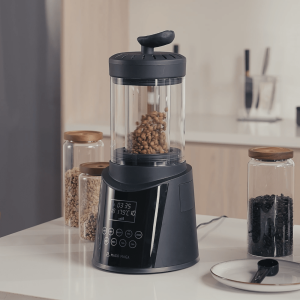
Mago Maga
Roma Pro V1.6 Smart Home Coffee Roaster | Black Friday Event – 10% OFF (-$48.80)
The MAGO MAGA Roma Pro V1.6 roasts green coffee beans in small batches; it does not brew coffee.
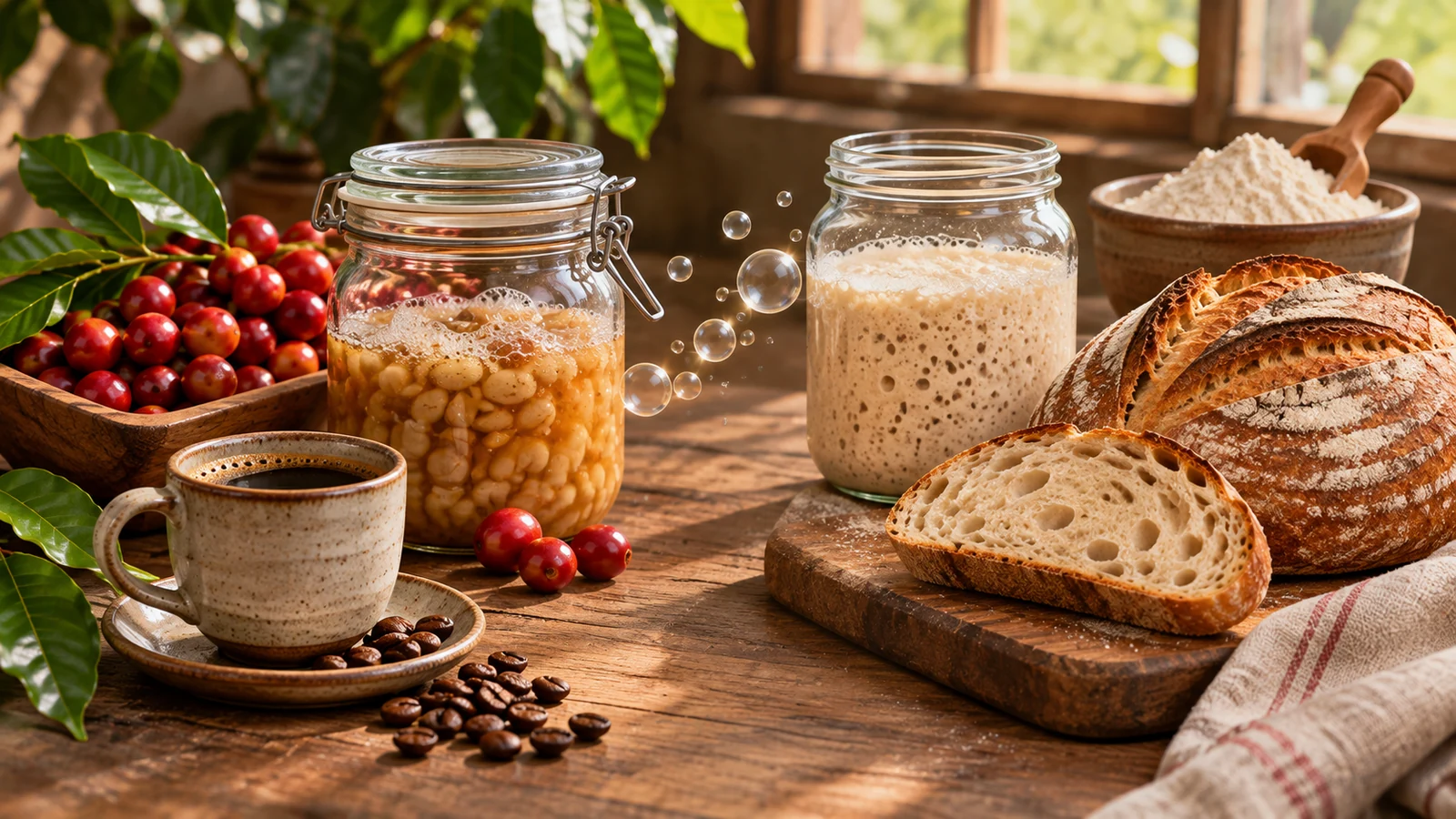
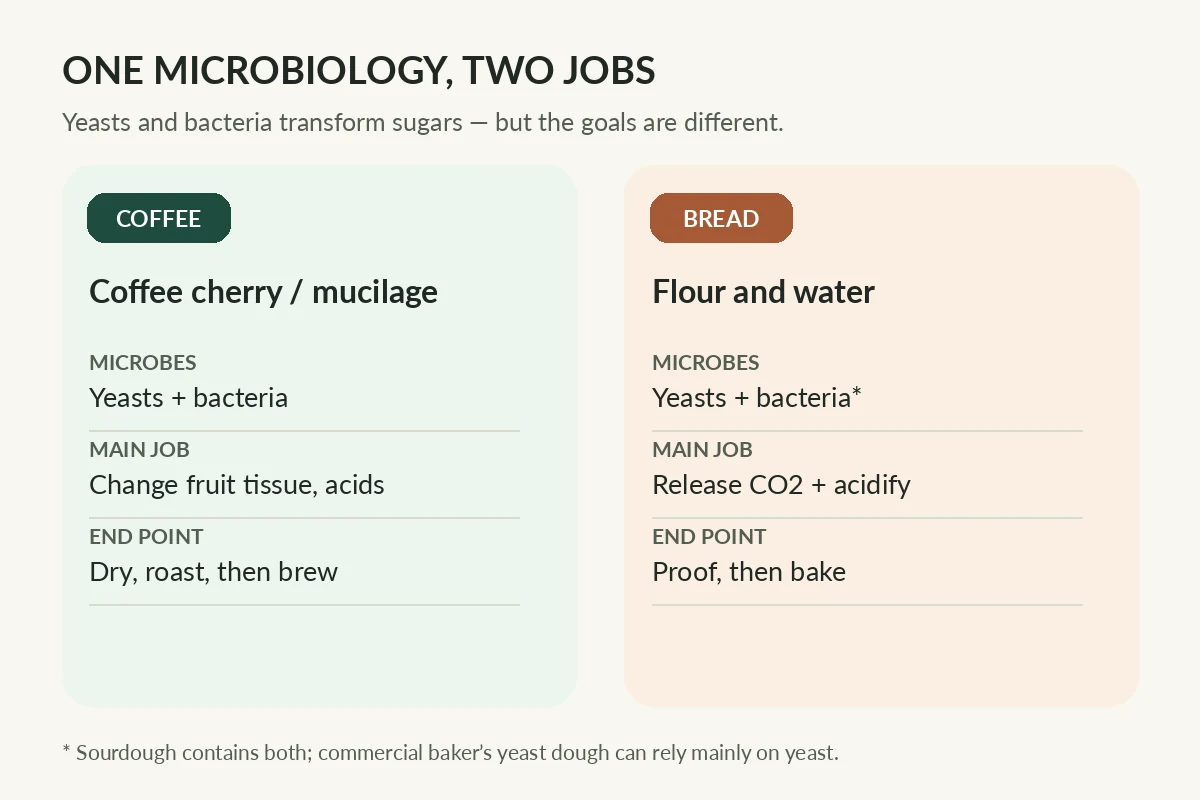
Coffee fermentation and bread making have an unexpected amount in common. Both rely on microorganisms that consume sugars and produce acids, alcohols, gases, and aroma-related compounds. Both can be done with naturally occurring microbial communities or carefully selected starter cultures. And in both, time, temperature, cleanliness, and the available food for microbes help determine whether the outcome is appealing or disappointing.
But the analogy has an important limit: bread makers want a dough that rises; coffee producers want stable, properly processed seeds that will later be roasted. Coffee fermentation usually acts on the fruit and sugary mucilage surrounding the seed after harvest, whereas bread fermentation acts in a flour-and-water dough. Understanding this distinction makes descriptions such as “wild fermented,” “anaerobic,” and “yeast inoculated” much less mysterious.
The surprising common ingredient: a community of microbes
Think of sourdough starter as a miniature ecosystem. It typically hosts yeasts and lactic acid bacteria that tolerate and influence one another. Yeasts help produce carbon dioxide and aroma compounds, while bacteria contribute acids and other metabolites that influence the dough’s flavor and behavior. Ordinary straight-dough bread made primarily with commercial baker’s yeast has a simpler microbial setup; the more direct comparison with coffee is sourdough, not every loaf of bread.
Fresh coffee cherries also carry communities of yeasts and bacteria. Their exact membership changes with the farm, fruit, water, containers, atmosphere, and processing stage. Researchers identify lactic acid bacteria, acetic acid bacteria, and multiple yeast groups in different coffee fermentations. The organism names can overlap with food fermentation—for example, Saccharomyces yeasts and certain lactic acid bacteria—but that does not mean a coffee tank contains the same microbial balance as your sourdough jar. A review of microorganisms in coffee fermentation describes how these communities vary by method and influence the eventual coffee.
In both systems, microbes help create a chemical environment that affects which other organisms can thrive. A producer or baker manages that environment rather than assuming all microbial growth is equally desirable.
What are the microbes actually eating?
For a baker, the starting material is flour and water. Enzymes make fermentable sugars available from the flour’s carbohydrates, and yeasts and bacteria use those sugars in different ways. The dough is also a physical structure: in wheat bread, a gluten network helps trap the gas generated during fermentation.
For a coffee producer, the readily available sugars are associated primarily with the ripe cherry’s pulp and mucilage. During post-harvest processing, microbial enzymes and metabolism help change or break down the sticky material surrounding the parchment-covered seed, and they create organic acids and other metabolites. Some of those changes can influence the green seed and the flavor precursors available to subsequent roasting. Coffee is not raised like a loaf, and its seeds do not need a gas-trapping gluten network.
A simple way to remember the difference is that bread dough is both the fermentation substrate and the food being baked, while the coffee fruit is a major fermentation substrate surrounding the seed that will be separated, dried, roasted, ground, and brewed.
Why does gas matter so much more in bread?
In bread, yeast converts fermentable sugars into carbon dioxide and ethanol. The gas expands within the dough, and its retention is a major reason a loaf grows in volume. Lactic acid bacteria can influence dough acidity and behavior, especially in sourdough. The final structure depends on fermentation, kneading or folding, flour properties, proofing, and oven conditions together.
In coffee fermentation, microbes may also produce carbon dioxide, but the producer is not trying to make the seed expand into an airy crumb. Instead, microbial activity is evaluated in relation to fruit-material removal, drying readiness, defects, and the chemistry that can contribute to cup flavor. A bubbling coffee fermenter may be visibly active without automatically making high-quality coffee; bubbles alone are not a reliable quality test.
The scientific 2026 review of bread fermentation describes how yeasts and lactic acid bacteria have complementary roles in sourdough, including leavening, acidification, aroma, and dough-structure effects. It also emphasizes how conditions and recipes change the outcome.
Acids and aromas: where the analogy gets interesting
Some of the most compelling similarities are chemical. Lactic acid bacteria can produce lactic acid, and particular microbial pathways can also lead to acetic acid, ethanol, and other fermentation metabolites. Yeasts contribute alcohols, esters, and a range of aroma-related compounds. These molecules or their chemical precursors can shape the sensory result of both products.
In sourdough, acidity can provide a recognizable tang, affect enzyme activity and dough structure, and interact with aroma development. The crust and crumb then undergo additional transformations during baking. In coffee, fermentation can change the composition of the green seed and its surroundings; roasting subsequently develops many of the aromas we associate with brewed coffee. It would be misleading to assume a molecule found in a fermentation tank passes unchanged into a finished drink or that a sour-tasting cup must contain unusually high lactic acid.
Consequently, an enthusiast might describe a fermented coffee as “winey” or “fruit-forward” and a sourdough loaf as “tangy.” Those are sensory descriptions, not proof that the same microorganism, acid level, or fermentation protocol produced both flavors.
Wild fermentation versus starter cultures
A traditional sourdough starter is maintained by repeated feeding, which selects a microbial community suited to its flour, water, temperature, and feeding schedule. Many coffee processes also depend on microbes already present on the cherries or in the processing environment. In both cases, “wild” or “spontaneous” does not mean that time, temperature, sanitation, or monitoring should be ignored.
Both fields also use deliberate inoculation. Commercial baker’s yeast can give bread makers a more predictable rise, and some sourdough processes use carefully managed starter cultures. Coffee researchers have experimented with selected yeast and bacterial cultures to influence fermentation consistency or the cup profile. However, outcomes depend on strains, raw materials, and methods; a culture that works in bread is not automatically suitable for use in coffee.
An actual coffee study using added microorganisms
A 2026 study in mSystems compared spontaneous wet fermentation with an inoculated process involving Coffea arabica var. Castillo. The researchers found differences in microbial communities, chemical metabolites, and sensory observations. Notably, the experimental inoculation involved a defined yeast mixture and other inputs, so this was not simply “put some bread starter on coffee.” The work illustrates that controlled fermentation can steer a process under the studied conditions, not that inoculation always improves every coffee.
Why repeated batches can still taste different
Even a familiar sourdough starter can behave differently when flour, hydration, feeding intervals, or room temperature change. Coffee fermentations likewise respond to cherry ripeness, microbial competition, temperature, oxygen exposure, water, and fermentation duration. A descriptive label on a coffee bag tells you something about the method, but not every variable or the precision of the producer’s controls.
Four process variables both bakers and coffee producers watch
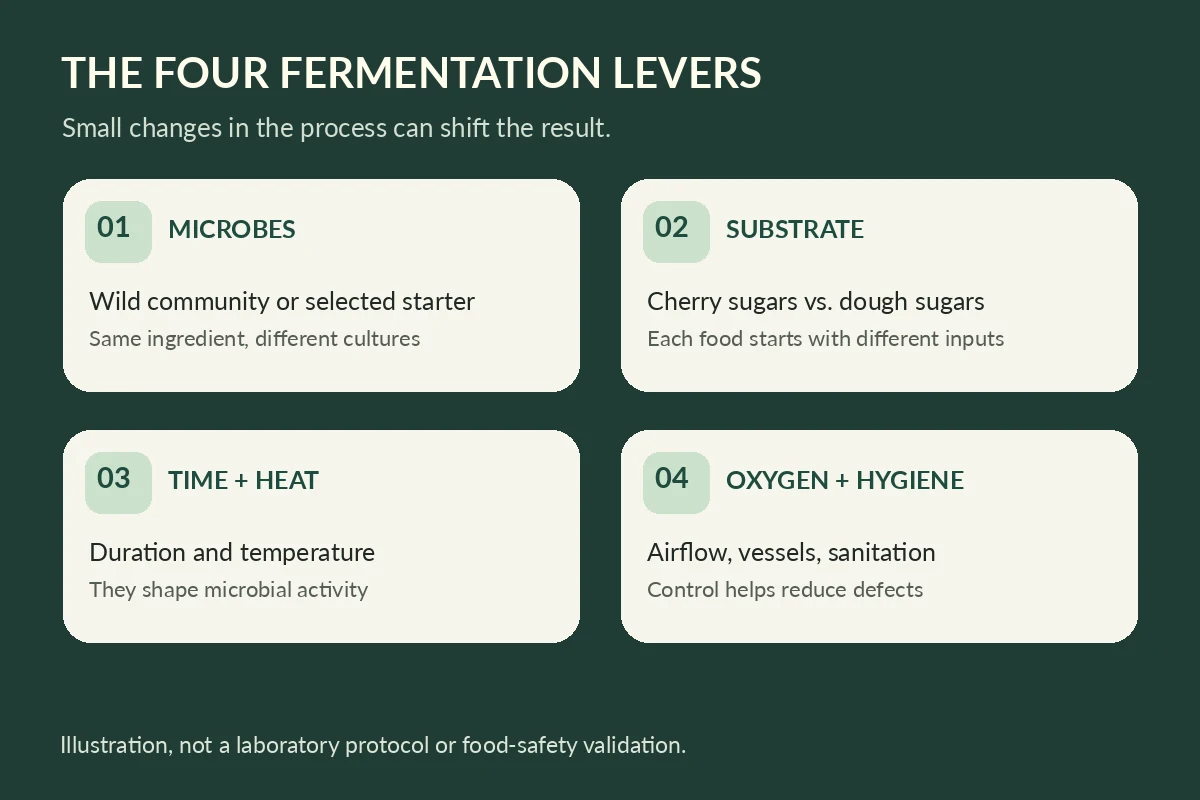
Neither food has a single universal recipe. Still, four broad principles travel well between them:
- Microbial community. A naturally established mixture can behave differently from a selected, validated starter. Strain and species identities matter.
- Food available to microbes. Flour carbohydrates and coffee-fruit sugars differ, so the same organism need not produce the same result in each system.
- Time and temperature. Changing the duration or warmth changes microbial growth and chemical reactions; faster is not automatically better.
- Oxygen, containers, and sanitation. Vessel design and oxygen availability influence the process. Clean handling and appropriate monitoring help prevent spoilage and defects.
There is no responsible shortcut from this list to a universal coffee-tank pH, duration, or kitchen DIY fermentation recipe. Professional post-harvest coffee processing requires suitable raw materials, drying equipment, hygiene controls, and a defined endpoint; leaving moist beans in a household jar without a validated protocol can produce spoiled material.
Three ways coffee fermentation is unlike sourdough
1. The final product undergoes a different finishing process
Sourdough is shaped, proofed, and baked into bread. Processed coffee must be dried to a safe storage condition, hulled as appropriate, and roasted before grinding and brewing. The roast transforms many coffee precursors and destroys the premise that a roasted coffee beverage should be viewed as a live microbial culture.
2. The physical goal is different
A baker cares about dough expansion, crumb texture, crust, and flavor. A coffee processor cares about removing or handling fruit tissue, achieving stable drying, avoiding defects, preserving bean integrity, and producing desirable cup characteristics. The same broad class of microbes can help serve very different endpoints.
3. Processing labels are not exact recipes
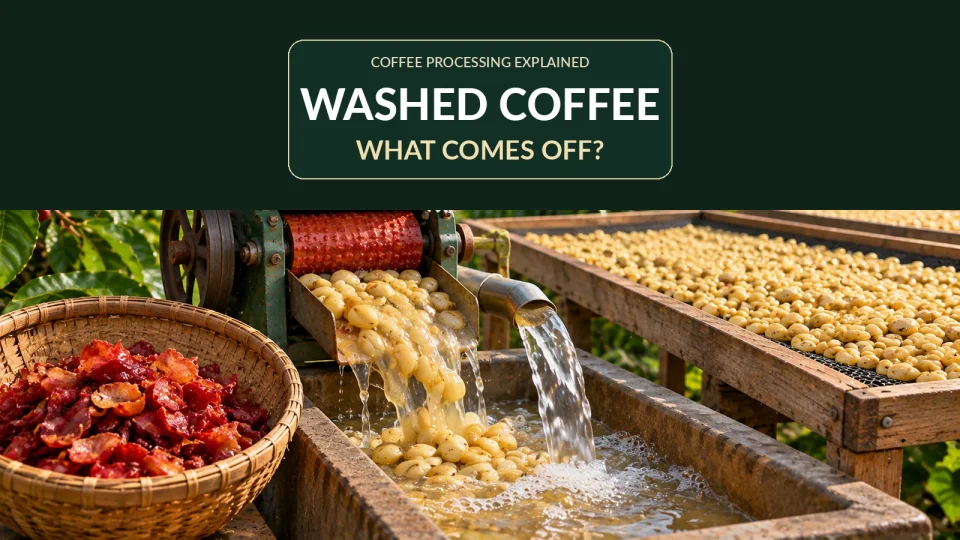
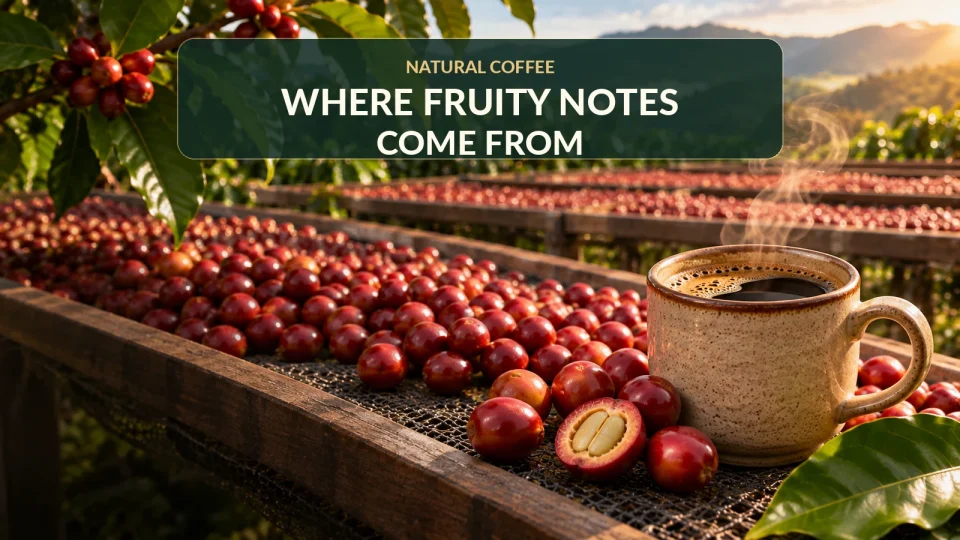
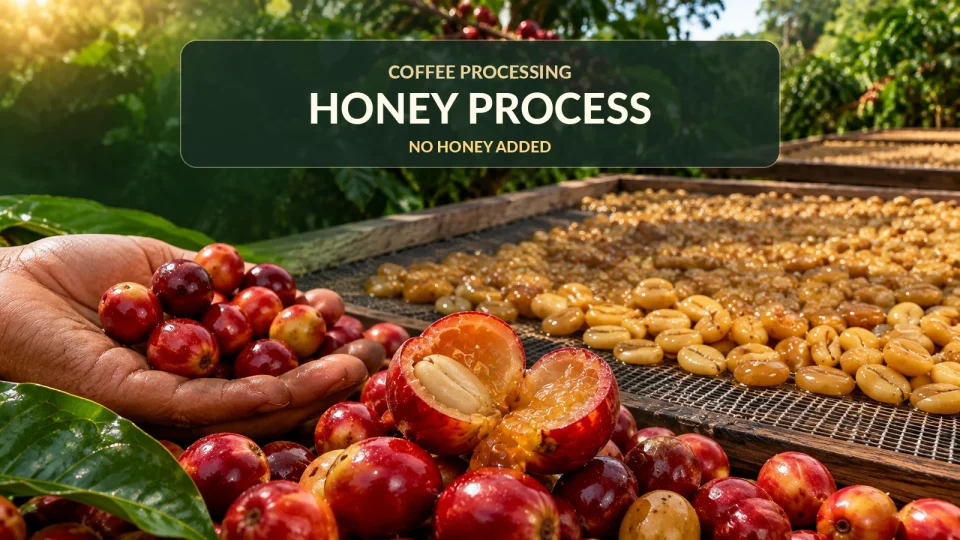
In coffee, washed, natural, honey, and experimental anaerobic fermentations differ in fruit handling, oxygen conditions, and drying. In bread, terms such as sourdough, poolish, biga, and straight dough describe different formulation and fermentation approaches. A name indicates a category, not all the variables needed to reproduce a result.
Does fermented coffee contain probiotics like a living starter?
Not in the sense implied by comparing it with a jar of actively fermenting sourdough. Roasted coffee is heated to temperatures that are incompatible with treating the beverage as a live microbial starter, and bread is baked as well. Fermentation can influence taste and chemical composition without giving the final food a demonstrated probiotic benefit. Claims about improved digestion, gut health, or reduced caffeine from a particular coffee fermentation need product-specific evidence, not just the word “fermented.”
Also avoid treating a strongly fermented aroma as a sign of safety or quality. Uncontrolled microbial activity can create defects, and producers need suitable sanitation and drying practices. A dramatic flavor description is not a substitute for good processing.
What should a coffee drinker take from this analogy?
When you taste a natural or experimentally fermented coffee, remember that the underlying plant variety is only part of the story. Just as two bakers can make very different loaves from similar flour through different fermentation choices, coffee producers can guide very different cup profiles from comparable cherries through distinct handling and microbial conditions.
For a useful home comparison, look for two coffees from the same farm, harvest, and variety but processed differently. Brew them using matched recipes, preferably taste blind, and record aroma, acidity character, sweetness perception, body, and finish separately from whether you personally like the cup. If the sourcing cannot be matched, treat the tasting as an enjoyable comparison rather than a controlled test of processing alone.
You can also ask a roaster whether a coffee used spontaneous or inoculated fermentation, whether it was processed with whole fruit or after depulping, and how the final drying was managed. Those answers usually tell you more than an unqualified promise of “sourdough-like complexity.”
Final takeaway: shared biology, different destinations
Coffee fermentation and bread making are connected by the same fundamental idea: microorganisms transform available nutrients, producing compounds that affect flavor and the material being processed. Yet baking depends heavily on gas retention in dough, while coffee processing involves the fruit around the seed and sets up the chemistry for drying and roasting. The parallel is a useful tool for understanding yeast, bacteria, fermentation control, and flavor—but it is not a literal equivalence and not a guarantee that more fermentation produces a better cup.
Research note: This is an independent educational article prepared from published microbiology, coffee-processing, and bread-fermentation research. We did not ferment coffee, bake test loaves, measure metabolites, or conduct sensory trials. The featured still life is original conceptual artwork; the inline diagrams are educational illustrations, not records of a specific experiment.
Mago Maga
Roma Pro V1.6 Smart Home Coffee Roaster | Black Friday Event – 10% OFF (-$48.80)
The MAGO MAGA Roma Pro V1.6 roasts green coffee beans in small batches; it does not brew coffee.