CouponF5 is an independent publisher. We may earn a commission when you purchase through our links, at no extra cost to you. Merchant terms apply.
In this guide
Art of Tea loose leaf tea is worth considering if you prefer choosing tea by flavor, caffeine level and steeping style instead of relying on generic supermarket tea bags. Its catalog includes specialty blends, single-origin options, pyramid sachets and gifts, plus a subscription that can reduce the price of qualifying repeat purchases. The most important buying decision is format: loose leaf offers control over strength, while sachets are easier to portion. Art of Tea also has a nuanced store-credit return policy, so sampling an unfamiliar blend is not completely risk-free. This guide reviews merchant-published product information rather than claiming we have brewed or tasted the teas.
Start by choosing a tea type and caffeine level
Black tea can be a familiar starting point for breakfast or milk tea, while green and white teas can appeal to people seeking different aromatic profiles and preparation approaches. Herbal infusions may be suitable for caffeine avoidance, but always inspect the specific ingredients: a product labeled herbal is not automatically appropriate for every dietary or medical circumstance. The manufacturer’s listed caffeine and steeping notes are the useful product-level reference.
Choose by when you drink it, whether you add milk, and how many servings you want, rather than treating specialty branding as proof that the tea tastes better. Temperature, water and steep time can change bitterness and aroma substantially. If you already like a classic Earl Grey profile, trying one variation is more controlled than buying a large assorted set of unrelated flavors.
Representative Art of Tea products to compare
Earl Grey Crème for aromatic black tea
The official Earl Grey Crème listing describes organic black tea with bergamot oil and natural vanilla flavors. It displays a medium-caffeine designation and a preparation guide of one teaspoon per eight ounces of water at approximately 206°F for three to five minutes. This is a useful candidate if you enjoy familiar black tea with citrus and a softer vanilla finish. The exact taste will depend on preparation and batch; we have not independently evaluated flavor or the merchant’s quality claims.
Mint and herbal tea for a different moment
Art of Tea carries non-black-tea options such as mint-forward and floral blends. They are not direct substitutes for breakfast tea: check whether the blend is caffeinated, whether the aroma comes from natural flavors or whole botanicals, and whether the ingredients match your preferences. An afternoon herbal tea can be a good starting point for someone who wants something different from coffee, provided the specific infusion suits their needs.
Gift assortments for discovering preferences
Its gift boxes can make sense when the recipient does not have a favorite blend yet. Check whether the assortment contains loose-leaf tea, sachets, or both; a recipient without an infuser might value sachets more than a pouch. Also assess allergens, caffeine and shipping lead time. A premium-looking package does not remove the need to match the contents to the drinker.
Loose leaf, sachet or iced-tea pouch?
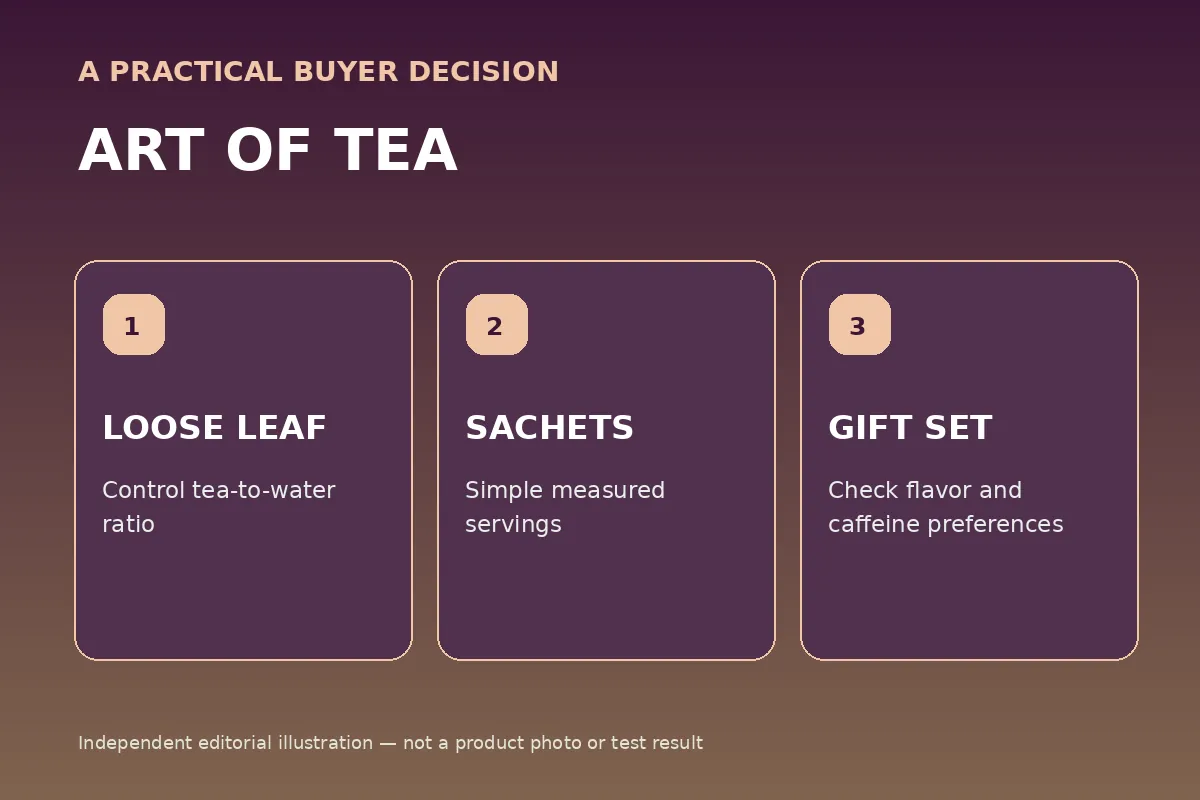
Loose leaf gives the brewer control over tea quantity and enables multiple steeping trials, but requires a filter or infuser and cleanup. Pyramid sachets can simplify office or travel preparation; compare their unit cost and the number in a box. Iced-tea pouches may be easier for making a pitcher but are sold with different return terms. One format is not inherently the highest quality for every buyer; the best one is the version you will actually prepare correctly and finish while fresh.
When does Art of Tea’s subscription make sense?
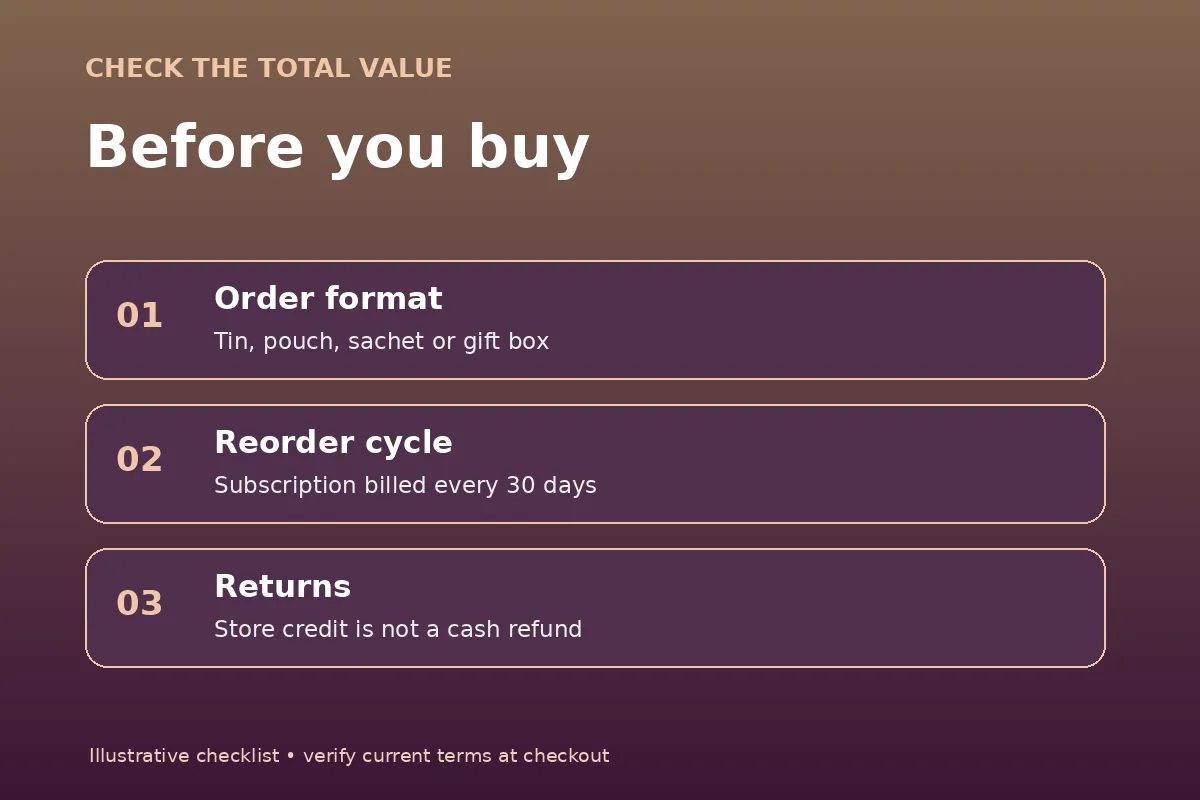
The merchant’s subscription membership guidance advertises 15% off qualifying subscribed purchases. It describes a default 30-day delivery schedule, charges before shipment, and account controls for skipping, rescheduling or cancelling. This is sensible only after you know your preferred blend and consumption rate. Someone drinking one pot a week could accumulate more tea than needed if they accept an automatic monthly shipment without checking quantity.
Separate the subscription benefit from ordinary coupon codes. Art of Tea’s published general policy says coupons and special promotional discounts do not apply to Tea of the Month Club and subscriptions. Do not assume a newsletter welcome code can be combined with the recurring 15% benefit. The monthly cost must include the exact selected package, delivery fees and any future changes in tea consumption.
How to evaluate newsletter, rewards and shipping offers
The company advertises a 10%-off first-purchase benefit when you join its email list. That is a signup benefit rather than a public code provided in this guide. It also offers a points-based rewards program with selected birthday and referral perks. Account points redeemed later are not the same as a reduction on the current order, and referral credit has specific conditions tied to a qualifying referred customer’s purchase.
For continental-US retail orders, the published free-shipping threshold is $60 before tax. Calculate the genuine extra cost of reaching that threshold: if a cart is a small amount short, adding a tea you actually wanted may be reasonable; buying a large extra product just to eliminate shipping can cost more. November and December processing may take longer than normal, so do not assume a late gift will arrive on the day it is needed.
Return rights are more limited than a blanket 30-day promise
The company’s specific returns and credit policy instructs customers to contact the team within 30 days after delivery. A buyer who dislikes a four-ounce loose-leaf pouch may receive a one-time store credit, excluding shipping; that is not a cash refund. The concession excludes one-pound pouches, tins, pyramid sachets and iced-tea pouches. An entirely unopened 50-count sachet case may be returned for credit, but a 12-count box cannot. This makes purchasing a small known blend or thoughtfully chosen gift more practical than blindly buying a large unfamiliar package.
Who should buy Art of Tea?
Art of Tea is a strong shortlist for shoppers who value ingredient information, multiple serving formats and curated gift options. It is less suitable when the decisive factors are lowest cost per ounce, guaranteed no-questions-asked cash returns or same-day fulfillment. Choose a tea format you can brew consistently, compare recurring cost only after discovering a favorite, and read the actual return scope for the item. We did not taste these teas, place an order or test shipping.