CouponF5 is an independent publisher. We may earn a commission when you purchase through our links, at no extra cost to you. Merchant terms apply.
In this guide
Mago Maga
Roma Pro V1.6 Smart Home Coffee Roaster | Black Friday Event – 10% OFF (-$48.80)
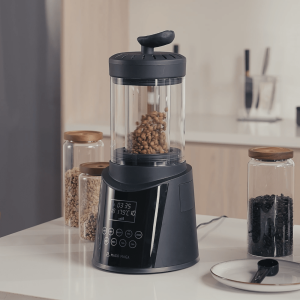
The MAGO MAGA Roma Pro V1.6 roasts green coffee beans in small batches; it does not brew coffee.
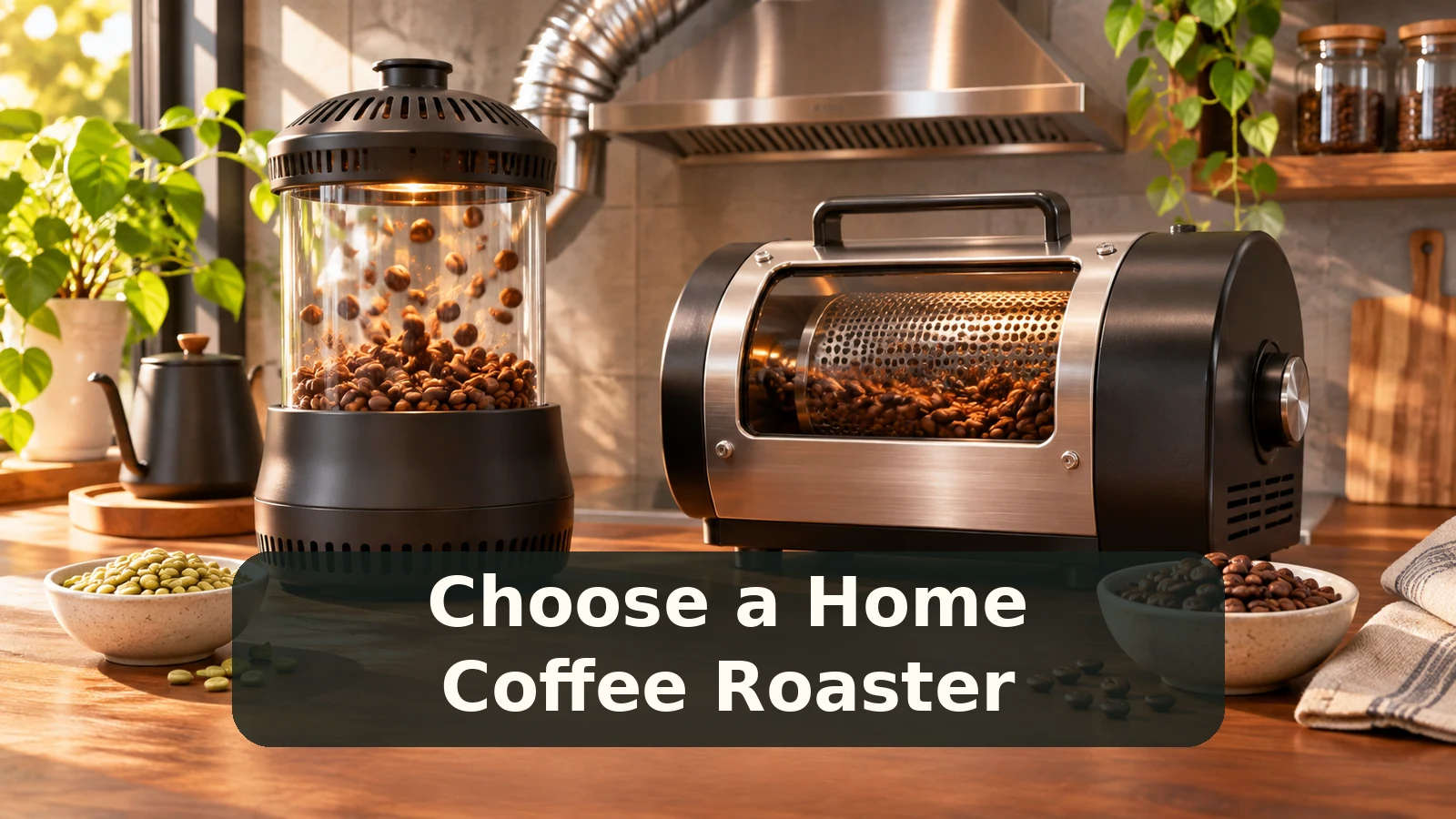
Choosing a home coffee roaster starts with three questions: How much roasted coffee do you use each week, where can you safely handle heat and smoke, and how much control do you want over each batch? A small hot-air (fluid-bed) roaster is often a sensible place to start for modest batches and hands-on experimentation. A drum-style machine may suit someone seeking different batch capacities or a rotating chamber, but it can require more space and a more involved roasting routine. Neither design is automatically the best choice for everyone.
Roasting your own beans can be rewarding because you choose the green coffee, watch the roast progress, and adjust future batches to your taste. It also produces smoke, chaff, hot equipment and occasional imperfect batches. Instead of promising café-quality results from a particular appliance, this guide shows how to select a machine that fits your drinking habits, home setup, and willingness to learn.
Home Coffee Roaster Types: Air, Drum and Manual
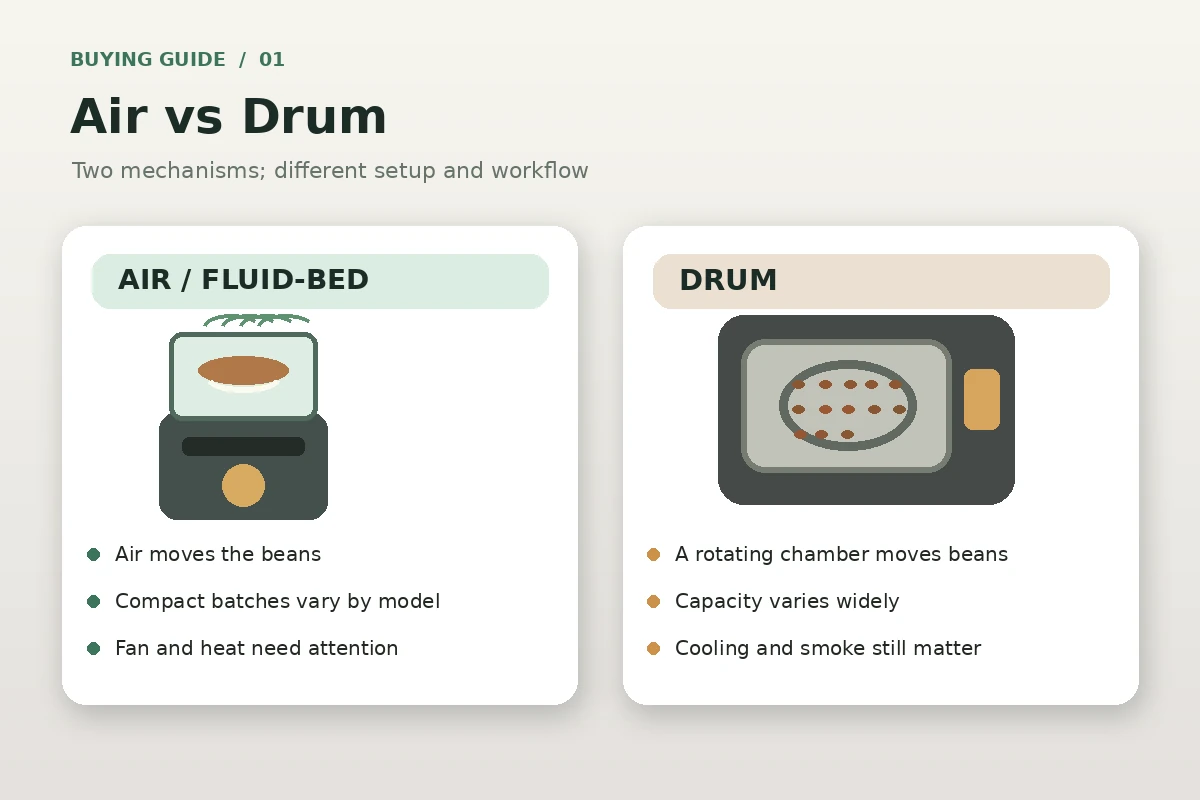
The core difference is how beans move and receive heat. A fluid-bed or hot-air roaster circulates heated air through the beans; many units visibly lift and agitate the coffee. A drum roaster turns a chamber that tumbles beans while applying heat. Manual pan or stovetop methods use the cook’s movement and heat adjustments, but can be harder to repeat consistently. Manufacturers vary widely within each category.
| Type | Typical strengths | Considerations |
|---|---|---|
| Hot-air / fluid-bed | Compact format; visible bean movement on many models; adjustable heat and fan on select units | Batch sizes can be modest; fan noise can make crack sounds harder to hear; adequate ventilation still needed |
| Drum-style appliance | Rotating bean agitation; some models support larger batches; programmed profiles may help | Size, cooling procedure, cleaning and supported roast levels differ by machine |
| Manual pan or stovetop | Low initial equipment complexity; direct experimentation | More active agitation and heat judgment; potential unevenness; smoke and fire precautions remain essential |
Sweet Maria’s, a specialist home-roasting educator, emphasizes that roast preference, consumption and budget should drive the choice, rather than declaring one universally superior technology. Its home roaster selection guide is a useful starting reference for comparing methods.
Step 1: Work Backward from How Much Coffee You Drink
A roaster’s published batch capacity normally describes the green coffee loaded into the machine, not the roasted coffee that comes out. Beans lose mass during roasting, chiefly from moisture loss and material shed as chaff. The amount lost varies with the beans and roast level. Consequently, a 200 g green-bean batch does not produce 200 g of finished coffee.
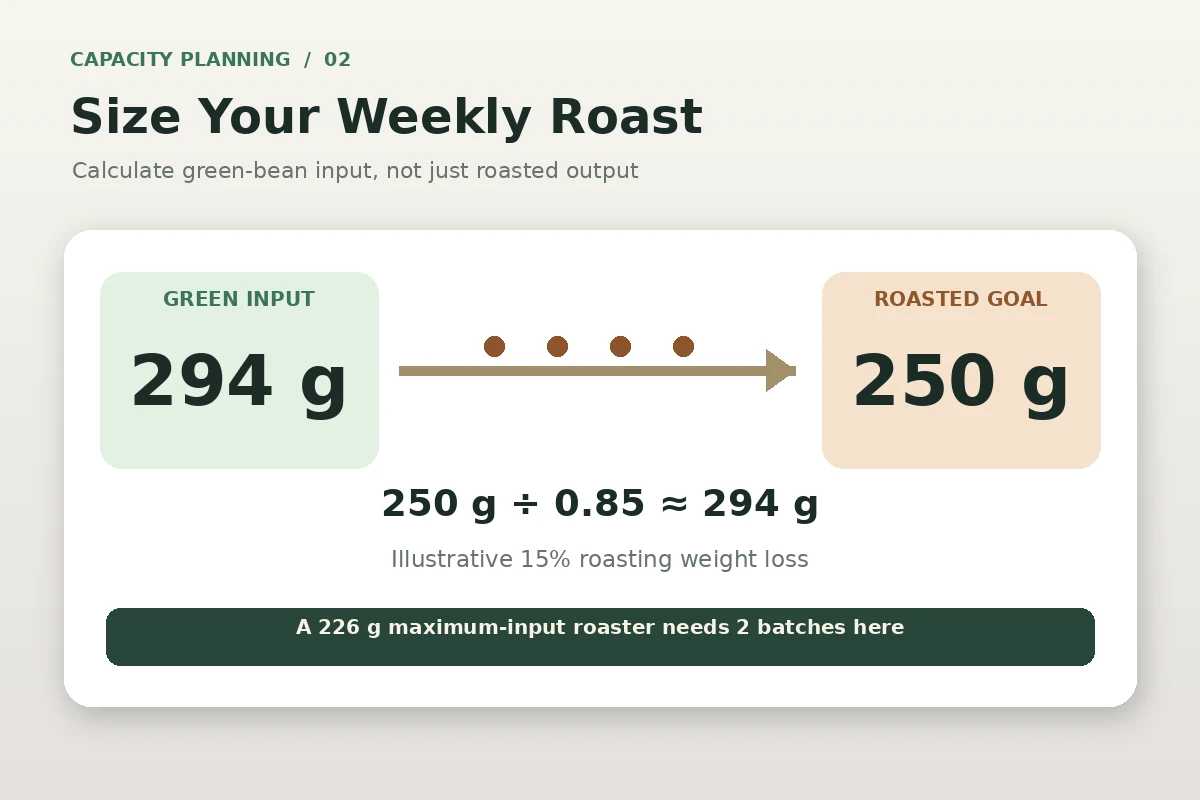
Start by estimating your household’s weekly roasted-bean use with a kitchen scale. Then use a reasonable planning assumption and adjust it after you have actual roast logs. For instance, if your household drinks 250 g of roasted coffee per week and you assume 15% roast weight loss, you need roughly 250 ÷ 0.85 = 294 g of green beans. This is illustrative arithmetic, not a guaranteed yield for every coffee.
A machine with a stated maximum green-bean capacity of 226 g would need at least two loads to process that 294 g input. In practice, you might choose smaller batches to match the specific coffee or the maker’s recommendations. Sweet Maria’s explains the weight-loss calculation in its roasting weight-loss guide and notes why weighing both before and after is useful for repeating a roast.
Decision rule: Choose capacity for the amount you will realistically roast per session, not for a hypothetical maximum you may never use. If your kitchen can only handle one supervised session every week, a tiny machine might become frustrating. If you prefer exploring several bean origins separately, smaller batches can be a benefit.
Step 2: Treat Smoke and Ventilation as a Buying Requirement
Every coffee roast produces some smoke and airborne chaff. Darker roasts and larger batches can generate more smoke. A machine advertised with smoke-reduction technology is not a smoke-free appliance. Before ordering, decide whether you have an appropriate outdoor setup or a ventilation arrangement that meets the manufacturer’s instructions and your home’s rules.
A basic kitchen recirculating hood is not necessarily an appropriate substitute for an outdoor-exhaust setup. Check the roaster’s specified clearance around hot parts, whether exhaust ducting is permitted, whether ventilation will interfere with neighbor spaces, and whether your electrical outlet matches the machine. Never improvise ductwork or place a hot roaster in an enclosed cabinet simply to hide smoke.
Roasting machines also need your attention. The Behmor 2000AB Plus product page describes smoke-suppression features, but the official operation manual explicitly states that the machine must not be left unattended and that coffee can ignite near high heat. Follow the safety instructions for your own model, rather than using a general article as an operating manual.
If you live in an apartment where smoke cannot be properly exhausted, the right decision may be to postpone buying a roaster. Choose equipment only after you have a compliant, workable roasting location.
Step 3: Compare Controls You Will Actually Use
Roasting is more than setting a timer and waiting. Beans change color, release aromas, and make audible cracks as roasting develops. A machine’s temperature number alone may not reflect the true temperature inside every bean. Useful control features include adjustable heat, airflow, roast duration, clear visibility, and an accessible cooling function.
Consider whether you would rather adjust each variable manually or start from repeatable built-in profiles. Both can work as learning tools. Presets are convenient but are not a guarantee that identical beans, voltage, ambient temperature and batch sizes will produce identical results. Some hot-air machines let you make fan and heat changes mid-roast; some drum appliances offer profiles, on-the-fly timing changes or manual overrides.
For your first few sessions, record the green-bean weight, machine settings, when first crack began, when you initiated cooling, final roasted weight and how the coffee tasted after resting. Change one major variable at a time. This simple habit often provides more practical learning than collecting temperature graphs without tasting the results.
Two Real-World Specification Examples—Not a Performance Ranking
Published specifications can show how different home roasters approach the same task. The following examples are manufacturer descriptions, not machines personally tested or ranked by CouponF5. Prices, availability and model details may change.
| Published feature | Fresh Roast SR800 | Behmor 2000AB Plus |
|---|---|---|
| Mechanism | Hot-air / fluid-bed | Rotating metal drum |
| Advertised maximum green-bean batch | Up to 8 oz / 226 g of wet-processed beans; maker advises lower loads for high-chaff dry-processed coffee | Up to 1 lb / 454 g under stated 120 V conditions; reduced loads recommended for darker roasts |
| Roast controls | Adjustable fan, heat and time; real-time temperature display | Five preprogrammed profiles plus manual/timing controls |
| Important condition | Chaff collection and adequate airflow; manufacturer specifies 120 V North American model | Smoke suppression is not smoke elimination; manual limits roast darkness and requires active supervision |
According to Home Roasting Supplies’ SR800 specifications, the 8 oz maximum applies to suitable wet-processed beans, while dry-processed beans may need a 6 oz / 170 g charge because of extra chaff. Behmor’s official manual describes a larger maximum charge but says darker roasting calls for smaller loads and that its appliance is not intended for very dark Vienna, French or Italian roasts. Maximum numbers do not make the two machines equivalent in workflow or roasting result.
Step 4: Examine Cooling, Chaff Collection and Cleanup
The moment you stop adding heat matters. Beans can continue to develop if cooling is slow, so compare how quickly and conveniently a machine moves into its intended cooling cycle. Review the maker’s instructions for how and when to remove a hot roasting chamber. Do not assume you can safely dump a hot load into an improvised container while the machine is operating.
Chaff is the papery skin released during roasting. It can accumulate in collection baskets, screens and vents, affecting airflow and cleanliness. For example, the Fresh Roast maker advises clearing the chaff basket and top screen before using the machine, while Behmor includes a removable chaff tray. Check whether you can comfortably access and clean these parts after the machine has cooled.
Also consider replacement parts. Glass chambers, lids, gaskets and motors can be costly or difficult to replace depending on a model’s availability. Look for an accessible manual, replacement components, warranty information and responsive support before paying for a machine, particularly if it will be used weekly for years.
Step 5: Confirm Space, Power and Everyday Noise
Measure the countertop and the necessary clearances—not just the machine footprint. You may need space for a scale, heat-safe accessories, green beans, a chaff container, and cool storage for roasted coffee. A large exhaust hose or removable drum can make a seemingly compact machine awkward in a small kitchen.
Electrical ratings matter. North American appliances may specify 120 V operation and substantial power draw. Use only approved outlets and accessories according to the manual. Do not assume a cheap voltage adapter, unsuitable extension cable, or travel converter makes an imported machine safe or perform properly. The SR800 maker’s guidance specifically warns that low supply voltage and extension cords can reduce heating performance.
Listen to the process if you can before buying. A fan-driven machine may be louder than expected; sound can affect how easily you hear first crack. Some roasters give a clear view of the beans, while others require a separate inspection approach. If you need a quiet kitchen routine early in the morning, account for both roast noise and exhaust noise.
Which Roaster Fits Your Coffee Preferences?
If you like light and medium roasts
Focus on control during the approach to and after first crack. A machine that lets you view and adjust bean movement can be helpful, but repeatability depends on the user as well as the appliance. Choose a method you can monitor comfortably rather than buying the highest-rated product without learning its controls.
If you prefer darker roasts
Check the manufacturer’s supported roast range before purchasing. Smoke and the potential for ignition increase as beans progress toward darker stages. The Behmor manual specifically excludes some very dark roast levels. Never push a machine beyond its safety instructions in pursuit of a specific roast color.
If you make espresso
You may value reproducible batches and the ability to rest beans before dialing in a grinder. Freshly roasted coffee releases carbon dioxide; flavor and espresso extraction may change over several days. Sweet Maria’s notes that a 12–24 hour rest is a common starting point, while some espresso coffees benefit from a longer rest. The ideal interval depends on the roast and your taste, so keep notes rather than expecting perfect consistency immediately.
If you enjoy tasting multiple origins
Smaller batches can make comparative tasting practical without producing weeks of surplus coffee. Choose a machine and workflow that can handle your planned batch size safely. Because a machine’s maximum is not necessarily its minimum, verify both values before buying.
What Will Owning a Home Roaster Really Cost?
The machine price is only part of the expense. Your ongoing budget may include green coffee, electricity, replacement chambers or gaskets, cleaning supplies, heat-safe accessories and a good scale. If your setup requires an approved ventilation improvement, that cost matters too. A machine that sits unused because of smoke restrictions is not a saving.
To compare options, estimate total first-year cost = roaster purchase + accessories and setup + green beans + expected maintenance and electricity. Then consider how many batches you plan to make and whether the time spent roasting is an enjoyable hobby or an unwanted chore. Don’t assume home roasting is automatically cheaper than buying roasted coffee from a local roaster; green-coffee pricing, shipping, equipment cost and failed batches can change the economics.
A kitchen scale and a simple roasting log are inexpensive planning tools compared with the cost of repeatedly wasting green coffee because the batch size and settings are inconsistent. For many hobbyists, control and experimentation are the main benefits.
Safe First-Roast Preparation
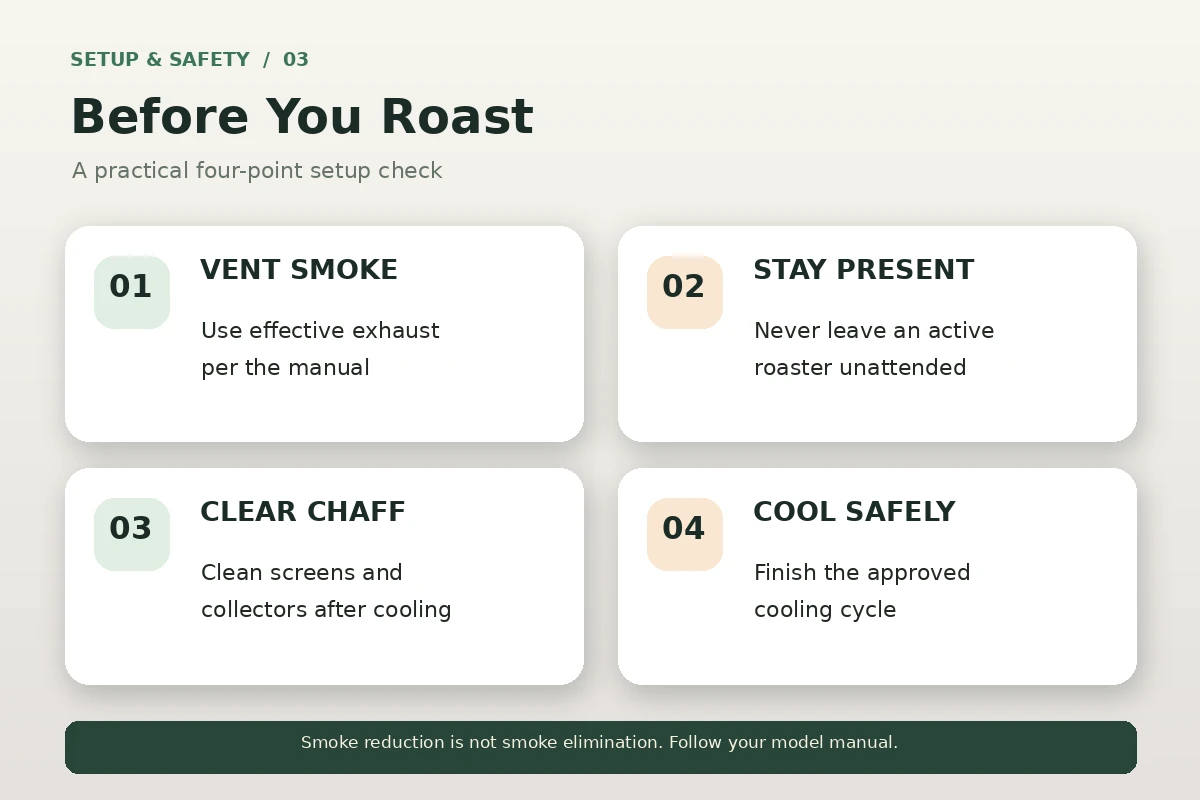
Before starting, read the complete manual for the model and prepare an appropriate work area. This checklist is general buying and setup guidance, not a substitute for product-specific operating or emergency instructions.
- Vent smoke: Set up the approved exhaust or outdoor arrangement and maintain required clearances from combustibles.
- Stay present: Never leave an active roast unattended, even if the machine has presets or an automatic shutoff.
- Check chaff handling: Begin with properly cleaned screens and collectors; do not open hot parts outside the approved procedure.
- Follow the cooling cycle: Use the machine’s designated cooling function and let hot components cool before cleaning or storing.
- Weigh and record: Use an appropriate green-bean load and note the settings, result and tasting feedback.
Questions to Ask Before You Order
- What are the recommended minimum and maximum green-bean loads for the coffees I will use?
- Can I safely exhaust smoke where I live? Does the manufacturer approve my installation approach?
- Are airflow, heat, time and cooling adjustments easy to reach while I supervise?
- Does the model support my preferred roast levels without violating its safety limits?
- How much space does it need for operation, cleanup and storage?
- What are the electrical rating, replacement-parts availability, warranty and return conditions?
- Does the brand publish a clear manual and reachable customer support?
Frequently Asked Questions
Is an air roaster or a drum roaster better for a beginner?
Neither design wins automatically. An air roaster can be compact and visually approachable; a drum appliance may offer different batch and profile options. Choose the model that safely fits your home, consumption, and desired level of manual control.
How large a home coffee roaster do I need?
Work backward from weekly roasted-bean consumption, account for weight lost in roasting, and compare the real recommended batch range. A stated maximum is not the amount you must roast every time.
Can I roast coffee in an apartment?
Only if you can comply with the appliance’s safety and ventilation instructions and building rules. Roasting produces smoke; a smoke-reduction claim does not make it emission-free. If ventilation is unsuitable, postponing the purchase is safer.
Do I need to drink coffee immediately after roasting?
No. Coffee releases gases after roasting and often tastes different after resting. A 12–24 hour rest is a commonly cited starting point, with some espresso coffees benefiting from several days. Adjust according to taste and your brewing method.
Can I choose a machine based only on how many pounds it roasts?
No. Consider safe roast-level limits, available ventilation, batch minimums, cooling, cleaning, warranty support and the time needed for each session. The largest advertised capacity may not match your everyday use.
Bottom Line: Choose the Machine You’ll Use Safely and Often
The best home coffee roaster is the one that fits your weekly batch needs, supported roast levels and real ventilation setup. A compact adjustable air roaster can suit experimenters making modest amounts. A drum appliance can suit different capacity and workflow priorities. Neither eliminates the need for supervision, cleaning, cooling, and practice. Confirm manufacturer specs, read the manual, and budget for setup before making the purchase.
Editorial methodology: This independent guide was researched November 14, 2026 using educational material from Sweet Maria’s and specifications and safety guidance from Fresh Roast/Home Roasting Supplies and Behmor. The figures used in the yield example are illustrative; no roaster was personally tested, purchased, timed or rated by CouponF5. Brand names are used only to identify the products described.
Mago Maga
Roma Pro V1.6 Smart Home Coffee Roaster | Black Friday Event – 10% OFF (-$48.80)
The MAGO MAGA Roma Pro V1.6 roasts green coffee beans in small batches; it does not brew coffee.