CouponF5 is an independent publisher. We may earn a commission when you purchase through our links, at no extra cost to you. Merchant terms apply.
In this guide
A GoDaddy domain deal is worth comparing only after you add the introductory registration price, later renewal fees, any required extra years, and optional checkout charges. A low first-year price can be legitimate while still costing more over time than a domain with a higher starting price. This guide shows how to check a GoDaddy promo code, compare the same ownership period, and avoid mistaking an introductory rate for a long-term price.
The quick rule: calculate the amount you expect to pay over the next three years, then compare that figure with other registrars. A promotion is a starting point, not the full cost of owning a domain.
Why the First-Year Price Is Not the Whole Story
Domain registrations are purchased for a defined term. Some GoDaddy landing pages promote a discounted initial term; future renewals can use a different rate. The exact price also depends on the extension, whether the name is premium, the selected purchase term, and the market in which the offer appears.
GoDaddy’s published domain-cost guide includes examples of new-registration prices and separate renewal prices. That guide states its tables were accurate in May 2026, so treat them as dated reference points rather than a promise of today’s checkout rate. A current cart should take precedence over an older article.
Build a Three-Year Domain Cost Comparison
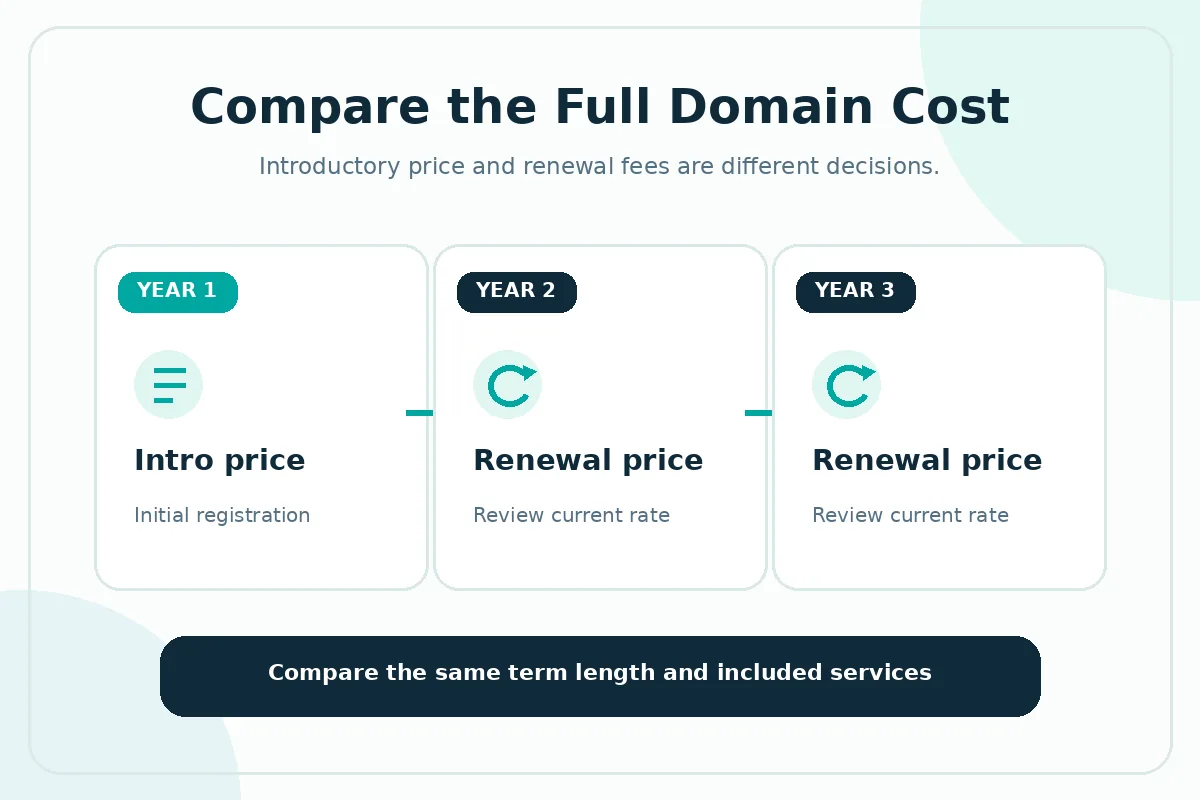
Use the same time horizon for every option. For a domain that starts with a one-year promotional registration, a simple three-year estimate is:
Three-year domain cost = first-year registration + second-year renewal + third-year renewal + applicable fees and chosen add-ons.
Consider a purely hypothetical offer at $5 for year one, then $23 for each of the next two years. The base three-year cost would be $51 before taxes, fees, or optional products. Another hypothetical registrar charging $12 every year would total $36. The second choice costs $15 less across three years despite lacking the flashier first-year sale. These are illustrative numbers, not verified current merchant prices.
| What to compare | Introductory offer | Alternative |
|---|---|---|
| First year | $5 hypothetical | $12 hypothetical |
| Year two | $23 hypothetical | $12 hypothetical |
| Year three | $23 hypothetical | $12 hypothetical |
| Three-year base total | $51 | $36 |
Include charges for each product you actually plan to keep. If you need a domain only, do not compare a domain-plus-hosting cart with a domain-only competitor quote.
Watch for Multi-Year Purchase Requirements
Not all domain promotions operate the same way. One advertisement may apply to a first year only when you purchase three years at once. Another may allow a single eligible one-year registration. These are different financial commitments, even if both feature an eye-catching headline price.
For each offer, ask: How many years am I paying for today? What is the effective cost per year across that exact term? What happens at renewal? A three-year purchase can make sense if you know you need the name for that period, but an inexpensive first-year headline does not mean each additional year is discounted.
How the GoDaddy GDWELCOME Code Is Advertised
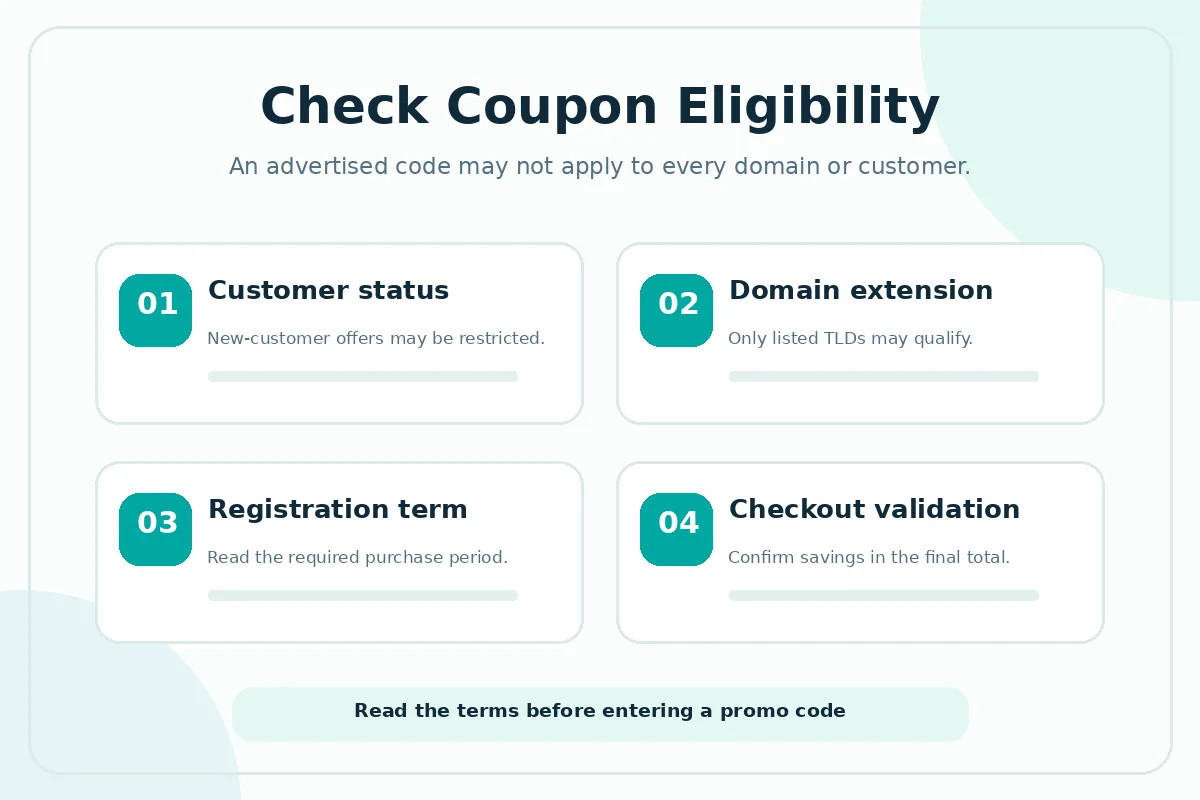
GoDaddy’s official domain-search page has displayed the code GDWELCOME for a new-customer offer. The page identifies eligible extensions including .com, .net, .org, .co, .us, .info, and .app; it also specifies one eligible domain, a one-year term, and validation at checkout. Displayed promotional amounts have varied between retrieved page versions, so this guide does not promise a universal discount or checkout price.
To assess the promotion, search your desired name, check eligibility, choose the term stated by the offer, enter the merchant-published code if the checkout requests it, and inspect the adjusted order total. If the price does not change, the cart message and official offer terms are better evidence than an unrelated coupon listing.
Understand Domain Renewal and Automatic Billing
Registration and renewal are separate billing events. GoDaddy’s domain registration agreement explains that prices and fees can change and describes how renewal pricing is presented. Because automatic renewal settings can affect future charges, review them before placing the order and again in the account afterward.
GoDaddy also provides an account-level way to check a domain’s renewal price. The renewal figure shown in the domain portfolio does not necessarily include paid domain add-ons, so your full expected bill may be larger if you choose protection services or other extras.
Before setting a reminder for renewal, verify the actual expiration date, the chosen term, your account’s auto-renew settings, and whether any separate services—such as email or hosting—renew independently. The goal is to keep the domain you need without unexpected extras.
Separate Domains, Hosting, and Website-Builder Charges
A domain is the address people type; hosting is infrastructure for storing and serving a website. A website builder is a tool or platform to create and publish a site. Bundles can simplify setup, but they can also make price comparisons harder when one cart contains multiple renewals.
GoDaddy provides both managed WordPress hosting and AI site-building options. For WordPress projects, decide whether you need a managed WordPress environment or a more flexible hosting arrangement. For a simple brochure site, consider whether the builder’s included hosting and workflow are a better fit. Compare what you use, not a bundle’s total feature count.
Check Add-Ons and the Final Cart Before Paying
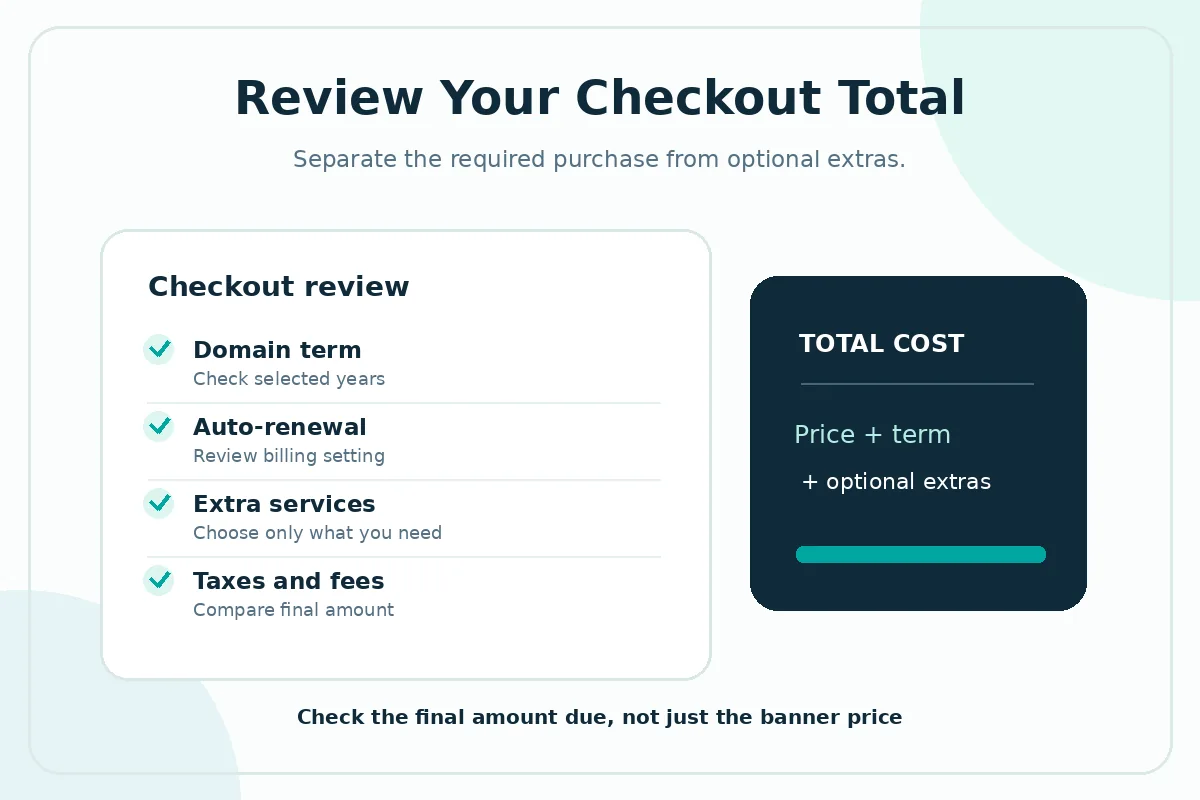
Domain-protection upgrades, premium DNS, email, hosting, and other extra services can affect the final bill. Some are useful in specific circumstances; others may not be essential to your project. Review each line in the cart and whether an add-on renews at its own price.
A practical comparison sheet should have columns for base domain registration, required term, renewal rate, mandatory fees, optional products, and next renewal date. The most accurate savings calculation uses what you will actually pay, not an unqualified percentage on a banner.
When a GoDaddy Domain Promotion Makes Sense
A GoDaddy promotion can be useful if the domain you want is available, the account and management tools fit your needs, and the total cost for your intended holding period is competitive. Keeping domains and associated website services together may also have convenience value even when another registrar has a lower base price.
However, compare other registrars when low long-term cost is your top priority, you are purchasing several names, or you need technical features not offered in the selected plan. Don’t buy unnecessary add-ons simply to qualify for a marketing offer.
Five Questions to Ask Before Checkout
- Is the domain name standard or premium? Premium names can be priced differently from ordinary registrations.
- Does the code apply to my account and extension? New-customer and product restrictions matter.
- What term am I buying today? One-year and multi-year promotions are not interchangeable.
- What happens when the promotional term ends? Note the current displayed renewal rate and billing settings.
- Which items are optional? Remove unneeded extras and examine the order total before paying.
Bottom Line
GoDaddy domain coupons can reduce the initial registration price for eligible orders, but the right choice is the best match of cost, management features, and renewal clarity. Verify any code on GoDaddy’s official offer page, compare equivalent multi-year totals, and keep a record of the final checkout terms. A little math now is usually more useful than chasing the biggest-looking discount.