CouponF5 is an independent publisher. We may earn a commission when you purchase through our links, at no extra cost to you. Merchant terms apply.
In this guide
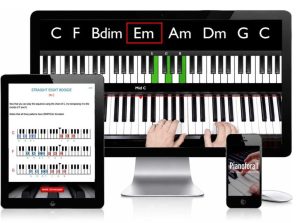
Pianoforall
Pianoforall Complete Piano Course — Lifetime Access
$49 one-time payment (regularly $79) for lifetime access to the complete Pianoforall piano course. Learn chords, rhythms and reading music with online lessons and…
Pianoforall review — our research-based verdict: Pianoforall is worth a close look for adults who want an inexpensive, self-paced way to start playing chord progressions, rhythm patterns, blues and pop accompaniment. At the merchant’s current advertised $49 one-time price, it offers substantially more structured material than a handful of random tutorials without requiring a continuing course subscription. Its limitations are just as important: it is not a live instructor, its chord-first sequence may leave technique and early sight-reading gaps for some learners, and its video-and-ebook format may feel less interactive than modern piano apps. We have not bought, completed or independently tested the course. This evaluation combines current official course information with a documented hands-on review by an external piano educator.
Quick verdict: who is Pianoforall best for?
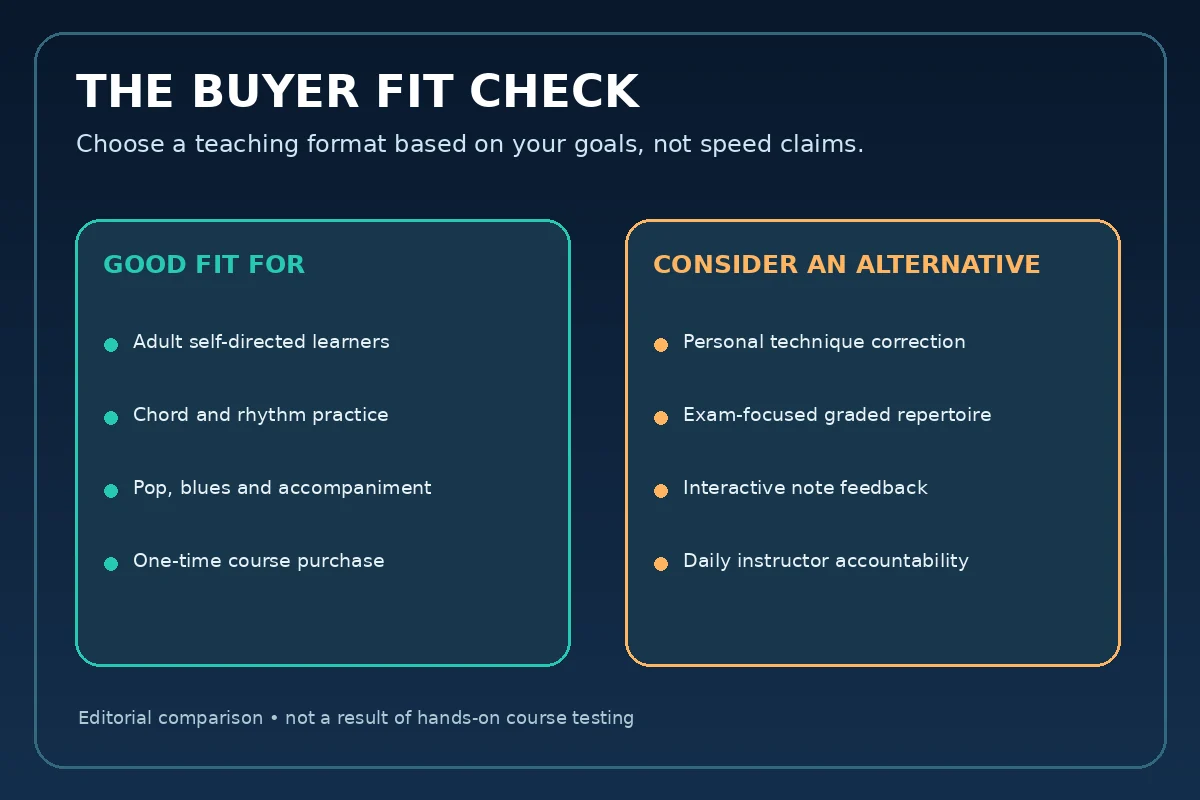
Best for: Self-directed adults who want to accompany songs, explore practical harmony and work at their own pace, especially players returning to the keyboard with a little prior knowledge. Consider another route if: You need someone to correct hand position in real time, are preparing for graded classical exams, or want a game-like app that checks your notes as you play. Biggest strengths: Low one-time cost, practical rhythm-first lessons, several musical styles and downloadable material. Biggest trade-offs: Limited individualized feedback, a learning sequence that may not suit everyone, and inconsistent refund-window wording across official pages.
What is Pianoforall, and what do you actually get?
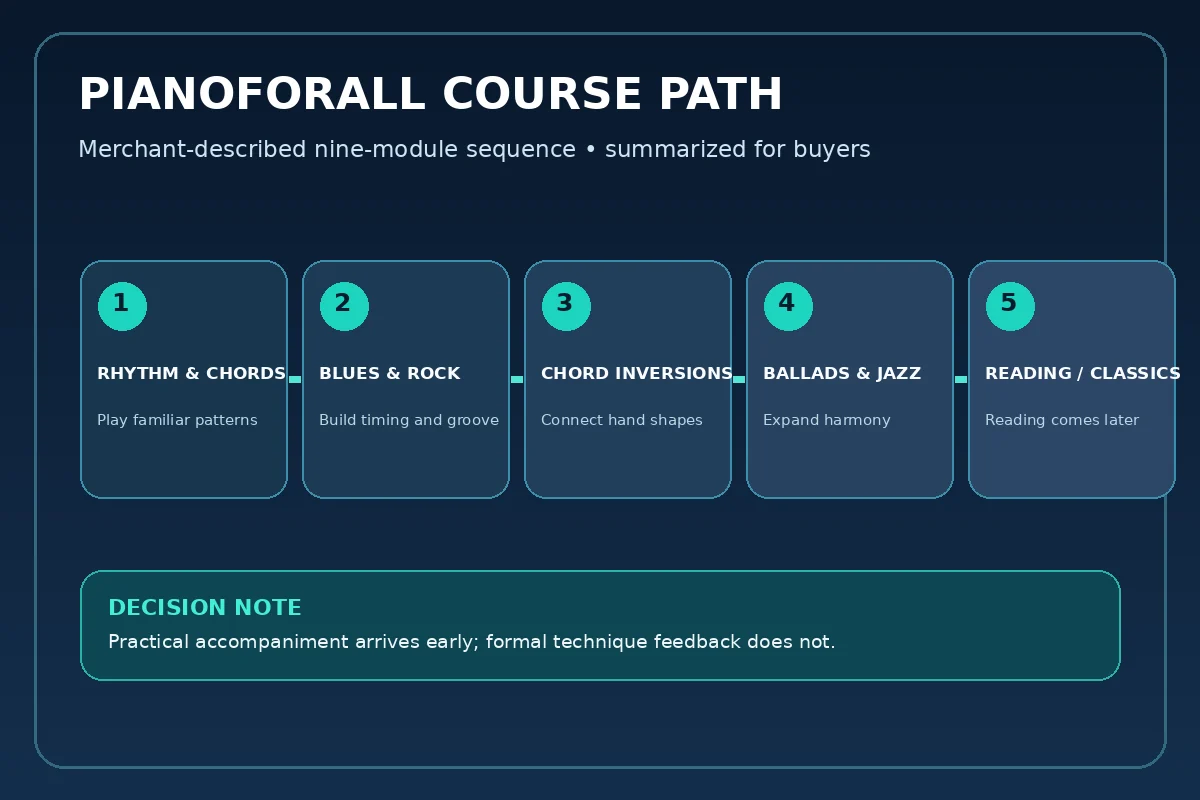
Pianoforall is Robin Hall’s digital piano-learning program aimed primarily at adult beginners. The current official course outline presents nine modules. The sequence begins with Party Time rhythm-style piano, then blues and rock ‘n’ roll, chord inversions, more advanced chord shapes, ballads and improvisation, jazz, advanced blues, a classical-reading module and speed-learning exercises. It is a curriculum built around familiar shapes and sounds before a heavy emphasis on notation.
The package includes the Pianoforall Academy online lesson player, which the merchant says saves progress, and downloadable interactive ebooks with accompanying video and audio. The site also offers The Piano Lounge community and creator email support. These extras can be useful for questions and motivation, but they are not the same as scheduled one-on-one technique correction. Separate Classics By Ear offerings appear in the Academy catalog; do not assume every separately sold course is part of the core nine-module purchase.
How does the chord-first method work in practice?
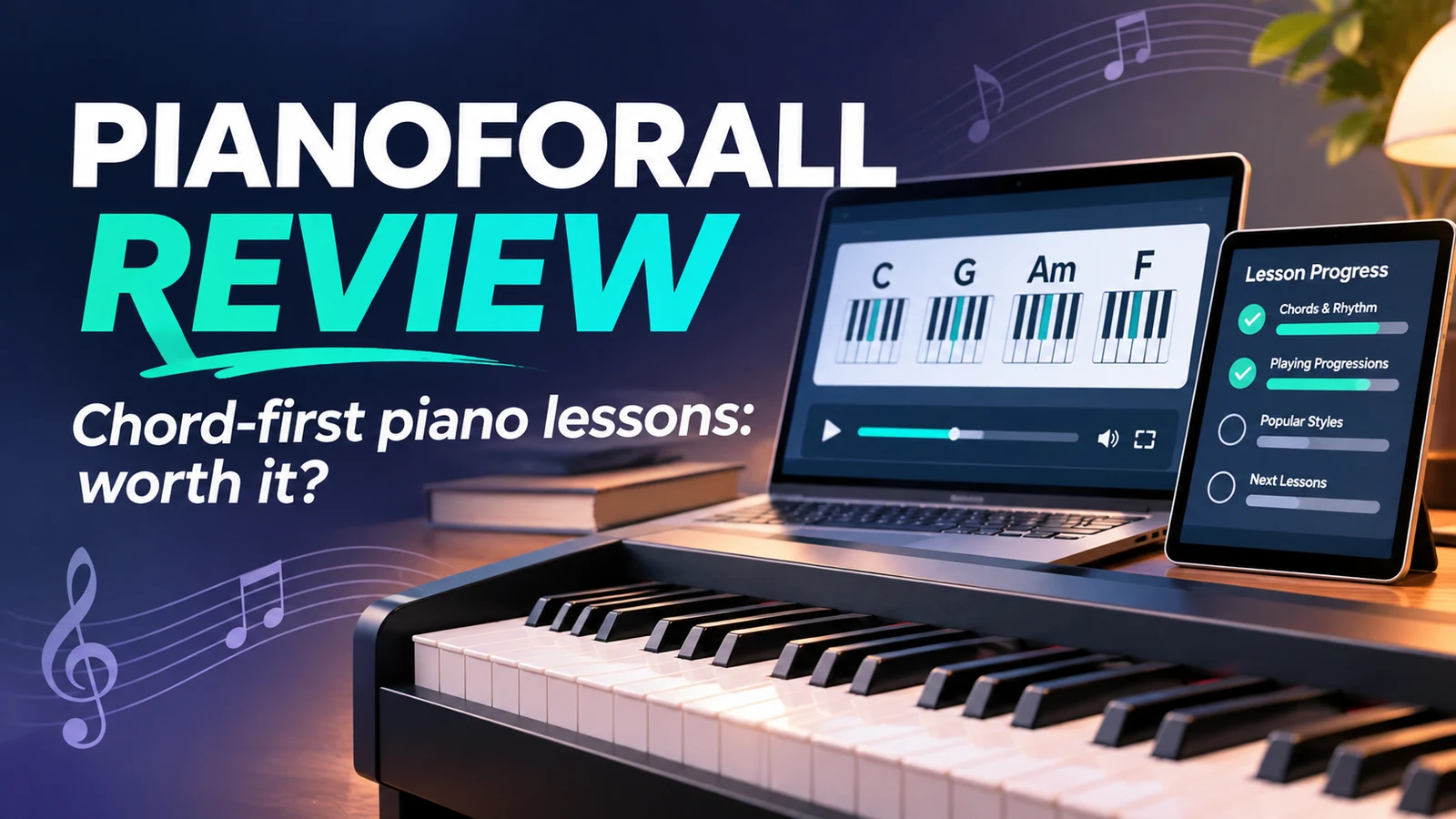
The central teaching idea is to start by making music through chord shapes, rhythmic patterns and repeatable progressions. Instead of requiring fluent sight-reading before playing a familiar accompaniment, students use practical patterns and then build toward inversions, more complex harmony, improvisation and reading. This may give a motivated beginner a tangible reason to practice: a few reusable chord patterns can support many songs with similar harmonic structures.
The downside is that fast early accompaniment can disguise technical weaknesses. If hand tension, posture, rhythm and finger movement are not checked by another person, a novice can repeat an inefficient habit. The official course includes setup and practice advice, but a recording cannot examine your hands or listen to every error as a teacher could. More importantly, a beginner hoping to read full classical scores quickly should understand that the current curriculum introduces the dedicated classical-reading section relatively late.
What does an independent piano educator say?
In a January 22, 2026 hands-on assessment, pianist and music educator James Michael Nugent described Pianoforall as good value with worthwhile content, particularly for learners who already have enough experience to recognize useful exercises. He also criticized the presentation as dated and less engaging than interactive alternatives, questioned parts of its progression, and emphasized that the approach can create difficulties for beginners who need firm technical foundations. These are that reviewer’s expert judgments, not a universal outcome for all students.
There is a version caveat: Nugent described taking lessons through Udemy, while Pianoforall currently markets an Academy player with saved progress and a refreshed nine-module overview. His observations about chord-first teaching and limited personal feedback remain useful questions for buyers, but comments about an older interface or number of sections should not automatically be treated as an audit of every current Academy feature. We have not independently compared both delivery versions side by side.
Reviews hosted on Pianoforall’s own website contain many enthusiastic customer testimonials, but those accounts are selected and displayed by the merchant and do not measure typical learning outcomes. The Trustpilot profile retrieved during this review had just one visible rating, far too few to support a meaningful overall customer-satisfaction conclusion. For these reasons, we do not assign a fabricated overall score or claim consensus based on weak review samples.
Is the $49 price actually good value?
On November 29, 2026, the official pricing page advertised a $49 one-time payment against a stated regular price of $79, with access to the full course and no recurring base-course subscription. This is a merchant-listed promotion, not a price obtained from a completed checkout. The buyer still needs a keyboard or piano and time for practice. Compared with a recurring subscription, a one-time course can be economical for someone who returns to lessons over several months, but it is only valuable if its teaching style matches the student’s needs.
Check how you will access the lessons after purchase. The company describes online progress tracking and offline ebooks; the Terms of Use clarify that “lifetime access” means for the lifetime of the course while it continues to be offered and supported, not an irrevocable promise that an online service will exist forever. Downloaded authorized materials may help with offline study, subject to the seller’s usage terms. No software or enrollment flow was tested for this review.
Free trial and refund policy: an important inconsistency
There are two different ways to explore the product in the current official material. The website describes a no-card Free Test Drive featuring sample lessons, while a separate seven-day full-course trial requires payment details and can convert to a single $49 charge after seven days if it is not canceled. Do not mistake a trial that eventually charges once for a recurring monthly subscription. Review the current order screen to know which path you are selecting and how to cancel in time.
The return promise is more complicated. The current Pricing and Course pages prominently advertise a 90-day money-back guarantee, whereas the Terms of Use, updated September 2026, the detailed trial FAQ and one Academy course page still state 60 days. That is a material conflict on the merchant’s own properties. We cannot determine which period ClickBank will apply to a particular order without examining the actual checkout and purchase confirmation. Before paying, save a copy of the refund statement shown for your transaction and ask the seller or ClickBank to clarify the governing deadline.
Pros and cons of Pianoforall
What works in its favor: The course emphasizes useful chord vocabulary and rhythm early, which may keep some adults motivated. The official nine-module path spans several styles beyond simple pop songs, including blues, jazz and classical reading. Downloadable materials and a one-time fee can suit people whose schedules make live lessons difficult. A hands-on external reviewer also identified specific worthwhile material, particularly for players with some experience.
What weakens the proposition: A prerecorded course cannot hear your mistakes or check physical tension during practice. Some material and its delivery have been criticized as old-fashioned and confusing in an independent educator’s review. Reading and deeper classical technique are not the primary early priorities. The official policy inconsistency creates uncertainty around refunds, and actual progress depends on how regularly and thoughtfully you practice—not on a seller’s fast-learning language.
How does Pianoforall compare with alternatives?
Private piano teacher: Usually the better choice for personalized posture, articulation, reading, exam preparation and accountability. The trade-off is scheduling and ongoing lesson fees. Some learners could combine a course with occasional teacher check-ins, although that would add expense.
Interactive piano apps: Products such as Simply Piano or Playground Sessions may appeal to learners who want software-driven prompts and some note-recognition feedback. Their availability, devices supported and subscription costs should be checked individually; automated note recognition still cannot replace full physical technique coaching. Pianoforall may feel less interactive but offers a straightforward one-time course model.
Other video-based programs: Platforms such as Pianote emphasize video instruction and community engagement. Their teaching format may feel more modern, but ongoing pricing and exact support features vary. Compare whether you value detailed demonstrations and coaching over a self-contained downloadable curriculum.
Who should avoid this course?
Choose a different primary teaching route if you are aiming for conservatory-style classical development, graded exams on a strict schedule, or immediate correction of physical technique. Parents shopping for a young child should prioritize age-appropriate pedagogy and supervision rather than assume an adult-oriented self-study course is ideal. Learners who struggle to motivate themselves without short interactive prompts or teacher assignments may find a traditional lesson arrangement more sustainable.
Conversely, Pianoforall can still serve as a supplemental resource for musicians who already know basic notation and want stronger chord or accompaniment habits. An adult beginner can also use it productively, but should take extra care with posture and rhythm fundamentals and seek feedback when uncertain.
FAQ: common questions before buying
Is Pianoforall a subscription?
No recurring subscription is advertised for the main course. The seller lists $49 as a one-time purchase; a seven-day trial may convert into that single payment if not canceled in time.
Does Pianoforall teach reading sheet music?
Yes. The current nine-module curriculum includes a dedicated classical reading unit later in the sequence, but rhythm and chords are emphasized early.
Can I use it without internet?
The merchant says downloadable interactive ebooks include video and audio for offline study once the relevant files have been downloaded. The Academy progress tracker itself is an online feature.
Will the course guarantee that I can play in a few weeks?
No. Those are marketing-style speed claims, not a demonstrated individual guarantee. Skills depend on practice, previous experience, instruction quality and goals.
Final verdict: is Pianoforall worth considering in 2026?
At an advertised $49 once, Pianoforall is a reasonable, lower-commitment option for self-motivated adults who want a structured chord-first route to song accompaniment and several popular piano styles. It is less compelling as a complete substitute for a teacher when physical technique, graded notation or real-time feedback is the priority. The mixed independent educator assessment adds a useful counterweight to the merchant’s enthusiastic testimonials, and the inconsistent 60-versus-90-day refund wording should be clarified before checkout. Start with the official curriculum and a genuinely free sample where available, then decide whether the format matches how you learn. This article is a research-based review, not a record of personal use.
Pianoforall
Pianoforall Complete Piano Course — Lifetime Access
$49 one-time payment (regularly $79) for lifetime access to the complete Pianoforall piano course. Learn chords, rhythms and reading music with online lessons and…